I Found My Pregnant Wife With an Electrician—Then I Saw Her Neck

The very first object that arrested my attention was the heavy ballistic-nylon tool tote resting against the foyer trim.
It was zipped completely shut.
Not a single pouch left open.
Sitting stone-still and finished on the oak floorboards.
The second sight was my wife.
She was standing motionless near the rug in our living room, draped in an oversized cerulean maternity dress, cradling the heavy swell of her thirty-week bump with one trembling palm.
The third sight halted every drop of blood in my veins.
Arranged in an unmistakable cluster along the left side of her throat was a constellation of fresh, dark plum-colored bruises.
I froze right on the welcome mat, the telescoping handle of my rolling suitcase still gripped tight in my right fist.
The electrician was stationed over beside the sofa arm.
His eyes darted straight to me.
Then flicked across the room to Natalie.
Then swung back toward my face.
Neither of them offered a greeting.
I stared hard at the stranger.
“What exactly are you repairing?”
Natalie cut in before he could part his lips.
“THE RECESSED CAN LIGHTING.”
My gaze dropped from her wide eyes to her collarbone.
Then down to the silent, fully packed tool bag by my shoe.
“That took three hours?”
Her jaw set in immediate hostility.
“DON'T START WITH ME.”
I released the luggage handle with a dull metallic click.
“Those fixtures were finished hours ago.”
The blood drained from her face until she was ghostly white.
The technician threw a panicked look in her direction.
That unspoken exchange between them lasted no more than a heartbeat.
It told me everything I never wanted to know.
I pivoted toward the repairman.
“Suppose you tell me why you are still loitering inside my home.”
He parted his lips, chest heaving.
Natalie took an unsteady step forward.
“Adam—”
“Be quiet.”
My eyes remained fastened to the technician.
“I directed the question to him.”
The electrician’s Adam’s apple bobbed as he swallowed hard.
When he finally answered, the sentence dismantled the foundations of our life together.
“Because she begged me not to leave.”
My name is Adam Reynolds.
I had just celebrated my fortieth birthday when I arrived home ahead of schedule from that sales run.
My wife, Natalie, was thirty-five.
We had shared nine years of marriage.
Our first baby was due to enter the world in less than three months.
A little girl.
We had already rolled pale yellow paint over the nursery walls.
Bolted together the white maple crib.
Bickered back and forth over baby books for months.
Natalie had her heart set on Evelyn.
I was partial to Claire.
To keep peace in the house, we settled on calling our unborn child Peanut, ensuring that neither one of us could claim an early victory.
Three mornings before I pushed open that front door, I had pulled Natalie close and kissed her goodbye right beside that same entrance.
She had captured my fingers and pressed my palm firmly over her rounded belly.
A swift, tiny kick answered against the center of my hand.
I couldn't help but grin.
Natalie let out a soft, warm laugh.
“She only ever starts kicking when your bags are by the door.”
“Guilt-tripping her old man before she even takes her first breath.”
“She knows her father’s heart.”
That was the memory I carried down the walkway that morning.
Peaceful.
Tired.
Completely rooted in ordinary domestic happiness.
Not in my darkest nightmares did I imagine that before Thursday evening fell, I would find myself standing in our living room, demanding to know why another man had spent nearly an entire afternoon alone with my pregnant wife.
Or why her throat was stamped with the unmistakable purple shadows of human mouths.
My living was made working for a commercial construction supplier headquartered in Kansas City.
My territory covered regional building accounts across the Midwest.
Most months entailed a single overnight trip.
Occasionally two.
Rarely more than a night or two away from home.
Yet as Natalie’s belly expanded, she had grown increasingly fragile each time my travel was scheduled.
It wasn't that she lacked faith in me.
The third trimester had simply unleashed an overwhelming physical and emotional toll.
A throbbing lower back.
Restless, fragmented nights.
Relentless acid reflux.
And beneath it all, a quiet, lingering terror that something catastrophic might strike while I was hours away down an interstate.
Recognizing her distress, I had begun trimming my calendar down to the absolute bone.
This particular St. Louis conference was originally scheduled to run through late Friday.
However, our major client session wrapped up well before noon on Thursday.
The Friday morning breakfast meeting was scrubbed entirely.
I easily could have stayed in the hotel room, slept in, and driven back across Missouri the next day.
Instead, I checked out immediately and threw my garment bag into the trunk.
I wanted nothing more than to walk through the door and see the relief wash over my wife’s tired face.
That single impulse was the sole reason my tires crunched into our driveway at twenty-six minutes past four in the afternoon.
Not Friday afternoon.
Thursday.
The trouble with the living room lights had cropped up late Tuesday evening.
A bank of recessed cans over the main seating area had begun stuttering and flickering without pattern.
Natalie sent me a brief phone video capturing the jittery light.
I dialed her cell immediately from my hotel desk.
“Flip the wall switch down and don't touch it.”
“Already turned off,” she murmured.
“Leave the wiring alone until a licensed technician can look inside the junction box.”
“You think I'm going to grab a pair of pliers and drag a ladder into the parlor, Adam?”
“I'm just glad to know you won't.”
“Your endless respect for my survival instincts is breathtaking.”
We both chuckled over the phone line.
We had hired a reputable local electrical service twice over the preceding four years for minor upgrades.
I copied the dispatch number from my contacts and texted it to her.
She scheduled a service appointment for Thursday afternoon.
Just routine homeowner maintenance.
At eleven minutes past ten on Thursday morning, her message chimed on my phone:
Dispatch says the electrician will be here around one.
I shot back:
Sounds good. Tell him to check the dimmer switch while he's at it.
At 1:17 in the afternoon:
Doorbell just went off. He's here.
At 1:49:
Found the culprit. Scorched internal dimmer and a loose wire nut on the circuit.
At 2:06:
All done and tested.
That precise timestamp was etched into my brain because I had read it sitting in my truck in a client parking lot.
I had texted right back:
Awesome. One less headache off the board.
Natalie had replied with a simple blue thumbs-up.
That concluded the exchange.
Which meant that when I unlocked the front door at 4:26 and found a technician lingering beside our sofa, I was already acutely aware that his diagnostic work had ended two hours and twenty minutes earlier.
His name was Lucas Meyer.
He was thirty-two years old.
That was a biographical fact I would uncover later.
At that exact moment, he was nothing more than an intruder wearing charcoal twill work pants and a navy company polo shirt.
He carried no air of physical aggression.
He looked trapped.
Cornered like an animal in a dead-end alley.
His canvas bag was completely zipped.
No stepladder set up.
No voltage detector in his hand.
No switchplate off the drywall.
No recessed cans open to the joists.
There was only Lucas.
Natalie.
And those dark plum bruises clinging to the side of her throat.
“Because she begged me not to leave,” Lucas repeated, his voice barely rising above a hollow rasp.
Natalie pressed her eyes closed against the ceiling.
I leveled my gaze at her.
“Would you like to explain why you would do that?”
“Adam, please,” she choked out, her hands fluttering in the air. “Can we just go into the dining room and speak privately?”
“We certainly will.”
I aimed my index finger directly at the front entrance.
“The exact second he is off our property.”
Lucas moved to hoist the shoulder strap of his tool bag.
Natalie gasped a frantic word:
“Don't.”
That single syllable froze him mid-motion.
And it turned my blood to absolute ice.
She recognized the catastrophic weight of what she had uttered the second it slipped through her teeth.
I stared at her, genuinely struggling to comprehend what I had just witnessed.
“You're telling another man to remain in our home?”
“No—that isn't—”
“You literally just commanded him to stay.”
“I didn't mean it that way—”
“Then describe exactly what you meant!”
She had no explanation left to offer.
Lucas swung the strap over his shoulder, refusing to meet my eyes.
“I'm leaving.”
“Make sure you do,” I said through clenched teeth.
As he moved past the coffee table, Natalie took an involuntary, desperate step into his path.
“Lucas…”
I snapped my neck toward her.
She caught herself and froze in her tracks.
Her trembling fingertips drifted straight back up to the bruised skin on her neck.
Again.
Lucas halted a few feet from where I blocked the foyer.
“Mr. Reynolds, you and your wife have a lot you need to talk through.”
“That much is obvious.”
He took two deliberate steps toward the open entry.
Then he stopped cold.
For a fleeting second, I anticipated some standard apology from a remorseful professional.
Instead, he turned his face toward Natalie.
“Tell him everything. Don't hide it.”
Every shred of warmth abandoned her face.
He slipped past me, stepping out onto the concrete porch.
The latch clicked firmly into place behind him.
Less than half a minute later, the gravel outside groaned beneath the tires of his work van as he accelerated away.
Natalie and I stood marooned in the suffocating silence of our front room.
“Adam…”
“What are those marks on your throat?”
Her fingers pressed instinctively against her collarbone.
“It's… it's complicated.”
“Deep purple bruises on your neck don't strike me as complicated at all.”
Water surged into her reddened eyes.
I detested the speed with which my mind drew the most repulsive scenario imaginable.
I detested even more that I had no logical ground to dismiss it.
“Did that repairman put his hands on you?”
Natalie dropped her chin toward her chest, staring fixedly at the floor.
A crushing nausea settled into my gut.
“Natalie. Did Lucas Meyer put those bruises on your body?”
A silence stretched between us so dense it was nearly impossible to breathe.
“Yes,” she whispered.
I recoiled two paces until my back struck the entryway drywall.
It felt as though someone had evacuated every molecule of oxygen from the house.
“How?”
A jagged sob broke across her lips.
“Please, Adam… won't you just sit down?”
“Not a chance in hell.”
“Adam, I'm begging you—”
“I am standing right where I am.”
“Your hands are shaking uncontrollably.”
“And you are coming undone at the seams!”
She buried her face in both hands, her shoulders shuddering violently.
I waited for the sobs to subside, refusing to bridge the distance between us.
Eventually, her voice muffled through her damp fingers:
“He kissed my neck.”
There are declarations your intellect simply refuses to accept upon hearing.
That was one of them.
“He put his mouth on your skin.”
“Yes.”
“Inside our living room.”
“Yes.”
“While I was two hundred miles away in St. Louis.”
Her tears flowed freely now.
“Yes.”
“You are carrying our daughter! You are thirty weeks pregnant!”
“I know what I am carrying, Adam!”
A sound tore from my chest—a dry, strangled bark of laughter that had nothing to do with humor.
“Apparently I'm the only person under this roof who thought that mattered.”
She sank down onto the cushions of our sofa, her frame curving inward.
I stayed planted on the hardwood floor, keeping the room between us.
“When did this happen?”
“Right after he finished testing the wall switch.”
“How long after?”
“I wasn't staring at the clock.”
“Give me an accurate timeframe, Natalie.”
“Maybe twenty minutes after he packed up his kit.”
“Which places it around two-thirty?”
“Around that time, yes.”
“It is currently four-thirty.”
She had no defense to offer.
I stared toward the closed front door, my mind racing through the chronology.
“He touched you, kissed your throat two hours ago, and he stayed inside this house the entire time?”
“Yes.”
“Why?”
“We… we ended up talking.”
That hollow, evasive phrase that immediately poisons trust because it acts as a fortress for secrets.
“Talking about what, exactly?”
“About us.”
I stepped closer, staring down at the crown of her head.
“You and the man who came to swap out a dimmer?”
“No. You and me.”
That reply made the hairs on my arms prickle with revulsion.
“By what conceivable logic does an electrical contractor spend two hours discussing my marriage with my wife?”
“He wasn't just an electrician to me.”
A cold sneer tightened my mouth.
“Is that the technical distinction we're drawing this afternoon?”
“I'm explaining it poorly.”
“Then explain it properly!”
She dragged the sleeve of her azure dress across her wet cheeks.
“I knew him before today.”
There it was.
The hidden hatch falling open beneath my feet.
“From where?”
She hesitated, her breath hitching in her chest.
“Natalie. From where?”
“We went to school together.”
I stared at her, genuinely bewildered.
“You had a personal acquaintance with him?”
“Yes.”
“And that detail somehow slipped your mind when you texted me that the technician had rung the bell?”
“I didn't know the company would dispatch him.”
“Yet the second he stood on our front stoop, you recognized him.”
“Yes.”
“And you made a deliberate choice not to mention it.”
“I didn't say anything.”
“Why?”
Her silence spoke volumes before she gathered her voice.
“Because I knew you would start asking questions.”
That single confession blew apart the entire framing of what had occurred.
This wasn't a sudden, brazen assault by a predatory stranger in our living room.
There was buried, unexcavated history between them.
I dragged a dining chair across the floor and sat down.
Far away from the couch.
On the opposing side of the living space.
“What kind of questions would I have asked, Natalie?”
She turned her swollen eyes toward the blank television screen.
“Lucas and I were a couple once.”
A sudden chill traveled straight up the vertebrae of my back.
“When?”
“In high school. And through our first year of college.”
“How serious was it?”
She let several long seconds bleed away before answering.
“Very serious.”
I rested my head back against the wooden slats of the chair.
Nine years of lawful marriage.
Eleven years of building a shared existence from nothing.
A nursery down the hall painted and prepared for our daughter.
And across more than a decade, I had never once heard the name Lucas Meyer pass her lips.
“Was he your first boyfriend?”
“No.”
“Was he your first real love?”
“Yes.”
“Why haven't I heard a single syllable about his existence in over a decade?”
“I don't know.”
“Do not lie to my face.”
She raised her red-rimmed eyes to meet mine.
“You're right. That was a lie.”
Lucas had been her partner from the time she was seventeen until she turned twenty.
Three full years of late-adolescent intensity.
They had scattered to different universities after their freshman year.
The distance strained them.
Arguments flared.
They broke apart.
Reconciled over holiday breaks.
Broke up once more.
Until the embers eventually died cold.
At least, that was the sanitized narrative she initially offered from the sofa cushions.
“Did you two remain in contact?”
“Not really.”
The words not really had instantly mutated into the most toxic evasion in the English language.
“Define what ‘not really’ means in our house.”
“An occasional exchange.”
“How occasional?”
“A happy birthday message every now and then.”
“Every single year?”
“No. Not every year.”
“When was the most recent exchange?”
Her chin dropped back against her chest.
The pattern was already sickeningly familiar.
“When was the last time, Natalie?”
“Six months ago.”
A brutal, suffocating constriction grabbed my chest.
Half a year ago, Natalie had been ten weeks into this pregnancy.
Lucas had discovered her profile on a social networking platform.
His introductory message had been brief and disarming:
Is this the real Natalie Pierce?
Pierce was the maiden surname she hadn't signed on a legal document in nearly a decade.
She had replied.
On the surface, the opening volley appeared utterly innocuous.
Where are you living nowadays?
What kind of work are you doing?
Did you ever tie the knot?
Yes, happily married.
Any children?
We're expecting our first.
Congratulations and warm wishes.
He had walked through a divorce two years prior.
No children of his own.
He had relocated back to the Kansas City metropolitan area around that same time.
That polite digital reunion should have drawn to a natural close right there.
It didn't.
The private messages persisted.
Infrequent and tentative at the start.
Then accelerating into a steady current.
Exchanging snapshots of old memories.
Laughing over eccentric high school instructors.
Catching up on mutual acquaintances from their hometown.
Trading songs from ancient burned CDs.
Referencing the late-night diner where they used to drink bottomless black coffee while cramming for exams.
The rusted hand-me-down car Lucas had driven back then.
A July camping weekend on the shores of Lake of the Ozarks.
I glared at her across the divide of our living room.
“Did you tell him that you were happy with me?”
She looked directly into my face.
“I did. I told him that.”
“Did you discuss anything else regarding our marriage?”
Tears tracked fresh paths down her cheeks.
“Yes.”
“What did you share?”
“That I was terrified.”
“Terrified about the baby?”
“Yes.”
The fact that she was afraid didn't wound me by itself.
“Afraid of what, specifically?”
“Of becoming a mother. Of disappearing completely. Of what was happening to my body. Of losing my autonomy.”
I knew she had harbored anxieties about the transition into motherhood.
I had no idea the water ran so deep and dark.
“Did you share that fear with your husband?”
“Some of it.”
“Did you confide more of it to him?”
“Yes.”
That severed something fundamental inside my chest.
Nurturing this baby inside her womb had unmoored Natalie emotionally every bit as much as physically.
She had yearned for a child for years.
We had poured nearly two exhausting, emotionally draining years into trying to conceive.
Basal thermometers.
Ovulation schedules.
Crushing monthly disappointment.
And then an early miscarriage the preceding autumn that had shattered both of our hearts into dust.
When this pregnancy finally held and progressed past the danger zone, the world around us seemed to demand that Natalie radiate uninterrupted maternal ecstasy every waking hour.
She was profoundly grateful.
She was also immobilized with dread.
Both emotions occupied the same ribcage at the exact same moment.
Society rarely grants pregnant women license to voice that duality.
And in all honesty, neither had I.
Whenever a wave of panic washed over her, my immediate instinct had been to fix it.
If she broke down over sudden stretch marks and bone-deep fatigue, I insisted she had never looked more radiant.
If she expressed doubts about whether she was cut out for motherhood, I pledged she would be spectacular.
Loving words.
Well-intentioned comfort.
Yet entirely devoid of actual listening.
Lucas, by contrast, had listened without offering solutions.
Or at least, that was the therapeutic fantasy she had constructed around their chats.
“He remembered who I was before all of this,” she whispered, her voice cracking.
“Before all of what, Natalie?”
She made a sweeping, despairing gesture across her lap and the room.
“The mortgage. The corporate career. The medical checks. The transformation into somebody’s mother.”
I stared at her, entirely stunned.
“Do I fall under the heading of ‘all this’?”
“That wasn't what I meant to imply!”
“Yet those are the exact words that fell out of your mouth.”
She pressed her palms against her temples, weeping softly.
“I felt like whenever anyone in our circle looked at me, all they saw was an incubator.”
“And Lucas Meyer saw something else?”
“He remembered the girl I was before any of that began.”
The brutality of that sentence nearly took my breath away.
Before me.
Before our sacred vows.
Before the home we had built together.
Before adult reality and accountability.
Lucas had transformed into an emotional escape hatch—a portal directly back to an unburdened twenty-year-old self who answered to no one.
I could see the psychological snare she had stepped into.
Understanding the mechanics of the snare did not dilute the poison of her betrayal in the slightest.
“How regularly were the two of you messaging?”
“Most weeks.”
“Did you clear the logs?”
She nodded her head in slow, miserable surrender.
That confirmation burned far worse than the frequency.
“When did you start deleting the threads?”
“Over the last three months.”
“Explain why you felt the need to do that.”
“Because the boundaries were slipping.”
“Define slipping.”
She swallowed, her throat visibly working.
“The tone turned emotionally intimate.”
“Give me the exact nature of it.”
“He started talking about how he often wondered where we would be if we had never let things end.”
“And what did you write in response?”
“I admitted that I wondered about that alternate life too.”
I squeezed my eyes shut, willing the stinging behind my eyelids to stop.
There it was.
No bodily contact yet.
Merely the quiet, deliberate entertainment of an alternate reality.
That is precisely the fertile soil where unfaithfulness takes root.
“What else did he tell you over those months?”
“He told me I was still stunning.”
“I tell you that every single morning of your life.”
“I know you do, Adam.”
Her voice had dropped to a faint murmur.
Not argumentative. Just empty.
Then she added:
“When he said it, I felt like he was seeing Natalie.”
I stared straight into her swollen eyes.
“And when I tell you that?”
“I felt like you were reassuring your pregnant wife.”
The honesty of that confession stung savagely because I recognized the psychological distinction.
And because recognizing it did nothing to excuse her decision to feed that vanity outside our marriage.
A heavy, suffocating silence blanketed the room.
Finally, I spoke:
“Did you arrange for him to be sent here today?”
“No.”
“Think very carefully before you answer that again.”
“I did not request him by name on the dispatch call.”
“Did you know he was employed by that contractor?”
“Yes.”
“How did that information come up?”
“He mentioned his new employer in a chat.”
“When?”
“A couple of months ago.”
“So when you picked up the telephone on Wednesday to schedule the repair?”
“I knew there was a possibility they might send him.”
“Did you secretly hope they would assign him the job?”
She kept her eyes glued to the hardwood floor.
“Natalie. Answer me.”
“Yes.”
There it was.
Another hidden lock turning, another door opening wide.
She hadn't formally submitted a ticket requesting Lucas Meyer.
Yet she had dialed that specific contractor in significant part because she knew his truck was parked in their fleet.
The company had serviced our furnace years before Lucas ever moved back to town.
So she possessed a completely plausible, innocent cover story to hide behind.
And a dark, suppressed desire lurking beneath it.
She had convinced herself that both motives could peacefully coexist without consequence.
They had coexisted.
That didn't make them equally innocent.
“When he knocked on that door today?”
“I was completely stunned.”
“Were you happy to see him?”
“Yes.”
“Did he realize whose home he was assigned to before arriving?”
“No.”
“Our address was printed right on his service tablet.”
“He didn't connect my married last name to me.”
“Until the door swung open.”
“Yes.”
And then, by her own earlier admission, they had shared a startled laugh.
That detail twisted like a jagged blade inside my ribs.
Not because laughter is an act of infidelity in isolation.
Because it established an immediate, effortless intimacy.
A warm, conspiratorial comfort.
He stepped over my threshold.
Laid eyes on his old high school sweetheart bearing an advanced pregnancy.
They shared a private chuckle over the absurdity of the coincidence.
Then he opened his tools and repaired our living room lighting.
At that exact junction, his professional obligation was fulfilled, and he should have walked straight to his vehicle.
He didn't.
“What transpired once the wiring was secured?”
“He packed his screwdrivers and meters into his bag.”
My gaze drifted toward the dark nylon tote that had rested by our entrance.
“And then?”
“I asked him if he had another service call scheduled immediately after.”
“He said his schedule was clear?”
“Yes.”
“And what did you say to that?”
“I asked if he wanted a cup of fresh coffee.”
I stared at her, utterly appalled.
“You invited your old high school flame to sit down for coffee while your husband was traveling for work.”
“Yes.”
“Fully conscious of the fact that your correspondence had already crossed into emotional infidelity.”
“Yes.”
“Why on earth would you invite him in?”
She buried her face in her trembling hands once more.
“Because I wanted him to stay.”
No evasions.
No pretending it was Southern hospitality or accidental politeness.
The raw truth was sickening.
It was also, finally, free of varnish.
They had taken seats at the kitchen island first.
Drinking coffee.
Then they migrated into the family room.
Lucas asked about our preparations for the baby.
Natalie led him straight up the staircase.
That disclosure nearly tore me clean out of my chair.
“You took that man up to our second floor?”
“Only to show him the finished nursery!”
“Our daughter’s nursery.”
“I know, Adam.”
“Why would you do that?”
“Because he asked to see it.”
“And whenever he nudged against a boundary, you simply gave him another foot of ground?”
Tears splashed onto the fabric of her cerulean dress.
“That’s how it looks, yes.”
“No,” I said, shaking my head violently. “That is the precise reality of what you did.”
She nodded in abject defeat.
They walked back down the stairs together.
Reminiscing over teenage years.
His failed marriage.
Our nine years together.
Then Lucas voiced a sentiment that should have ended the encounter instantly.
“What did he say, Natalie?”
She paused, her chest heaving as she fought for composure.
“He told me that seeing me pregnant felt completely surreal.”
“Why?”
“Because he admitted that he used to spend hours daydreaming about us having children together.”
I pushed myself up out of the wooden chair.
I could not endure sitting still while absorbing that.
“And your response was?”
“I told him he had no right to talk like that.”
“Did he honor that?”
“For a little while.”
“For a little while,” I repeated under my breath.
The phrase tasted like sulfuric ash, and I let it hang heavy in the air between us.
Then came his direct question: did she ever find herself letting her mind drift back to him?
She admitted she did.
He asked whether she carried any regrets about their split all those years ago.
She answered that she didn't regret the trajectory of her life.
That gave me a single, deceptive second of relief.
Until she added the rest of the conversation:
“I told him that sometimes, I couldn't help wondering what the unlived version of my life would have looked like.”
There are forms of emotional treason that require zero skin-to-skin contact.
That was one of them.
She had entertained a parallel life with an old flame while our unborn child moved beneath her ribs.
Not out of hatred for our baby.
Not out of contempt for me.
Because nostalgia had become a sanctuary she retreated into whenever the crushing weight of real adulthood became terrifying.
And Lucas was waiting inside that fantasy landscape.
“What happened physically between the two of you?”
Natalie went dead silent.
I required absolute, indisputable reality.
Not out of some perverse desire to inflict self-punishment.
Because living inside the dark fog of my own imagination was tearing my sanity apart.
“Did you kiss that man?”
“He reached out and kissed me.”
“Did you shove him away?”
“Not right away.”
There it was.
“Where did he kiss you?”
“He started on my forehead.”
I braced my hands on the back of the dining chair, waiting.
“Then on my cheek.”
“And then he moved to your neck.”
“Yes.”
“Did your mouth ever touch him?”
She dropped her eyes to the carpet.
“Once.”
“Where?”
“His cheek.”
I stared at her, hollowed out from the inside.
“Before or after he kissed your throat?”
“Before.”
“So you actively took part in this.”
“Yes.”
The syllable struck like a lead pipe to the chest.
Yet at least it wasn't dressed up as an accident.
“How long did the contact last?”
“A few seconds.”
“Did his hands wander anywhere else?”
“He wrapped his arms around me.”
“Anything further? Anything sexual beyond that?”
“No. Absolutely nothing.”
“Did you want there to be?”
Her breathing shattered into fresh sobs.
“I honestly don't know.”
“‘I don't know’ is not an acceptable answer!”
“I wanted the moment!” she cried out.
That was an answer.
“I didn't want to sleep with him, Adam. I swear on my life.”
“Yet you wanted the embrace.”
“Yes.”
I turned on my heel and walked out of the living room, heading into the kitchen.
The physical proof sat right in plain view.
Two glazed stoneware coffee mugs.
One sat next to the chrome sink basin.
The other rested atop the white quartz island.
I stood over them, staring down at the ceramic.
Ordinary, familiar mugs.
A matched set gifted to us at our wedding reception nearly ten years ago.
One had the word HIS painted across the center in black lettering.
The other was inscribed with HERS.
A bitter, humorless bark tore from my throat.
Lucas Meyer had drunk his coffee from my mug.
Of course he had.
I have no rational explanation for why that minor detail made my temperature plummet toward zero.
Perhaps because betrayal is so frequently unmasked through ordinary domestic objects that were never designed to hold such ruin.
Natalie appeared in the kitchen doorway, her gait sluggish and burdened.
“Adam…”
“How long did that physical contact last, in total?”
“Barely a minute.”
“What brought it to a stop?”
“I ended it.”
“How?”
“I told him we couldn't do this. I told him it was completely wrong.”
“And did he comply?”
“Yes.”
“Immediately?”
“Immediately. He stepped back right away.”
That was an important distinction to establish.
Lucas had crossed a moral boundary with her complicity, but the moment she drew a line, he had honored it.
I had no intention of manufacturing a violent monster in my mind merely to satisfy my rage.
“And what occurred after he stepped back?”
“I collapsed into tears.”
“And he remained in the room.”
“Yes.”
“For another hour and forty minutes.”
“Yes.”
“Why?”
“I went into total panic.”
“Panic over what you had just done?”
“Yes.”
“And instead of calling your husband, you used the man who kissed you as your emotional crutch.”
Her head sank in profound, agonizing shame.
“Yes.”
That particular decision may have been the most cowardly choice of the entire afternoon.
Lucas had made a move to collect his tool tote.
Natalie had pleaded with him to remain.
She confessed that her thoughts were spinning in manic circles.
She was terrified that I would detect the shift the moment I set foot in the house.
He told her she had no choice but to come clean to me.
She argued that she couldn't bring herself to confess.
He suggested that perhaps the marks on her throat might fade before my return on Friday.
That sentence caused my teeth to grind together.
“He actually proposed that?”
“Yes.”
“So he actively brainstormed ways for you to conceal it from me.”
“At first.”
“At first?”
“He changed his mind later and said hiding it was wrong.”
I let out another harsh, sarcastic chuckle.
“After spending twenty minutes calculating the odds of getting away with it?”
“Yes.”
Messy human nature.
People rarely maintain moral consistency inside their worst decisions.
Natalie had gone upstairs to the master bath and attempted to dab concealer over the bruises on her throat.
The purple discoloration bled right through the makeup.
She had changed her top twice, attempting to find higher collars that obscured the skin.
She had even briefly contemplated telling me she had suffered an allergic reaction to a new skincare wash.
That clarified the immediate hostility she had projected when I first crossed the threshold.
The lie was already halfway constructed in her mind.
Not fully committed to.
Yet waiting on standby in case she chose to pull the trigger.
That revealed everything about her state of mind.
“If my client meeting hadn't wrapped early and I had arrived tomorrow, what would you have told me?”
Her composure broke completely.
“I honestly don't know, Adam.”
“Would you have confessed about Lucas?”
“Part of me wants to swear to you that I would have.”
“And the rest of you?”
“I don't know. I honestly don't know.”
I gave a slow, grim nod.
It was a devastating admission.
Yet I valued that painful honesty infinitely more than a convenient, manufactured comfort.
Then another memory from my arrival flashed through my mind.
“Why did you snap ‘Don't start with me’?”
She blinked, momentarily disoriented.
“When I asked why the repair took three hours.”
She squeezed her eyes shut against the recollection.
“Because I was already having the screaming match in my head before you even stepped into the room.”
“Before you even knew that I knew.”
“Yes.”
Precisely.
She was already defending herself against the accusation in her imagination because she knew what she had earned.
“Hand me your phone.”
She passed the device across the island without a second of hesitation.
That compliance provided no solace.
The cleared conversations were gone into the ether.
Yet plenty of history remained intact.
Six months of digital footprints.
I swiped through the screens.
At first, innocent pleasantries.
Then nostalgia.
Then unmistakable emotional adultery.
Lucas:
Do you ever miss who we were when we were twenty?
Natalie:
Every single day lately.
Lucas:
You spent all of twenty complaining about how broke and lost you felt.
Natalie:
I hated not knowing the future. Now my life is completely mapped out, and some days I miss having somewhere unknown to go.
Another segment:
Lucas:
Does Adam have any real sense of how terrified you are?
Natalie:
He knows I'm nervous.
Lucas:
Nervous isn't the same thing as terrified.
Natalie:
No. It isn't.
Another:
Lucas:
You looked radiant in that anniversary post.
Natalie:
I am happy. That's why feeling this weird about everything makes me feel like such a monster.
That line registered deeply.
She hadn't been painting our marriage as an abusive nightmare to justify her flirtation.
Then the conversations crossed an unmistakable threshold.
Lucas:
Sometimes I still think you were the girl I was supposed to grow old with.
No answer for six full hours.
Then Natalie:
You cannot say things like that to me.
Lucas:
Why not?
Natalie:
Because I took vows. Because I'm having a child. Because our youth is over. Take your pick.
A clear, unambiguous line drawn in the sand.
Until the following morning at dawn.
Natalie:
Though I'd be lying if I said the thought never crossed my mind.
The gate swung wide open again.
The identical, exhausting dance.
Pushing him away with one hand.
Beckoning him closer with the other.
I scrolled further down the screen.
Lucas:
If we had stayed together back then, do you think we'd have a house full of kids by now?
Natalie:
Probably.
Lucas:
We would've made beautiful ones.
Natalie:
Stop it.
Lucas:
You know you smiled when you read that.
Natalie:
You can't see my face.
Lucas:
I know how your mind works.
No reply in letters.
Instead, a small red heart reaction pinned to his message.
My wife had attached a heart to an imaginary family with her high school boyfriend.
I set the phone flat on the quartz counter.
“Explain this reaction.”
She knew instantly which message I was looking at.
“I don't know.”
“You do know, Natalie.”
In a voice barely above a breath, she murmured:
“It made me feel desired by someone who knew me before my life became… this.”
She made a tired gesture toward the kitchen, the hallway, the walls around us.
I looked around the room.
Our custom cabinets.
Our nursery waiting upstairs.
Our decade of shared history.
“‘This’?”
She waved her hands in panic.
“That sounded dreadful!”
“It sounded profoundly honest.”
“I don't hate our life together, Adam!”
“I know you don't.”
Surprise flickered across her red eyes.
I meant what I said.
That was precisely what made the whole ordeal so difficult to parse.
A human being can genuinely treasure their life and still set fire to it.
I packed a duffel bag that evening.
Blind panic erupted across Natalie's features.
“Where are you going?”
“Over to Marcus's apartment.”
“Please don't walk out that door, Adam.”
“I need room to think before I say something unforgivable.”
“Adam, I am seven months pregnant!”
“I am brutally aware of how pregnant you are.”
“What if something goes wrong with the baby?”
That stopped me dead in the entryway.
She was thirty weeks along.
Regardless of what lay shattered between us, I was not going to jeopardize the health of my unborn daughter, nor would I use medical vulnerability as psychological leverage.
I pulled out my phone and dialed her sister, Rachel.
Natalie watched me with wide eyes.
“Who are you calling?”
“Making sure you aren't left unattended.”
Rachel arrived at our front door twenty-five minutes later.
I offered her only the bare essentials:
“Natalie and I are in the middle of a massive marital emergency. I cannot sleep in this house tonight. Please stay by her side.”
Rachel glanced between the two of us, noting my packed bag and Natalie's tear-streaked face.
She asked zero questions.
Not that night.
I picked up my duffel and walked into the cool evening air.
Sleep was an impossibility.
At twelve minutes past three in the morning, my phone screen illuminated on Marcus's nightstand:
The baby is kicking. Physically I am fine. Rachel is asleep on the couch. I won't harass you with texts. I am so profoundly sorry.
I stared at the glowing blue words in the pitch black.
A desperate part of me wanted to type a reassurance.
I left it dark.
At four minutes past four, a second alert buzzed:
I want to lay out every single detail for you. Not the version that protects my ego. Every single truth. Whenever you are willing to listen.
I didn't answer that one either.
Yet I saved the screenshot.
At daybreak, I called my regional director.
I requested two weeks of immediate personal emergency leave.
Then I sat down at the breakfast bar in my brother Marcus's kitchen.
He set a steaming mug of black coffee in front of me.
“Do you want to talk about it?”
“No.”
“Understood.”
Five minutes passed in silence while he wiped down the stove.
He leaned against the edge of the counter and looked at me:
“Do you need me to go put hands on someone?”
In spite of the lead weight in my chest, a small, grim chuckle slipped out.
“Not at this moment.”
“The offer stands indefinitely.”
That was Marcus. Steady and unblinking.
I agreed to sit down with Natalie on Saturday afternoon.
A neutral venue.
A quiet study in Rachel's home.
I brought a fresh yellow legal pad and a ballpoint pen.
Natalie eyed the yellow paper nervously.
“Is this an official deposition?”
“No.”
“Then what is the notepad for?”
“Because your version of the facts cannot continue to shift.”
The sting registered squarely in her eyes.
Good.
Not because I took pleasure in cruelty.
Because she had to understand that evasive storytelling was permanently over.
She had constructed her own handwritten chronology on notebook paper.
Six months of text messages.
Two extended telephone calls.
One live video call.
That last item was brand-new information.
I looked up sharply from my pad.
“You had a video call with him?”
“Yes.”
“When did that happen?”
“Three weeks ago.”
“Where was I?”
“In Dallas.”
Another regional sales trip.
Naturally.
“How long did it last?”
“About forty minutes.”
“What were you wearing?”
She blinked, startled by the inquiry.
“Why does that matter?”
“It matters to me, Natalie.”
She lowered her gaze.
“My pajamas.”
“Was there any nudity or explicit conduct?”
“No. Nothing like that.”
“Flirting?”
“Yes.”
Another jagged shard of truth to swallow.
During that video exchange, Lucas had told her she was carrying the pregnancy beautifully.
Natalie had wept while listening to him.
Not out of offense.
Because she craved hearing it.
She confessed that she had started contrasting how Lucas gazed at her through the screen with how I interacted with her around the house.
I looked at her across the table.
“What did you imagine you saw when I looked at you?”
“A physician.”
I stared at her, genuinely baffled.
“A what?”
“You treated me like a high-risk patient.”
Her hand drifted to her stomach.
“‘Don't lift that laundry basket. Put your feet up. Did you drink enough water? Did you take the prenatal iron? Have you scheduled the glucose test? Are you resting enough?’ Every day.”
“I was terrified of losing this baby after what happened to us in November.”
“I know that, Adam.”
“Then what was the problem?”
“Somewhere along the way, you stopped looking at me like your wife.”
The words struck with staggering force.
“I felt like a medical assignment that you loved dearly.”
I looked down at the yellow legal pad.
As a characterization of our entire decade together, it was unfair.
Yet as an indictment of the preceding five months, it held painful truth.
The ghost of our previous miscarriage had haunted me every waking second.
I had become a hyper-vigilant site supervisor in our home.
Methodical.
Overly cautious to an extreme.
I tracked hydration levels.
Read medical studies on third-trimester risks.
Inquired about physical symptoms the second I walked in the door.
In my mind, relentless vigilance was the highest manifestation of husbandly devotion.
Occasionally it was.
Other times, it suffocated the romance until there was no oxygen left.
“Did you ever attempt to voice that to me?”
“Not clearly enough.”
“Why not?”
“Because you were sacrificing so much just trying to keep me safe.”
That was the bitter irony of the situation.
She didn't want to seem ungrateful for my protectiveness.
So her loneliness transformed into silence.
Until an old flame materialized and paid attention to the woman underneath the maternity clothes.
Once again:
A legitimate marital defect.
Not a valid excuse for stepping outside our marriage.
We had to learn to hold those two concepts in separate hands without letting one contaminate the other.
Her written chronology held another unexpected disclosure.
Lucas had proposed meeting face-to-face on two distinct occasions prior to Thursday.
Natalie had turned him down both times.
Once for a coffee meetup.
Once for a walk around a suburban park.
A momentary wave of relief broke across my mind.
Then the reality settled in: she had kept the communication line wide open regardless.
“Why reject the invitations then?”
“Because meeting in person felt like infidelity.”
“And digital messaging didn't?”
“I managed to convince myself it didn't.”
“Even after he declared that you were the one he should have married?”
“Yes.”
She shook her head in self-disgust.
“I constructed artificial mental categories to legitimize what I wanted to keep enjoying.”
That single observation proved vital in our healing years later.
She had established an arbitrary set of private rules.
No physical encounters.
No sexually explicit photos.
No degrading her husband's character.
No conversations about abandoning the marriage.
So long as she operated within those self-imposed boundaries, she assured her conscience that she wasn't having an affair.
Then Thursday created a sudden, unscripted domestic opportunity.
And the artificial boundaries evaporated into thin air.
That is how fidelity is dismantled.
Not in a single catastrophic leap.
The perimeter is nudged outward an inch at a time until crossing the final threshold requires almost no effort at all.
I scheduled a direct conversation with Lucas Meyer.
Not behind Natalie's back.
I told her plainly across the kitchen table at Rachel's house.
“I am going to hear his version directly from his mouth.”
She offered a subdued, nervous nod.
“All right.”
“Are you terrified that his story will contradict yours?”
“Yes.”
The admission curdled my stomach.
“Why?”
“Because I am terrified that in my shame and cowardice, my memory has blotted out some horrible detail.”
At the very least, she grasped how thoroughly she had ruined her own credibility.
Lucas agreed to sit down with me at a roadside diner off the interstate.
Broad daylight.
A public booth.
I walked into that diner fully equipped to tear him apart.
And the rage was certainly there.
Yet he didn't present himself as the smug, predatory home-wrecker I had pictured in my mind.
He looked haggard, drained, and completely hollowed out.
He slid into the booth across from me.
“I am deeply, truly sorry, Mr. Reynolds.”
I offered no response, letting the air hang heavy.
He pushed forward into the void.
“I knew she was married to you. I knew she was seven months along. There is zero justification for how I conducted myself.”
A reasonable baseline.
I opened my legal pad and started down the list:
“Did you manipulate the dispatch board to secure our repair order?”
“No.”
“Did she request you through the office?”
“Not to my knowledge.”
“Did you kiss her neck?”
“Yes.”
“Did she lean into it?”
He hesitated, shifting uncomfortably on the vinyl seat.
“Yes, she did.”
That matched her confession.
“Did she tell you to stop?”
“Yes.”
“Right from the start?”
“No. Not immediately.”
Matched again.
“Did anything further occur?”
“No.”
“Were you hoping it would go further?”
He looked me squarely in the eyes.
“Yes. I was.”
I loathed him for that truth, yet I had to respect the raw lack of self-preservation.
“Why linger inside my home for two hours after she halted the contact?”
“She broke down into hysterical sobs.”
“You have two working legs. You could have walked straight out to your truck.”
“I made a move to leave.”
“And she begged you to remain.”
“Yes.”
“Why comply with that request?”
His eyes dropped down to his paper napkin.
“Because a part of me was hoping she might reconsider.”
That was a brand-new detail.
My fingers tightened around the ceramic handle of my diner mug until my knuckles went white.
He noticed the shift instantly.
“Nothing else happened, Mr. Reynolds. I swear to you on everything I own.”
“Yet you stayed on our sofa because you were waiting to see if she would give in.”
“Yes.”
That ugly reality mattered immensely.
“Did you suggest that the bruises on her throat might fade before Friday?”
“Yes.”
“Why say that?”
“She was spiraling into panic about your return.”
“So you actively assisted her in strategizing a cover-up.”
“Yes. I did.”
He mounted no defense.
“Then why tell her on your way out the door that she had to confess everything to me?”
“Because about twenty minutes later I looked in the vanity mirror while washing my hands and realized how completely pathetic and disgusting the whole scene was.”
A bitter, dry sound escaped my throat.
“Twenty minutes of conscience?”
“I’m not looking for forgiveness from you.”
Good.
Because none was being served.
His sequence of events mirrored Natalie's confession almost beat for beat.
Save for one crucial sentence.
Directly after the kiss had broken, Natalie had whispered a phrase into the quiet of the room:
“If things were different…”
To which Lucas had replied:
“I know.”
Natalie had omitted that exchange entirely from her yellow-pad chronology.
I leaned across the laminate table, my jaw clenched tight.
“Tell me her exact words.”
Lucas repeated them without hesitation:
“If things were different, I don't know what I'd do.”
That single omitted confession nearly ended our marriage right there.
I stormed back to Rachel's residence with fury boiling in my veins.
The moment Natalie saw the expression on my face, she knew the earth had shifted beneath her feet.
“What did I miss?” she stammered.
I recited her exact words back to her: If things were different, I don't know what I'd do.
Every ounce of color vanished from her skin.
“I… I forgot, Adam.”
“Do not insult my intelligence!”
“I swear to God Almighty, Adam!”
“You honestly expect me to believe you simply forgot murmuring that to your high school lover right after he kissed your neck?”
Tears poured down her cheeks in rivers.
“It wasn't on my timeline because the memory was buried until you just spoke it aloud!”
I stood up from the study table.
“I don't believe a word coming out of your mouth.”
“I understand why you wouldn't.”
“Then our discussion is over for today.”
“Adam, please don't leave like this—”
“We are done.”
I walked out the front door into the afternoon heat.
For the subsequent two weeks, divorce hovered over my head like an incoming storm.
Not out of an appetite for retaliation.
Because I genuinely doubted whether I could spend the next forty years functioning as a forensic investigator of my wife's words.
The impending arrival of our baby added immense logistical weight.
It did not, however, govern my moral judgment.
I was not willing to remain trapped inside a hollow, untrustworthy partnership merely because a child was on the way.
A child deserves parents who actively choose one another, not two resentful prisoners putting on an act for the nursery.
Yet I also refused to incinerate our household in the delicate final stretch of her pregnancy unless circumstances left me zero alternative.
So we separated emotionally while putting legal proceedings on pause.
I remained in the guest bedroom at Marcus's apartment.
I escorted her to every single obstetric appointment she asked me to attend.
We discussed baby gear, fetal heartbeats, and pediatricians.
We never once pretended that our marriage was intact.
At thirty-four weeks, Natalie's blood pressure began creeping toward concerning levels.
Nothing emergency-grade.
Yet her obstetrician ordered twice-weekly monitoring.
I drove her to the specialist clinic myself.
Sitting beside her on the vinyl chairs of that sterile waiting room felt completely detached from reality.
When the nurse opened the door and called her name, Natalie reached out blindly to take my hand.
Then she caught herself and pulled her fingers back.
“I'm sorry,” she whispered.
I looked down at her swollen, trembling hand.
Then I closed my fingers around hers.
“This isn't about our issues today.”
She wept quietly as we walked down the corridor to the exam room.
Our daughter arrived five weeks later.
Completely healthy.
Seven pounds, one ounce of fragile new life.
Natalie labored through fourteen grueling hours.
I stayed beside her bed for every single minute of it.
Not because our marital crisis was resolved.
Because she needed an advocate in that delivery room, and because my daughter was entering this world.
When the labor nurse placed Evelyn onto Natalie's bare chest, Natalie lifted her exhausted, tear-stained face toward mine.
Evelyn.
She had carried the day on the name debate.
I didn't care in the slightest.
I had never laid eyes on something so tiny.
Nor had I ever felt the gravity of something so monumental.
Natalie whispered through her cracked lips:
“She's finally here.”
I wept.
She wept alongside me.
For twenty miraculous minutes, the world was scrubbed completely clean.
No emotional affair.
No Lucas Meyer.
No contractor's van in the drive.
No purple bruises on her neck.
Only our daughter taking her first breaths.
Then the world rushed back in.
It always does.
I lived out of Marcus's apartment for another month following the birth.
Every morning before heading into the supply office, I stopped at the house.
Every evening after clocking out, I returned.
Changing diapers.
Warming bottles.
Running endless cycles of laundry.
Cradling Evelyn against my chest so Natalie could catch three uninterrupted hours of sleep.
We operated as a remarkably efficient parenting machine.
Ironically, excessive mechanical efficiency had been part of our marital downfall.
Now it was the very thing keeping our household afloat.
Natalie initiated private therapy.
I scheduled appointments with a counselor of my own.
Three months after Evelyn was born, we sat down together in the office of a licensed marriage therapist, Dr. Camille Bennett.
Her opening inquiry was not:
“Are you planning to remain married?”
Instead, she leaned forward and asked:
“Do both of you genuinely want to understand what happened between you?”
Yes.
That was a question we could both answer honestly.
Natalie explicitly categorized her involvement with Lucas as an emotional affair.
Nobody coerced her into using that terminology.
She arrived at the term herself.
She told Dr. Bennett:
“I kept telling myself that because we hadn't met at a hotel, I hadn't crossed the true line.”
Dr. Bennett tilted her head.
“Where was the true line, Natalie?”
Natalie sat in reflection for a long moment.
“The very first text message I deleted because I was terrified Adam might read it.”
That answer shifted something profound inside me.
Because the betrayal had not originated when Lucas pressed his lips to her throat.
It had begun months prior.
With the first seed of intentional secrecy.
Dr. Bennett turned her attention to me, asking what I required to move forward.
“Absolute certainty.”
She shook her head gently.
“You will never obtain that.”
The statement infuriated me.
“Then what am I supposed to build on?”
“Decide how much uncertainty your marriage can reasonably bear.”
I despised her response at the time.
In the fullness of years, I realized she was speaking profound truth.
No spouse possesses the power to audit every second of their partner's inner existence.
Even round-the-clock surveillance cannot manufacture authentic trust.
Trust always demands an element of vulnerability.
My dilemma was not whether I could reconstruct every second of that Thursday afternoon.
My dilemma was whether Natalie's future behavior justified extending that vulnerability again.
We did manage to reconstruct the concrete timeline.
Company dispatch records verified that Lucas logged his arrival at 1:16 p.m.
The electronic invoice closed out at 2:03 p.m.
Our exterior doorbell camera captured his service van parking at the curb.
It recorded his departure at 4:31 p.m.
No other person entered the premises.
No evidence of any departure and secret return.
No physical indicator of any prolonged sexual encounter beyond what both had confessed.
The electrical fault itself was completely genuine.
The recessed cans had actually been repaired and tested.
The infidelity had unfolded in the aftermath.
That clarity didn't make the betrayal harmless.
It simply anchored us in cold facts rather than paranoid speculation.
I had to confront another difficult reality.
Natalie had never premeditated a three-hour encounter with Lucas.
The physical opportunity had been entirely accidental.
Yet she had spent half a year laying the psychological track for what took place when the opportunity presented itself.
That mattered infinitely more than whether she had marked Thursday on a calendar.
People often assume betrayal demands a detailed master plan.
It doesn't.
More often, you spend months building the highway, and then express shock when you find yourself at the destination.
Dr. Bennett asked Natalie a piercing question:
“What did Lucas Meyer embody for you?”
Natalie answered without a second's hesitation.
“My former self.”
Not everlasting love.
Not romance.
Her former self.
The twenty-year-old girl who hadn't endured two grueling years of negative pregnancy tests.
Who hadn't wept on the bathroom tile over a lost miscarriage.
Who hadn't shouldered the terror of impending motherhood.
Who hadn't built a corporate career.
Who hadn't signed a thirty-year mortgage.
Who hadn't spent a decade assuming the weight of adult responsibility.
Lucas remembered that girl.
Or more precisely—
he possessed a preserved memory of her.
A memory is a snapshot, not a living person.
That became another indispensable insight.
Lucas had zero knowledge of the Natalie who woke at three in the morning panicked over pediatric milestones.
He had no idea how she managed our family budget.
How she nursed her father through his hip replacement.
How she collapsed in grief when our first pregnancy slipped away.
How terribly out of tune she sang while chopping vegetables.
How withdrawn she became when financial stress mounted.
How stubborn she grew when she felt defensive.
I knew the living, unedited woman in her entirety.
Lucas merely held a nostalgic Polaroid from a decade and a half prior.
And Natalie held an equally romanticized image of him.
Nostalgia had edited all the flaws out of both of them.
That didn't imply their mutual attraction was fabricated.
It meant their connection had never been subjected to the abrasive wear of real life.
As Dr. Bennett memorably observed:
“Fantasies never have to fold laundry or pay property taxes.”
Natalie offered a self-conscious laugh through her tears.
I didn't laugh.
Not in that session.
It took years before the humor of that line resonated with me.
I had my own failures to confront.
I had gradually stopped seeing Natalie as a woman.
The shadow of our previous pregnancy loss had turned me into a clinical guardian.
Fear had become my dominant operational mode.
I inquired about physical symptoms far more than her emotional heart.
I laid my hands on her swollen stomach a dozen times for every time I cupped her cheek.
I playfully called her “Mama” until the nickname grated on her nerves.
She never told me it bothered her.
I never possessed the awareness to notice.
I had unintentionally reduced her identity to her maternal function.
That was a marital failure on my part.
It was not, however, the cause of her infidelity.
Dr. Bennett held that boundary firmly whenever Natalie leaned toward making excuses.
“Context helps us understand vulnerability,” Dr. Bennett reiterated.
“It does not transfer accountability.”
I had immense respect for her for maintaining that standard.
Five months after Evelyn was born, I moved my belongings back into our home.
Into the guest bedroom down the hall.
Natalie did not celebrate or throw a victory party.
That restrained reaction helped immensely.
She simply met my eyes and said:
“Thank you for coming home.”
No emotional manipulation.
No grandiose declarations.
We shared the labor of parenting.
Continued our weekly counseling sessions.
Occasionally ate dinner across the kitchen table after Evelyn was down for the night.
Other evenings, we exchanged scarcely ten words.
Rebuilding trust was not a cinematic montage.
It was a slow, monotonous grind of daily choices.
Lucas Meyer reached out to Natalie a single time.
A brief email sent to her personal inbox:
I hope you are doing well. I find myself thinking about you and the baby often. I will not reach out again if you prefer that I don't.
Natalie brought her laptop straight to me before typing a single character.
“What do you want to say to him?” I asked.
“This is my boundary to set,” she replied.
She sat at the counter and composed her response:
Do not contact me again under any circumstances. What occurred between us caused severe harm to my marriage and was a profound betrayal of Adam. I willingly participated in that betrayal, and I bear full responsibility for my actions. I will not maintain any contact or friendship with you going forward. Please respect this boundary permanently.
She clicked send.
Then she permanently blocked his address.
I felt no triumphant surge of pride.
Yet I noted a vital detail in her phrasing.
She hadn't hidden behind:
My husband is making me cut contact.
She owned the boundary entirely in her own voice.
That distinction was everything.
When Evelyn reached eight months old, I kissed Natalie for the first time since my discovery.
In the kitchen.
Evelyn was fast asleep in her crib upstairs.
There was no dramatic build-up.
Natalie was rinsing a baby bottle at the sink.
I reached out and touched the curve of her shoulder.
She turned around.
I leaned in and pressed my lips to hers.
Then I immediately took a step back.
Tears welled in her eyes.
“Are you all right with that?” she asked softly.
“Yes.”
“Are you certain?”
“I'm certain.”
She offered a small, grateful nod.
Then she turned back to the sink and finished washing the bottle.
Neither of us attempted to turn that solitary kiss into a declaration that our marriage was cured.
It wasn't.
Yet a tiny shoot of genuine warmth had broken through the frozen ground.
By Evelyn's first birthday, we were sleeping in the master bedroom again.
At eighteen months, I realized one afternoon that I had stopped checking the doorbell camera logs.
I had been monitoring those digital timestamps obsessively without consciously realizing it.
The realization brought a wave of embarrassment.
During our next session, Dr. Bennett asked:
“What caused you to stop monitoring the cameras, Adam?”
“I just forgot to check.”
A warm smile crossed her face.
“Forgetting to check is far more meaningful than making a formal resolution to stop.”
She was completely correct.
Hyper-vigilance rarely ends with a ceremonial announcement.
It fades when you simply look up and realize the panic has loosened its grip.
Evelyn turned two.
Then three.
She inherited Natalie's hazel eyes.
And my stubborn disposition.
Every relative who visited remarked on it.
One summer afternoon, a contractor arrived to wire a new outlet behind our refrigerator.
A completely different company.
A different repairman entirely.
I walked through the front door while he was kneeling on the floor.
Natalie saw my expression the moment I entered.
Not terror.
Just a momentary, involuntary shadow across my eyes.
She wiped her hands on a dish towel and walked straight over to me.
“Are you okay, Adam?”
“I'm fine.”
“Are you sure?”
I looked at the stranger working on the baseboard.
Then I looked into my wife's clear, steady eyes.
“Yes. I'm sure.”
And the remarkable thing was, I truly was.
The realization caught both of us by surprise.
The years accumulated.
Our marriage grew healthy and deeply grounded once more.
Different from what it was before.
Far more intentional.
We instituted mandatory weekly date nights.
Not particularly romantic in execution, according to Natalie's sensibilities.
Wildly effective, according to mine.
We developed the habit of asking uncomfortable, direct questions:
“Do you feel genuinely desired right now?”
“Are you wrestling with loneliness?”
“Is there any truth you're keeping from me out of fear that I'll blow up?”
That final question became our absolute strongest safeguard.
On occasion, the answers were difficult to digest.
Yet we had discovered the hard way that early discomfort is infinitely cheaper than the catastrophic price of hidden secrets.
When Evelyn was seven years old, she pulled an old cardboard shoe box of photographs from our bedroom closet.
She uncovered a snapshot of Natalie taken when she was nineteen.
Lucas wasn't present in the frame.
Just Natalie alone.
Long brunette hair caught in the breeze.
Faded denim jeans.
Standing along the rocky shoreline of a lake.
Evelyn examined the glossy paper with wide eyes.
“Mommy, you look like a totally different person.”
Natalie laughed warmly.
“I was nineteen in that picture, sweetie.”
“Were you fun back then?”
I nearly spat my coffee across the breakfast table.
Natalie mock-glared at our daughter.
“I'd like to think I'm plenty of fun right now.”
Evelyn weighed the claim with a seven-year-old's solemn gravity.
“Well, you do make chocolate chip pancakes.”
Apparently, that met the threshold.
Later that evening, after Evelyn was tucked into bed, Natalie held that photograph beneath the glow of the desk lamp.
“I can barely recognize the girl in that picture.”
“The girl by the lake?”
“Yes.”
I studied the faded print over her shoulder.
“I never had the chance to meet her.”
“No. You didn't.”
“Does that still make you sad?”
She reflected on the question for several moments.
“Not anymore.”
That response carried immense weight.
She had spent months of her pregnancy grieving an idealized version of her youth, convinced that stepping into the next chapter meant the death of her selfhood.
Therapy had guided her to understand identity through a completely different lens.
You don't preserve your youth by opening secret doorways to old romances.
You simply carry the best parts of who you were into the commitments you've chosen to make.
On our fifteenth wedding anniversary, we reserved a table at the small Italian bistro where I had proposed.
Natalie wore an understated black dress.
No maternity smocks.
No diaper bags slung over the chair.
Evelyn was spending the weekend with Marcus.
Midway through our main course, Natalie's fingers drifted up to touch the side of her throat.
I caught the movement instantly.
She caught me watching and smiled sheepishly.
“What?” I asked.
“Nothing.”
“Historically speaking, that has not been an optimal answer in our marriage.”
She laughed out loud.
A genuine, unforced laugh.
Then she tilted her chin to reveal a tiny red welt on her skin.
“A rogue curling iron while getting ready.”
I leaned across the candlelit table and looked at it.
She raised both hands in mock surrender.
“I took a photo of the bathroom counter if you require forensic verification.”
“No verification necessary.”
Her playful smile softened into something tender and vulnerable.
“You truly believe me?”
“I do.”
That simple, unhesitating affirmation brought sudden tears to her eyes.
Authentic trust had returned so gradually that neither one of us had marked the exact day it felt effortless again.
That didn't mean I suffered from amnesia regarding that Thursday afternoon.
I never forgot it.
Forgiveness and memory loss are two entirely separate conditions.
There were still random triggers across the years.
Unscheduled business travel.
A utility contractor's van parked on our street.
Catching a glimpse of an azure maternity dress folded in a charity donation box.
Unbidden memories would occasionally surge to the surface without warning.
Yet with the passage of time, those memories lost their power to dictate my emotional state.
That was the essence of true healing.
I could remember every detail of what Natalie had done without living in terror that she was doing it again.
Decades later, she asked me an unexpected question:
“What was the single most devastating detail of that entire day?”
I suspect she anticipated that I would say the bruises on her throat.
Or finding Lucas standing near our sofa.
Instead, I answered:
“The service invoice.”
Confusion washed over her features.
“The repair receipt?”
“Yes.”
“Why that?”
“Because the digital stamp said the repair concluded at 2:03 p.m.”
I vividly remembered standing in our foyer at twenty-six past four.
The closed nylon tool bag.
The working light fixtures.
Another man still lingering inside our home.
“The professional necessity for his presence had an absolute endpoint.”
I held her gaze across the table.
“Everything that happened after 2:03 was a conscious, deliberate choice.”
She bowed her head and nodded slowly.
That was the precise truth.
If the electrical repair had legitimately required three grueling hours of labor, the entire afternoon would have taken on a different shape.
Yet it hadn't.
The only legitimate reason for Lucas Meyer to stand beneath my roof had expired at three minutes past two.
Every single second that followed required an active decision.
Offering coffee.
Engaging in conversation.
Climbing the stairs to the nursery.
Trading nostalgic high school memories.
Confessing private fears.
Permitting physical proximity.
Allowing a kiss.
Brainstorming ways to conceal the evidence.
One conscious surrender after another.
Natalie said:
“I find myself thinking about that exact moment all the time.”
“Which moment?”
“When he pulled the zipper shut on his bag.”
She looked down at her hands.
“He looked at me and said, ‘All set.’”
I waited in the quiet.
“I could have simply said ‘Thank you so much.’”
“Yes.”
“He would have carried his bag out to his van and driven away.”
“Almost certainly.”
“Instead, I asked him if he'd like a hot cup of coffee.”
“Yes.”
A tear tracked down the fine lines around her eyes.
“It wasn't one monumental, blinding mistake.”
“No.”
“It was twenty small, cowardly choices stacked on top of one another.”
That captured the anatomy of the betrayal far better than any clinical diagnosis.
When Evelyn reached adolescence, our marriage encountered all the standard, unglamorous friction of middle age.
Financial disagreements.
Conflicting parenting philosophies.
Career fatigue.
Caring for my ailing mother.
Natalie navigating a career transition.
None of it possessed the dramatic, explosive intensity of that Thursday.
Yet those everyday frictions tested whether we had truly absorbed the lessons of our crisis.
During one heated disagreement over household priorities, Natalie crossed her arms and said:
“I feel like you aren't truly listening to a word I'm saying.”
The younger version of me would have immediately mounted an aggressive defense of my attentiveness.
The older, wiser version simply took a breath and said:
“Fair enough. Try explaining it to me again. I'm listening.”
She blinked at me, thrown completely off balance.
“That's infuriating.”
“Why?”
“Because now I actually have to articulate it clearly.”
We both broke into laughter.
And then she sat down and explained what she was feeling.
That is what marital repair actually looks like in practice.
Not an eternal debate over a past betrayal.
Applying the hard-won wisdom of the scar before a new wound can open.
Evelyn was seventeen when she sat at our kitchen island and asked how we had ultimately settled on her name.
Natalie looked across the quartz counter at me with a knowing smile.
I leaned back and said:
“Your mother played dirty.”
Evelyn's eyebrows shot toward her hairline.
Natalie promptly crumpled her cloth napkin and threw it at my chest.
“He means about the name!”
I laughed heartily.
“I fought tooth and nail for Claire. Your mother was dead-set on Evelyn.”
“So how did she win?”
“Your mother had just endured fourteen hours of unmedicated labor to deliver you into my arms. I wasn't about to argue the point.”
“Very diplomatic, Dad.”
“Survival instinct, kiddo.”
Natalie looked at me, her eyes shining with quiet affection.
There was a season in our life when I could not fathom laughing about anything connected to the week our daughter was born.
Life had expanded far beyond the darkest corner of its history.
When Evelyn packed her final trunk and departed for college, an unnatural silence fell over our home.
That transition shook Natalie to her core.
I recognized the warning signs immediately.
The familiar cycle.
A monumental identity shift.
A profound sense of loss.
A vital chapter of her womanhood drawing to a close.
Yet this time, she brought the terror straight to me.
“I honestly don't know who I am anymore if she doesn't need me to care for her every day.”
I sat beside her on the sofa and listened.
I didn't attempt to fix her pain.
I didn't dismiss it with:
“You'll adapt in no time.”
I didn't hand her a brochure for local volunteer groups.
I simply asked:
“What part of the quiet scares you the most?”
She spoke for nearly an hour while the sun went down.
That exchange seemed completely ordinary on the surface.
Yet it represented the absolute pinnacle of the transformation we had achieved.
She brought her raw vulnerability home.
To her husband.
She returned to acrylic painting.
An artistic pursuit she had abandoned after her freshman year of college.
Her initial efforts were clumsy.
She grumbled incessantly about her technique.
I purchased high-grade canvases and new sable brushes.
She teased me that I was actively enabling mediocrity.
I responded that matrimony required immense sacrifice.
With patience, her talent flourished.
Our hallway walls filled with vivid Midwestern landscapes.
One canvas was inspired by that vintage photograph of the shoreline taken when she was nineteen.
Yet she painted the rocky shore without any figure standing upon it.
Only the water.
The windblown pines.
The sweeping expanse of sky.
I studied the painting and asked why she had left the girl out.
“I don't need to hold on to her anymore.”
I wrapped an arm around her shoulder, understanding completely.
We never laid eyes on Lucas Meyer again.
Not once.
I encountered his name a single time, years down the road, when I called the electrical contractor for an emergency service run.
The dispatcher casually remarked:
“Lucas hasn't been with this company in a very long time.”
I didn't inquire where he had gone.
It was no concern of mine.
He had faded back into what he should have remained all along:
An anonymous face from my wife's distant youth.
At fifty-nine, I stepped back from regional travel entirely.
At sixty-two, I retired from the building supply firm.
Natalie jokingly warned me that she would have to find a gentleman caller on the side now that I was underfoot all day.
The very first time she made the quip, a dead, awkward silence descended over the breakfast room.
Her smile vanished, and genuine remorse washed over her face.
“Adam, I'm so sorry. That was thoughtless.”
I looked at her worried expression.
Then I let out an easy laugh.
“The delivery needs a little polish.”
Relief flooded her eyes, and she laughed along with me.
Not every old scar must remain an unmentionable shrine.
Yet humor only becomes safe after decades of uncompromised accountability have cleared the path.
When I turned sixty-five, we undertook a complete renovation of our living room.
The outdated recessed can fixtures were scheduled for removal.
Natalie stood directly beneath them while the demolition crew worked on the ceiling drywall.
She looked over at me with a wry smile.
“You realize these are the exact cans.”
“I am very aware.”
“Should we preserve one in a shadowbox?”
“Whatever for?”
“A trauma souvenir for the mantle?”
“Absolutely not.”
She chuckled.
We watched the contractor toss the metal housings directly into the roll-off dumpster in our driveway.
Good riddance.
Not every physical reminder deserves a place in your future.
We replaced them with modern, warm-spectrum lighting.
That evening, Natalie stood in the center of the redesigned room, admiring the glow.
“Better?”
“Infinitely better.”
She surveyed the ceiling for a quiet moment.
“It's strange, isn't it?”
“What is?”
“The wiring was never the real danger in this house.”
“No.”
She gave a solemn nod.
“They were finished hours before you arrived home.”
The exact phrasing from forty years prior.
She remembered the words.
I remembered them just as clearly.
We stood together in the gentle illumination.
Then she confessed:
“That sentence terrified the life out of me that day.”
“Why?”
“Because the second it left your mouth, I realized you already possessed the complete timeline.”
“I did.”
“I had convinced myself I had until Friday afternoon to figure it out.”
That was a brand-new revelation.
I turned toward her, surprised.
“You actually thought about that in the moment?”
“Immediately after Lucas kissed me.”
She swallowed hard against the memory.
“My very first coherent thought was: Adam won't be home until tomorrow.”
There it was.
Even across four decades of faithful marriage, another dark thread of the truth came to light.
Not a new transgression.
Merely a clearer window into the mind of the woman who had committed the old one.
“What were you planning to do with that extra day, Natalie?”
“I don't know.”
“Hoping the purple marks would vanish?”
“Yes.”
“Scrubbing the remaining messages from your phone?”
“I had already deleted most of them.”
“Rehearsing a convincing cover story?”
She offered a subdued nod.
“Probably.”
I appreciated that she made zero effort to protect herself even now.
“Would you have eventually confessed the truth to me?”
She paused, searching her conscience.
“Part of me desperately wants to tell you yes.”
“And the realistic part?”
“I suspect I would have stayed quiet and waited to see if you noticed the bruises.”
The admission stung with a dull, familiar ache.
An old wound.
No longer lethal.
Just profoundly sad.
I said:
“Then coming home a day early saved us.”
“Yes.”
“If my meeting had run through Friday…”
“We might have become an entirely different, poisoned couple.”
Perhaps.
We will never truly know.
Speculating on alternate timelines is an addictive, useless exercise.
Natalie reached across the space and took my hand.
“Do you ever regret turning the car around and driving home early?”
I smiled softly.
“Never.”
“Even knowing the agony you walked into?”
“Especially because of what I walked into.”
The reality of her choices existed whether I discovered them on Thursday or on Friday.
My early arrival didn't manufacture the infidelity.
It terminated the deception.
That was a distinction that required years of maturity for me to comprehend.
At seventy, Natalie held our first grandchild in her arms.
Evelyn had given birth to a healthy baby boy.
The moment they placed the infant in Natalie's embrace, tears flowed freely down her cheeks.
Later that evening, on the drive home from the maternity ward, she leaned her head against the headrest:
“I remember being pregnant with Evelyn and feeling so terrified that becoming a mother would erase who I was.”
“Did it erase you?”
“No.”
A serene smile touched her lips.
“It simply added another room to who I could be.”
That was perhaps the most elegant summary of the lesson she had spent a lifetime learning.
Identity is not a finite house with limited occupancy.
Becoming a wife did not require executing the independent young woman.
Becoming a mother did not require destroying the romantic partner.
Growing old did not require desperately summoning the ghost of a twenty-year-old girl.
A soul can expand into new devotions without secretly escaping into what was left behind.
One Sunday, our grandson was digging through a cedar chest in our den.
He pulled out an old framed picture of Natalie during her pregnancy.
Wearing the loose cerulean maternity dress.
My heart gave a faint, involuntary flutter.
It was the very same dress.
Not necessarily from that fateful Thursday, but the identical garment.
“Grandma, you looked enormous!” he declared with ten-year-old bluntness.
Natalie gasped in mock horror.
“I was carrying your mother inside me!”
“Still enormous.”
“You are a cheeky little boy.”
He giggled.
Then he turned the frame toward me:
“Grandpa, where were you when this was taken?”
I looked at the photograph across the years.
“I was probably on the road working.”
Natalie looked over at me.
For a fleeting second, the entire ancient history passed unspoken between our eyes.
Then I said:
“I spent far too much time working in those years.”
And Natalie added:
“And I didn't speak my truth nearly enough.”
Both statements were completely accurate.
Neither told the complete, jagged story.
Yet it was plenty of truth for a grandson on a Sunday afternoon.
I am seventy-six years old now.
Natalie is seventy-one.
Evelyn has a thriving family of her own.
Our house has returned to its quiet rhythm.
We have shared forty-five years of married life.
When casual acquaintances hear that number, they reflexively assume that longevity is synonymous with flawless wisdom.
It isn't.
Two people can easily remain miserably tethered together for half a century.
Longevity is merely a measure of elapsed time.
What you choose to build within that time is the only thing that matters.
I do not preach that every betrayed spouse should choose to stay.
I never have.
There were multiple junctures where I stood on the precipice of walking away forever.
Had Natalie persisted in weaving lies, I almost certainly would have left.
Had she shifted the blame for her actions onto my shortcomings, I would have packed my bags.
Had Lucas Meyer remained anywhere in her orbit, I would have ended the marriage without hesitation.
Remaining was not a badge of moral superiority.
Leaving would not have constituted failure.
I chose to stay because, over months and years of sustained action, Natalie demonstrated that the broken woman who had betrayed our vows was not the woman she intended to be.
That was my calculation.
Another person in my shoes would have been entirely justified in making the opposite choice.
The purple marks on her throat vanished in less than a week.
There is an ironic absurdity in that fact.
The single detail that appeared most dramatic and incendiary had the shortest lifespan of all.
The true, devastating wounds carried zero color.
The deleted digital messages.
The secret indulgence of nostalgia.
The unmonitored emotional intimacy.
Selecting a contractor partly because an old flame worked the trucks.
Offering hospitality after the professional work was done.
Bringing an old ghost into an unborn child's nursery.
And strategizing ways to conceal the fall.
Those were the injuries that required decades of patient surgery to mend.
And yet those physical marks held immense significance.
Not because they told the whole narrative.
They couldn't.
A bruise cannot narrate its own context.
It cannot testify to consent.
It cannot measure duration.
It cannot reveal the emotional preamble or the subsequent panic.
Yet in the arc of our marriage, those marks forced an immediate confrontation that Natalie was desperately trying to avoid.
They served as the undeniable physical eruption of an invisible emotional boundary that had been breached months before.
Often, when I sit in the quiet of our living room, my mind returns to Lucas Meyer's tool bag.
Zipped tight.
Fastened shut.
Resting by the door, completely ready to exit.
That mental image has always carried more weight for me than the bruises.
The service work was accomplished.
The can lights operated properly.
His legitimate reason for standing in our home was finished.
There was a natural, clean exit available to both of them.
Natalie intercepted that exit.
“Do you want some coffee?”
Five ordinary words.
No grand seduction.
No premeditated plot.
Simply an ordinary, seemingly harmless invitation extended after six months of emotional drifting.
That is how life-altering devastation begins.
With choices that feel completely insignificant while you are making them.
Natalie once posed a question to me on our back porch:
“If I had simply let him leave that day, do you think we would have had to face the reality of the messages eventually?”
“Yes.”
“How do you think it would have happened?”
“I don't know.”
Perhaps I would have found an undeleted thread.
Perhaps her conscience would have buckled.
Perhaps Lucas would have pushed for more.
Perhaps the connection would have simply withered away.
There is no way to know.
Yet I looked at her and said:
“The coffee didn't create the corruption in our house.”
She nodded in solemn agreement.
“It merely proved how far I was willing to let it go.”
Exactly.
A few summers ago, during a violent afternoon thunderstorm, the ceiling lights in our living room flickered and dipped.
Natalie glanced up at the fixtures.
Then her eyes cut straight across the rug to me.
“Don't you dare.”
I burst out laughing.
“I didn't utter a single syllable!”
“You were broadcasting it loud and clear.”
“I absolutely was.”
She pointed a finger at me.
“I'm hiring an all-female electrical crew this time.”
I laughed so hard our grandson came bounding down the stairs to see what the commotion was about.
“Nothing at all,” Natalie said quickly.
I caught her eye.
She immediately collapsed into helpless laughter of her own.
“Don't start,” she giggled.
“What?”
“‘Nothing at all’ is historically a terrible answer in this living room.”
That made us laugh even harder.
We stood together in our kitchen, chuckling over a memory that once brought our world to the brink of total destruction.
Not because betrayal had lost its gravity.
Because it no longer possessed the power to rule our lives.
The electrician who showed up the following morning was a weathered, sixty-year-old tradesman named Frank.
Natalie answered the chime.
She looked at him.
Then looked over her shoulder at me.
“He's all yours.”
Frank stood on the welcome mat looking thoroughly bewildered.
I stepped forward with a grin:
“Forty-five years of marriage, Frank.”
He nodded sagely, as though that single sentence explained the mysteries of the universe.
In many ways, it did.
The issue turned out to be nothing more than a loose neutral wire in the panel.
Frank had the circuit secured in forty minutes flat.
He packed his drivers and wire strippers into his pouch.
Zipped the main compartment of his tote.
Then he turned and said:
“All set.”
Those two ordinary words stopped the air in my chest.
The exact two words Lucas Meyer had spoken forty years earlier.
Natalie heard them too.
She looked across the room, her eyes meeting mine with absolute clarity.
Frank turned toward the foyer.
Natalie looked at him and said:
“Thank you so much.”
Nothing more.
He walked out onto the porch.
The front door clicked shut behind him.
She remained standing in the entryway for a quiet beat.
Then she whispered:
“That is what I should have said.”
I understood her completely.
“Yes.”
“Thank you.”
“And goodbye.”
“And goodbye.”
She walked across the room and leaned her head against my chest.
Four decades had evaporated into history.
Yet for a single, crystal-clear moment, I could perceive both versions of that room existing at once.
Natalie at thirty-five.
Seven months pregnant.
Draped in that azure dress.
Purple bruises blooming on her throat.
Lucas Meyer cornered beside the sofa.
Me standing over my rolling suitcase with the truth crashing down around me.
And Natalie today.
Silver woven into her hair.
A grandmother.
Zero secrets.
No contractor lingering by the furniture.
No alternate fantasy hidden inside a phone screen.
Only the two of us.
She looked up at me:
“Do you ever still wonder what would have happened if your client meeting hadn't been canceled early?”
“Yes.”
“Even now?”
“Occasionally.”
“What do you imagine?”
I considered the question carefully.
Then I gave her the absolute truth:
“I think you would have hidden it.”
She lowered her chin and nodded.
“I think so too.”
“I think the emotional affair would have quietly continued.”
“Probably.”
“And I think eventually, something far more catastrophic would have happened.”
Tears welled in the corners of her eyes.
“You're likely right.”
Then she looked at me with immense vulnerability:
“Does believing that make you think less of the life we built afterward?”
“Not in the least.”
Surprise softened her face.
“Why wouldn't it?”
“Because I didn't spend the last forty years married to the woman you might have become in the dark.”
I lifted her aged, weathered hand to my lips.
“I stayed married to the woman you chose to become the moment the light was turned on.”
Tears spilled over her eyelashes.
I felt moisture in my own eyes, though I muttered something about tree pollen.
Four decades of marriage provides an abundance of excuses for tears.
That doesn't rewrite the history of that Thursday.
Nothing should ever rewrite it.
She violated my trust.
Emotionally across half a year.
Physically in a brief, cowardly moment.
And then contemplated concealing the wreckage.
Those are historical facts.
And so are these:
She eventually spoke the complete truth.
She accepted full ownership of her choices.
She severed contact permanently.
She did the painful work of therapy.
She transformed how she handled terror and vulnerability.
She revolutionized how she communicated with her husband.
She spent forty-five years living with such unwavering consistency that authentic trust took root once more.
Both sets of facts belong to the exact same human being.
Real life is inconvenient that way.
Whenever my memory summons my early return on that Thursday afternoon, the tableau remains as sharp as broken glass.
The wheels of my suitcase clicking across the entryway tile.
The contractor's van parked at the curb.
The zipped tool bag on the baseboard.
Lucas Meyer standing rigid beside the sofa.
Natalie turning to face me.
Her fingers darting up to shield her throat.
My eyes fixing on the bruised skin.
“What exactly are you repairing?”
Natalie answering with desperate haste:
“THE RECESSED CAN LIGHTING.”
Me staring at the marks on her neck.
“That took three hours?”
Her panic twisting into instant hostility:
“DON'T START WITH ME.”
And then the crushing reality she never anticipated:
“Those fixtures were finished hours ago.”
The dead silence.
The blood draining from her cheeks.
Lucas glancing toward her in terror.
And me demanding:
“Suppose you tell me why you are still standing in my house.”
For a long time, I believed that Lucas Meyer's answer was the fulcrum upon which our entire marriage tilted:
“Because she begged me not to leave.”
It wasn't.
The true fulcrum arrived much earlier in the afternoon.
At 2:03 p.m.
The dimmer was operational.
The scorched wire was repaired.
Lucas had zipped his tool tote.
The legitimate justification for his presence inside our home had drawn to an absolute end.
He stood up and said:
“All set.”
My wife was faced with the simplest of choices:
“Thank you.”
The front door.
Goodbye.
Instead, she looked at a man from her past, a man she had secretly invited into her emotional life, and said:
“Do you want some coffee?”
That was the true moment of betrayal.
Not because a cup of coffee is an act of infidelity.
Because context breathes meaning into ordinary words.
Our marriage endured the storm that followed.
Yet survival was never a foregone conclusion.
It wasn't guaranteed by her pregnancy.
It wasn't guaranteed by our love.
It wasn't guaranteed simply because the physical contact halted before crossing into something irreversible.
We survived because, after months of retreating into comfortable illusions, Natalie finally stopped running.
And because, after months of demanding a total certainty that no human being can possess, I eventually learned to measure our future by consistent, demonstrated character rather than obsessive forensic reconstruction of the past.
It required years.
Not months.
Years.
The lighting in our living room has been replaced yet again.
The original dimmer switch was thrown away decades ago.
The azure maternity dress was donated to a clothing drive.
The ceramic HIS and HERS coffee mugs eventually chipped and were laid to rest in the trash.
Evelyn grew up and built a home of her own.
The baby's nursery became a home office, and then a guest room for our grandchildren.
The house evolved.
We evolved along with it.
Yet I have never forgotten pushing open that front door one day earlier than expected.
Sometimes an unexpected schedule change is merely a fortunate break in routine.
And sometimes, it alters the course of an entire life.
Even now, whenever an appliance fails and a repair technician concludes their work, Natalie still listens intently for those two familiar words:
“All set.”
Then she smiles.
Says:
“Thank you so much.”
Escorts them to the front porch.
And firmly closes the door.
Not because I demand it of her.
Not because she is performing penance for my benefit.
Because forty years ago, she learned a truth that neither of us will ever forget:
Some doors become perilous long before anyone ever physically steps through them.
And sometimes, defending a sacred marriage is as simple—
and as demanding—
as knowing the exact moment a conversation is finished.
On that Thursday afternoon, the lights had been repaired hours before I arrived.
It took us the rest of our lives to fix what happened next.
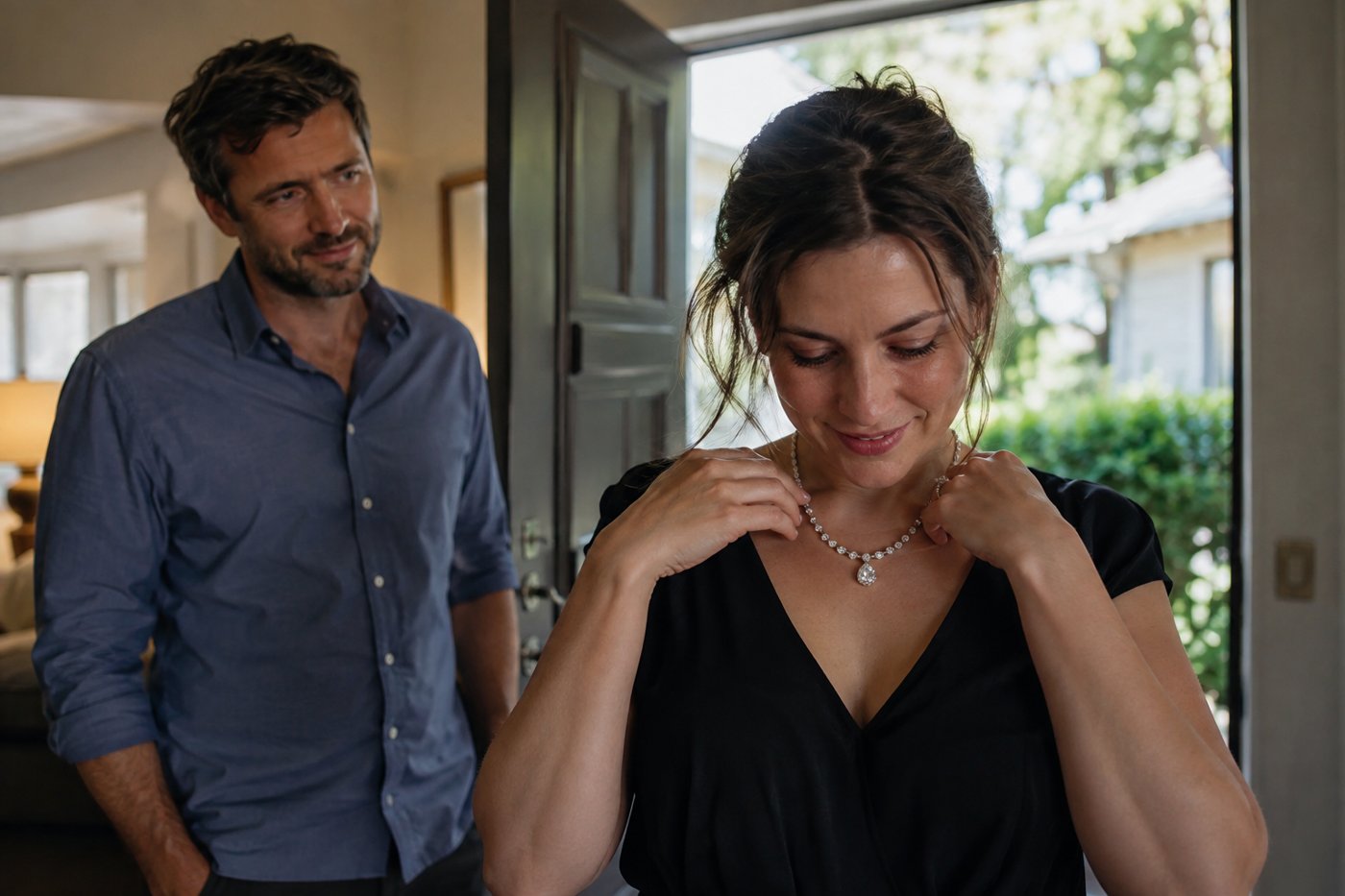



COMMENTS
Loading…