HOA President Tried to Evict Me—Then Learned I Owned the Property
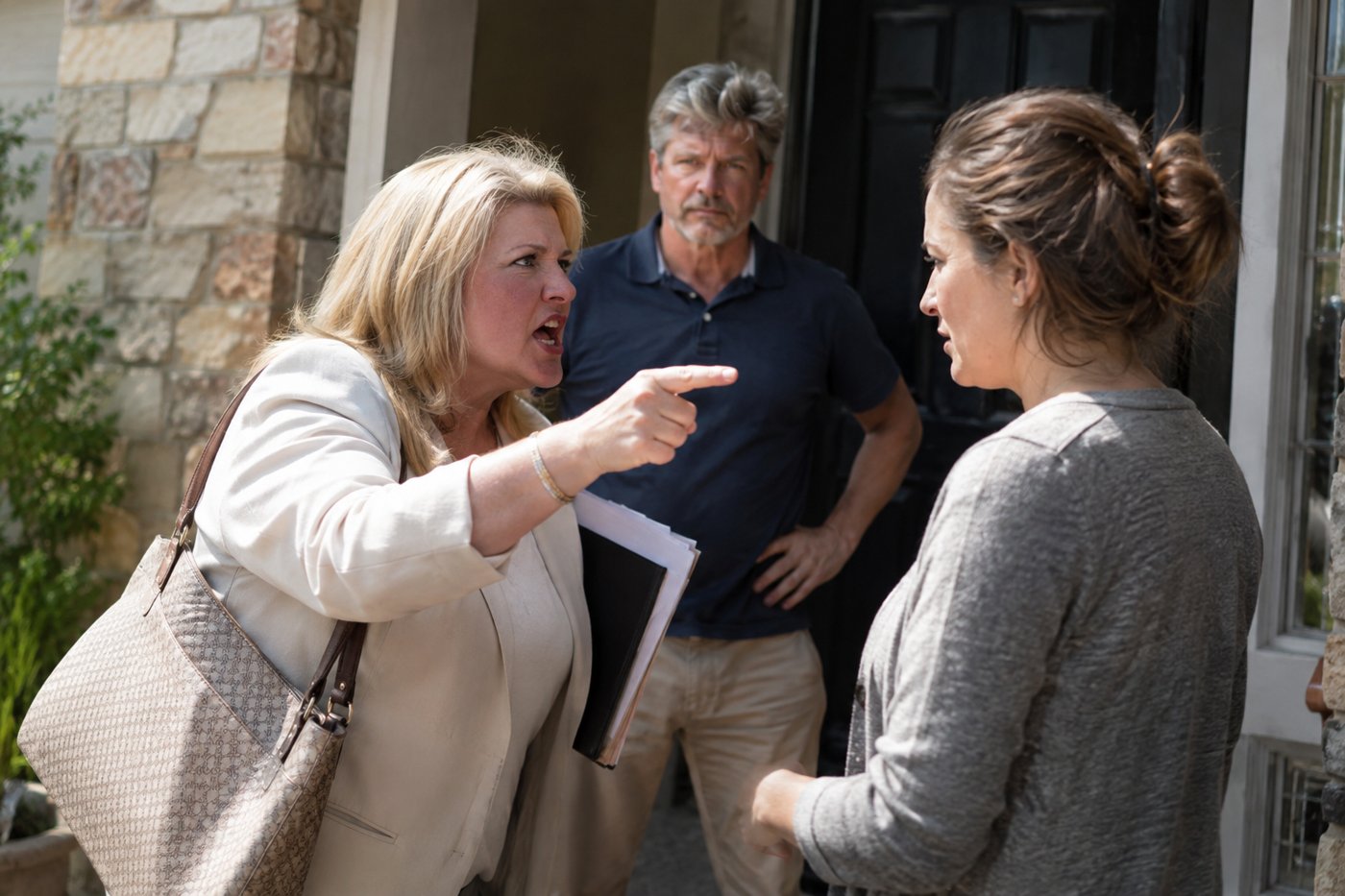
Standing on asphalt I had legally purchased just eleven days earlier, I was given exactly five minutes by the neighborhood HOA president to clear out.
She was entirely oblivious to the fact that I held the deed.
So were the two association trustees trailing in her wake as she marched across the sunlit parking lot.
I had propped an elbow on the front fender of my pickup truck outside a low-profile red-brick commercial building when she came charging toward me, a hefty navy-blue ring binder clamped firmly under her arm.
She came to an abrupt halt roughly six feet away.
“May I help you with something?”
“I seriously doubt it.”
Her eyes narrowed to thin slits.
“You happen to be standing on private property.”
“I’m fully aware of that.”
“Then you need to pack up your things and leave immediately.”
I shifted my gaze past her shoulder toward the building’s exterior facade.
A polished bronze plaque was affixed to the masonry right beside the double glass doors:
CEDAR GLEN HOMEOWNERS ASSOCIATION
My eyes drifted back to her expectant face.
“I’m not blocking traffic, and I’m not bothering anyone.”
Her thumb popped the metal levers on the side of her binder with a sharp click.
“You’ve been stalking the perimeter of this building taking photos for twenty minutes.”
“That’s true.”
“You were snooping behind the mechanical units in the rear alley as well.”
“Also true.”
“Care to explain why?”
“Because I needed photographs of the structural condition.”
One of the men flanking her folded his arms over his chest, his posture stiffening.
It was immediately obvious that this woman was completely unaccustomed to hearing responses that didn't include an apology or a stammer.
She leveled a rigid forefinger straight at the hood of my truck.
“YOU HAVE FIVE MINUTES TO CLEAR OFF HOA PROPERTY.”
I met her fiery gaze without flinching.
“I don’t belong to your HOA.”
A smug, self-satisfied grin pulled at the corners of her mouth.
She looked as though she had just watched me walk straight into an open bear trap.
“THEN YOU’RE TRESPASSING.”
For a brief second, I considered pulling out my paperwork and ending the drama right there on the spot.
Instead, I simply offered:
“Go ahead and call the police.”
Her eyebrows climbed halfway up her forehead.
“Are you actually daring me?”
“I’m openly encouraging you.”
She snatched a smartphone out of her blazer pocket.
“Have it your way.”
She punched three digits into the keypad and hit speaker.
Less than twelve minutes later, two white-and-blue municipal patrol units rolled into the lot.
The HOA president was already power-walking toward them before the patrolmen could fully swing their car doors open.
She stabbed her finger violently in my direction.
“ARREST HIM.”
The lead officer stepped out, lifting an open, calming palm into the air.
“Ma’am, let’s take a breath and slow down.”
“He is trespassing on our association grounds! I gave him a direct order to leave the premises, and he defied me to my face!”
The patrolman turned his attention across the tarmac to me.
“Sir, do you have some official identification on you?”
“Sure do.”
I pulled my driver’s license from my wallet and handed it over.
Then I reached into the open cab of my truck, pulled a single folded sheet of paper from the leather folder sitting on my dashboard, and passed it to him.
“What’s this document?” the officer asked, unfolding the paper.
“Wake County register of deeds printout.”
The patrolman smoothed the crease flat against his clipboard.
He checked my full legal name.
He checked the parcel identification code.
He looked up at the brick commercial suite with the HOA sign.
He looked back down at the county stamp.
His brow pinched in visible confusion.
Slowly, deliberately, he pivoted around to face the expectant HOA president.
“Ma’am, we have a bit of a situation here.”
Her voice snapped with impatient venom:
“WHAT SITUATION?”
Before the patrolman could formulate a polite explanation, I stepped forward and answered for him.
“You’ve spent the morning ordering your brand-new landlord off his own property.”
For the first time since she had stormed across the asphalt, Karen Whitlock stood entirely paralyzed, utterly robbed of words.
And that was merely the opening bell of a very complicated chapter.
My name is Ethan Caldwell.
I was forty-seven years old when I closed the purchase on the property at 4107 Cedar Glen Parkway, situated in a quiet commercial pocket just outside Raleigh, North Carolina.
The building wasn't a showpiece of modern architecture.
It was a functional, single-story commercial strip built from standard utility red brick back in the late nineties.
Enclosing close to 4,800 square feet of commercial floor space.
Twenty-three striped parking stalls on the front asphalt.
A narrow apron of bermudagrass bordering the roadway.
A concrete-block trash enclosure housing two dumpsters in the back.
A shallow drainage swale running the length of the western boundary line.
And an overall lot measuring just shy of two wooded acres.
Internally, the structure was divided into three tenant suites.
Suite A was rented out to a mid-sized regional property-management company.
Suite B was occupied by an independent family-owned insurance brokerage.
And Suite C—which accounted for nearly half of the entire usable floor plan—was leased to the Cedar Glen Homeowners Association.
That single technical detail was about to carry the weight of an anvil.
The association conducted business inside the suite.
They did not own the building.
They never had held title to a single brick.
I didn’t reside inside Cedar Glen.
I didn't own a home behind its ornate wrought-iron entrance gates.
I didn't pay monthly HOA dues or special capital assessments.
I was not subject to their neighborhood architectural guidelines or their restrictive covenants simply because my commercial plot bordered their residential subdivision.
Put plainly, I was merely the private investor who had just purchased the building in which they rented office space.
Karen had no idea the deed had transferred because the sale had been completed with zero publicity.
There were no massive SOLD banners hammered into the front lawn.
No press release had been published in the county business journal.
No celebratory ribbons had been cut.
And I hadn't yet dropped in to introduce myself to the three commercial occupants.
That was entirely by design.
I wanted an undisturbed, objective walk-through of the physical property before I sat down across from anyone to talk business.
Commercial real estate was not an unfamiliar sandbox for me.
Before venturing into property investment, I had spent twenty-two grueling years working in commercial facilities maintenance and general contracting.
I wasn’t some deep-pocketed institutional conglomerate sweeping in to buy up suburban real estate.
I was an independent owner with three modest, hard-working assets.
A medical clinic down in Cary.
A small flex-warehouse near the interstate.
And, as of that Tuesday morning closing, 4107 Cedar Glen Parkway.
I had financed a significant portion of the deal through a commercial mortgage with a regional bank.
My wife, Dana, and I had also committed a substantial chunk of our personal life savings into the equity down payment.
The property carried its fair share of deferred maintenance.
Minor roof leaks requiring torch-down patching.
Asphalt seams that needed crack-sealing and restriping.
A poorly graded drainage swale that pooled water during summer storms.
A flickering security floodlight mounted high on the back masonry wall.
And an aging rooftop package HVAC unit that would almost certainly require full replacement within twenty-four months.
This purchase was an active, roll-up-your-sleeves investment.
It wasn't a trophy piece to brag about at cocktail parties.
The previous owner was a seventy-four-year-old gentleman named Howard Bell.
Howard had held title to the parcel for nineteen continuous years.
He was tired, stiff-jointed, and completely burned out on fielding tenant maintenance requests.
His wife was eager to spend their golden years traveling through national parks in an RV.
His grown children had established careers in other states and wanted nothing to do with commercial real estate.
So he put the property on the commercial exchange.
During our forty-five-day due diligence period, Howard provided copies of every active tenant lease.
That was the moment I first noticed the bizarre dynamic surrounding Cedar Glen's leasehold.
Their lease was a patchwork relic.
Decades old.
It had been rewritten, amended, and extended multiple times across twenty years.
The foundational lease had been drafted all the way back when the residential development was still under the control of its master developer.
Over the ensuing decades, the association had expanded into larger square footage as the community grew.
They had bargained for dedicated parking stalls.
Exterior equipment storage privileges.
Signage rights on the front facade.
After-hours permission to hold evening board hearings in the building.
The contract granted the HOA broad rights to use Suite C and nonexclusive access to the common parking areas.
Yet legal title to the real estate remained one hundred percent in the hands of the property owner.
It was an elementary legal distinction.
It should have been obvious to anyone capable of reading an introductory lease clause.
Yet somehow, across years of casual conversation, that reality had completely evaporated from Karen's mind.
Howard had tried to give me a subtle heads-up before closing.
“Cedar Glen can be quite a handful,” he had mentioned over coffee at the title office.
“What kind of handful?”
He had let out a tired, cynical laugh.
“Depends entirely on the person running their board.”
“Who’s sitting in the president’s seat right now?”
Howard slouched back in his swivel chair.
“Karen Whitlock.”
The sheer exhaustion dripping from his voice made me chuckle.
“Is she really that difficult to deal with?”
“She behaves as if the association owns every square foot of land between here and the county line.”
“Did you ever push back and set the record straight?”
“Dozens of times.”
“And how did that go?”
Howard shrugged his shoulders with an air of complete defeat.
“She’d just give me a forty-minute lecture on fiduciary duty and keep doing whatever she wanted.”
I should have listened to him much more carefully.
Karen had taken over the presidency approximately three years before I arrived on the scene.
According to Howard, she was a relentless worker and extraordinarily organized.
When she took over, the association’s administrative archives had been a chaotic mess of lost paperwork and delinquent billing, and she had single-handedly whipped their files into pristine order.
I want to be completely balanced and give credit where credit is due.
Cedar Glen wasn't an unruly mess because of Karen.
In many respects, she was a remarkably effective civic leader.
She had re-bid their community landscaping contracts, saving thousands every quarter.
She had built up their reserve replacement fund to its healthiest level in a decade.
She had pressured the township into repaving neglected residential side streets.
She organized quarterly neighborhood safety forums and block watch meetings.
She oversaw the installation of handsome period lanterns at the subdivision gate.
A significant portion of the homeowners in Cedar Glen genuinely held her in high regard.
The fundamental problem was that her successes slowly warped her understanding of her legal reach.
Karen stopped operating under the guiding premise:
I am an administrator authorized to carry out the specific powers granted to our board.
She began behaving under a far more expansive delusion:
If an issue impacts Cedar Glen, I have sovereign jurisdiction over it.
Those are two radically different perspectives.
The physical arrangement of the commercial building only fed that growing misconception.
Cedar Glen had leased Suite C for nearly fifteen uninterrupted years.
Their monthly board sessions took place inside its main conference room.
Every deed restriction file, architectural review form, and billing record was stored in its steel cabinets.
The neighborhood’s name was engraved on the exterior marquee by the road.
Karen had a brass key to the front door.
The association’s third-party community manager had a key.
Board trustees walked in and out as if it were a municipal town hall.
Delivery vans dropped packages addressed to Cedar Glen directly on the porch.
To the eight hundred residents living in the subdivision across the street, the building was simply the HOA office.
Over the passage of time, Karen had entirely stopped distinguishing between:
the space our HOA rents
and
the real estate our HOA owns.
Careless phrasing has a insidious way of calcifying into accepted truth when nobody bothers to challenge it.
Howard had spent the better part of a decade letting little things slide just to keep the peace.
Karen would hire crews to plant ornamental junipers along the exterior walkway without ever running it past him.
She ordered custom reserved parking signs and had them bolted into the curb stops.
On one occasion, she brought in a painting contractor to coat two entire curbs in fire-lane red without consulting the landlord.
On another, she had an electrician replace an exterior walkway fixture with a coach lantern that matched the neighborhood’s residential aesthetic.
Howard would grumble and send a mild complaint.
Karen would fire back a formal memo insisting the alteration was vital for neighborhood administration.
He would cite a clause in the commercial lease.
She would cite a resolution passed by her board of directors.
Neither side wanted to spend five thousand dollars on billable legal hours over a five-hundred-dollar lighting fixture.
So the small boundary violations compounded, month after month, year after year.
By the time I sat down at the closing table, Karen treated Howard Bell like a distant, absentee paper-pusher who held a technical deed on paper but had no moral right to meddle with “association grounds.”
Howard couldn't wait to hand over the keys and walk away forever.
And I was walking straight into the middle of twenty years of uncorrected drift.
Even knowing that history, I saw no reason to initiate our relationship on a hostile footing.
My plan for that morning was straightforward and entirely professional.
Walk the exterior grounds.
Record baseline structural and cosmetic conditions.
Introduce myself to the managers of all three suites.
Review outstanding service requests.
And quietly institute a clear, respectful protocol for any future exterior work.
No grandstanding. No conflict.
On the eleventh morning following the closing, I pulled my truck into the lot at 9:30 on the dot.
On the passenger seat, I had staged my equipment: a digital SLR camera, a rolling distance-measuring wheel, a digital moisture probe, a clipboard, and a certified copy of our closing settlement packet.
I started out on the front parking tarmac.
Photographing spiderweb cracks in the asphalt.
Inspecting the slope of the curbing.
Checking the stability of the concrete wheel stops.
Examining the rust on the tall exterior light poles.
Next, I worked my way around to the rear service lane behind the building.
I documented a crushed aluminum downspout elbow that was dumping rainwater right against the foundation.
I pulled out my tape measure to check clearance around the three commercial condensing units.
I logged dark moisture staining and white mineral efflorescence creeping along the northwest corner of the foundation brickwork.
Just routine, standard maintenance due diligence for any prudent property owner.
That was the exact moment Karen caught sight of me through the window.
As fate would have it, she was inside Suite C setting up chairs for an executive board session scheduled for later that evening.
Two other board members were working alongside her.
Martin Keene, the association’s long-standing treasurer.
And Susan Doyle, the board secretary.
Karen had been tracking my every move through the mini-blinds of the conference room.
I only found out that detail weeks later during an informal conversation with Martin.
From Karen’s perspective, an unfamiliar middle-aged man in work boots had rolled up in a pickup, paced the perimeter of the facility, aimed a camera lens at the exterior doors and utility meters, and rolled a distance wheel across the asphalt.
Looking back on it objectively, I can understand why an unfamiliar figure pacing the property raised an eyebrow.
Walking outside to say hello and ask who I was would have been completely sensible.
Phoning the commercial property management firm in Suite A to check on scheduled maintenance would have taken two minutes.
Even calling the local non-emergency dispatch line to ask for an officer to drive by would have been understandable if she felt genuinely uneasy.
Her fatal mistake was not that she was cautious.
Her fatal mistake was that she decided she already knew the answer before she ever asked the question.
When she charged out across the asphalt to confront me, she didn't open with:
“Good morning, who are you?”
She opened with:
“May I help you?”
The words themselves might look polite in print.
The tone carrying them was pure, icy condescension.
I told her I was doing just fine on my own.
She demanded to know why I had a camera pointed at the building.
I answered her directly and honestly.
That was when she barked her ultimatum:
“YOU HAVE FIVE MINUTES TO CLEAR OFF HOA PROPERTY.”
I calmly replied:
“I don’t belong to your HOA.”
And that was the catalyst that brought that triumphant, condescending smirk to her face.
“THEN YOU’RE TRESPASSING.”
Standing there in the morning sun, watching her smug expression, I realized that Howard Bell hadn’t exaggerated a single word.
I could have easily pulled my business card from my wallet, pointed to the county deed in my truck, and defused the entire scene in thirty seconds.
Looking back with a decade of hindsight, that was almost certainly the mature path to take.
Yet there was something so breathtakingly arrogant about her unearned authority that a stubborn spark flared inside me.
I wanted to see exactly how far down the rabbit hole of delusion she was willing to sprint.
So when she threatened to drag local law enforcement into a peaceful parking lot, I didn't back down.
“Go ahead and call the police.”
Admittedly, it wasn't my finest exercise in public relations.
My wife, Dana, made certain to drive that point home over dinner that night.
With great enthusiasm.
And she was entirely right.
Karen made the call to 911 dispatch.
While we stood waiting on the hot pavement for the sirens to arrive, Martin Keene slowly wandered over toward my truck.
He was a retired accountant in his mid-sixties.
Quiet, observant, with round spectacles and a cautious demeanor.
He cleared his throat and asked:
“Are you here with the power company?”
“No.”
“An insurance appraiser?”
“Nope.”
“Land surveyor doing boundary work?”
“Not that either.”
Martin pushed his glasses up his nose, genuinely baffled.
“Then what exactly are you doing out here with a camera and a measuring wheel?”
“Conducting a structural inspection of the property.”
“Under whose authorization?”
“My own.”
Martin stared at me, blinking repeatedly as he tried to fit that answer into the universe as he understood it.
Before he could ask another question, Karen snapped across the asphalt like a whip.
“Martin! Do not engage in conversation with that man!”
I glanced over at her.
She had her chin tilted upward, her eyes fixed on the entrance driveway.
“The authorities will be here in two minutes.”
“I’m in no rush,” I replied.
Susan Doyle looked considerably less confident than her president.
Her eyes darted nervously between my rolling measuring wheel, the tidy leather folio sitting on my hood, and the calm expression on my face.
She took two steps closer to Karen and whispered under her breath:
“Should we maybe ring the management agency next door just to make sure they didn’t hire him?”
Karen waved a dismissive hand without even turning her head.
“I already know what they’ll say. This lot is our jurisdiction.”
Looking back, that answer was almost poetic in its irony.
She didn’t have the faintest clue what they would say.
At 9:58 AM, two patrol cars turned into the parcel with their lights off.
Officer Daniel Ruiz and Officer Megan Harper.
Karen practically sprinted toward their cruiser the second the transmission clicked into park.
She had her forefinger outstretched like a spear before their boots hit the pavement.
“ARREST HIM.”
Officer Ruiz held up a broad, steady hand.
“Ma’am, let’s take a breath and tell me what’s happening.”
“He is trespassing on our association grounds! I gave him a lawful order to vacate, and he openly refused!”
Ruiz turned his eyes toward me.
“Sir, may I see your identification?”
“Of course, Officer.”
I handed him my North Carolina driver’s license.
Then I reached over to the leather folio on my hood, extracted the recorded county deed document, and handed it to him.
“What am I looking at here?” Ruiz asked.
“Wake County register of deeds conveyance records.”
The officer spread the paper flat on his clipboard.
He checked the grantor and grantee names.
He verified my legal signature.
He reviewed the parcel ID number.
He glanced over at the brick commercial suite displaying the brass HOA plaque.
He looked back down at the county stamp.
His eyebrows slowly arched.
Finally, he turned back to Karen, his voice dropping into a very measured, cautious register.
“Ma’am, we have a bit of a situation here.”
Karen’s patience shattered instantly:
“WHAT SITUATION?”
Before Ruiz could craft a gentle explanation, I stepped around the fender of my truck.
“You’ve spent the morning ordering your brand-new landlord off his own property.”
Karen Whitlock went completely rigid.
The silence that fell over the parking lot was thick enough to choke on.
And that was the precise moment our real relationship began.
Karen stared at me as if I had spoken in ancient Greek.
Martin Keene’s mouth dropped open in an involuntary 'O'.
Susan Doyle let out a tiny, breathless squeak:
“Oh dear.”
Karen was the first to fight her way back to speech.
“No.”
I crossed my arms over my chest, leaning back against my tailgate.
“No what?”
“You do not own this facility.”
“I assure you, I do.”
“This building belongs entirely to the Cedar Glen Homeowners Association!”
“No, ma’am, it certainly does not.”
“Our association has operated out of this facility for fifteen consecutive years!”
“You lease Suite C.”
“It is our administrative headquarters!”
“Yes, by virtue of a lease.”
“Our primary office!”
“Correct, which you rent.”
“Which gives us the right to—”
“No. It gives you the contractual right to occupy interior space inside Suite C under the terms of your lease.”
That was our very first substantive exchange as landlord and tenant.
Karen spun violently toward Officer Ruiz.
“He’s fabricating this! He forged that paper!”
Ruiz held up both hands in a classic defensive gesture.
“Ma’am, I am a patrol officer, not a chancery judge. I do not settle real estate title disputes on the asphalt of a parking lot.”
It was an eminently sensible position.
He turned back to me.
“Sir, do you have corroborating documentation with you today?”
“Plenty of it.”
“May I see it?”
I unzipped the main compartment of the leather folio.
I pulled out the certified copy of the recorded deed.
The signed closing settlement disclosure bearing the bank and title company stamps.
The county tax parcel map showing the exact boundaries.
The certified tenant estoppel certificates and active rent roll.
And the original lease abstract for Suite C.
I kept our private financial figures folded away, revealing only the public records and legal closing instruments necessary to prove legal chain of title beyond any reasonable doubt.
Officer Harper leaned over Ruiz’s shoulder, comparing the physical street address on the building facade to the legal description on the recorded deed.
Karen stood watch, the iron fortress of her certainty visibly crumbling around her.
She yanked her phone from her pocket with trembling fingers.
“I am calling our professional community manager right this second!”
“Be my guest,” I said pleasantly.
That cordial response only seemed to infuriate her further.
She dialed the commercial management agency in Suite A, jammed the phone onto speaker, and waited through three agonizing rings.
A woman's voice answered:
“Cedar Glen management office, Melissa speaking.”
Karen blurted into the phone:
“Melissa! I’m out in the front lot right now. There is a strange man out here claiming he purchased the association’s property!”
A brief, heavy silence hung over the speaker.
Then Melissa asked cautiously:
“Is his name Ethan Caldwell?”
Karen went totally, utterly dead silent.
For a fleeting second, I almost felt a twinge of pity for her.
Almost.
“Yes,” Karen finally managed to choke out.
Another pregnant pause lingered on the line.
“Karen… Mr. Caldwell is the new property owner.”
Martin exchanged a wide-eyed look with Susan.
Susan stared down at the asphalt between her sensible walking shoes.
Karen’s voice jumped an octave:
“You knew about this sale?”
“Of course we did. We received the formal landlord transition notice and tenant estoppels.”
“When did this happen?”
“We received the preliminary files last month, and the final transition letter arrived late last week.”
“Why on earth wasn't I informed immediately?”
“Karen, I emailed the official transition memorandum to the entire board distribution list on Thursday morning.”
Martin’s hand plunged into his slacks.
He pulled out his phone, his thumb tapping furiously across the glass screen.
A second later, his shoulders slumped.
“Oh boy.”
Karen whirled around on him like a storm front.
“What?”
Martin cautiously turned his screen toward her face.
“It’s right here. In our board inbox. Received Thursday at 10:14 AM.”
Watching that realization wash over her features was genuinely agonizing to witness.
Karen’s cheeks flushed into a deep, furious scarlet.
She turned her frustration back onto Melissa over the phone:
“So just because he bought the building, that gives him free rein to roam our property snapping photographs whenever he feels like it?”
Melissa responded with the calm, rehearsed patience of a woman who had spent twenty years mediating suburban disputes.
“Karen, he owns the entire real estate parcel. Access to your private, locked leased suite is strictly governed by the covenants in your lease agreement. But inspecting the exterior facade, the roof, and the common parking facilities is completely standard procedure for a property owner.”
Karen jabbed her finger at me again, her voice shaking:
“He was around behind the building photographing the exterior wall of our office!”
Melissa asked gently:
“Did he break into your private offices?”
“No.”
“Did he attempt to force open your locked file storage?”
“No!”
“Did he make threats or act aggressively toward anyone?”
“No!”
“Then Karen, please… do not escalate this matter any further until our legal counsel can review the contract terms.”
It was sound advice.
Unfortunately, it arrived approximately twenty minutes too late.
Two municipal patrol officers were already standing on the blacktop.
Officer Ruiz adjusted his utility belt and turned his attention back to Karen.
“Ma’am, do you still wish to file a formal trespassing complaint and request this gentleman’s removal?”
Karen looked at Ruiz.
She looked at me.
She looked down at the recorded deed resting on my truck hood.
She cleared her throat with difficulty.
“He should have introduced himself properly the moment he stepped foot on the grounds.”
In all honesty, that was a fair critique.
I gave her a small, respectful nod.
“I certainly could have done that.”
She blinked, startled by the unexpected concession.
Then I added:
“Just as you could have asked a simple, civil question before threatening to throw me off my own land.”
Her lips pressed into a tight, thin line.
The patrol officers filled out a standard informational incident report and prepared to head out, having determined there was zero criminal basis to treat me as a trespasser on property I owned.
They didn’t declare me king of the parking lot.
They didn't berate Karen for wasting municipal resources.
They didn't arrest anyone.
They simply declined to transform a common landlord-tenant communication failure into the felony arrest Karen had demanded.
Before climbing back into his patrol unit, Officer Ruiz gave us both some parting counsel:
“This sounds like an administrative matter that the owner, the tenant, the management firm, and your attorneys need to sit down and clarify like adults. Keep it peaceful.”
It was the wisest guidance anyone offered all morning.
Neither of us was quite ready to take it immediately.
Once the patrol cruisers rolled out of the driveway, Karen remained rooted near the glass entrance of Suite C.
Martin cleared his throat nervously.
“Perhaps we should head inside and start organizing the agenda for tonight.”
Karen ignored him completely.
She kept her eyes locked on me.
“How long have you owned this property?”
“Eleven days.”
“And it never once occurred to you to come inside and introduce yourself to the board?”
“I was planning to do exactly that today.”
“By pacing around taking spy photos of us?”
“By conducting an objective, baseline physical condition survey of my commercial asset before sitting down with my tenants.”
She looked down at the digital camera sitting on my truck fender.
“Were you aiming that telephoto lens into our private office windows?”
“Not for a single second.”
“Taking pictures of staff members?”
“No.”
“Snooping at association files?”
“Of course not.”
“Then what on earth were you taking pictures of?”
“Deteriorated flashing on the roofline. Spiderweb cracks in the asphalt. Corroded exterior light standards. Clearances surrounding your mechanical condensing units. Crushed gutter downspouts. And mineral efflorescence and water staining creeping along the western brick foundation.”
Susan Doyle murmured softly from two steps behind Karen:
“That actually sounds like completely routine building maintenance.”
Karen whipped her head around and shot Susan a glare so sharp it ended the discussion on the spot.
At that point, the sensible thing would have been to pack my gear into the truck and leave.
Instead, my stubborn streak dug its heels in.
“Actually, since we’re all out here enjoying the morning sun, let me introduce myself properly.”
Karen stood rigid as a fence post.
“My name is Ethan Caldwell.”
“I am well aware of your name, Mr. Caldwell.”
“I am your landlord.”
Her jaw set into stone.
“We have an active, binding commercial lease agreement.”
“Yes, you certainly do.”
“An executed multi-year contract that grants us protected rights.”
“That is entirely correct.”
“You do not have the right to interfere with the lawful operations of the Cedar Glen HOA.”
“I have no desire whatsoever to interfere with your operations.”
“We have tenant protections under North Carolina law.”
“Yes, you do.”
I held her gaze.
“And I have owner protections under the exact same law.”
That was the one reality she simply could not bring herself to stomach.
Within forty-eight hours, an oversized courier envelope arrived on my desk: a six-page legal missive from the association’s retained general counsel.
It wasn't explicitly belligerent.
Not in the crude sense.
It cited standard contractual covenants regarding quiet enjoyment and demanded that any future landlord inspections impacting the leased premises strictly adhere to contractual written-notice timelines.
Perfectly standard legal maneuvering.
My personal real estate attorney, Rachel Monroe, read through it with an amused smirk on her face.
Then she burst into laughter.
“What’s so amusing about a six-page legal threat?” I asked.
“Ethan, this is boilerplate posture.”
“Six dense, single-spaced pages over an awkward parking lot chat is boilerplate?”
“For commercial real estate attorneys, a six-page letter is practically an invitation to coffee.”
I didn't find it funny.
Rachel did.
Then she gave me a frank, unvarnished breakdown of our legal reality.
The HOA possessed legitimate, enforceable leasehold rights.
Holding title to the real estate did not mean I had carte blanche to stroll through their private conference room whenever curiosity struck.
They had a lawful right to peaceable possession without unwarranted interference from their landlord.
The lease agreement governed all physical access.
State statutes protected commercial tenants from landlord overreach.
Advance notice periods mattered.
A tenant's quiet enjoyment had to be protected.
I couldn't adopt Karen's imperious posture simply by brandishing my deed and declaring:
I own the place.
Ownership came with legal boundaries just as rigid as tenancy.
That lesson struck home and stayed with me.
Rachel drafted a professional, polite reply confirming our full intention to abide by the terms of the existing lease.
At the very same time, she requested complete municipal permits and landlord approval documentation for several exterior modifications the HOA had installed across the parcel without written consent.
That simple request blew open a massive filing cabinet of unaddressed issues.
Custom reserved parking signs bolted to curbs.
External security cameras mounted to the brick masonry.
A freestanding corrugated metal storage shed erected behind the dumpster enclosure.
Uninspected electrical conduits wired across the rear wall.
Unapproved landscaping shrubs.
Curbing painted fire-lane red without municipal variance.
And a commercial aluminum flagpole anchored into the front turf.
Most of these additions weren't dangerous.
Several would ultimately be permitted to remain in place.
However, the master commercial lease explicitly mandated prior written owner authorization for any exterior alterations or additions.
Howard Bell had evidently given verbal nods to a couple of items during casual phone chats over the years.
For the rest, there wasn't a single shred of paperwork on file.
Karen immediately fired off an email denouncing our audit as vindictive retaliation.
It was nothing of the sort.
I had dispatched identical baseline audit inquiries to the property management firm in Suite A.
And to the independent insurance agency in Suite B.
New ownership.
Establishing a clean baseline for future files.
That is fundamental, standard practice following any commercial property acquisition.
That was the catalyst that ignited the parking dispute.
For over a decade, the Cedar Glen board had operated under the assumption that the twelve parking bays directly fronting Suite C were their exclusive, private property.
The executed lease agreement stated something entirely different.
Under the actual contract, the association held exclusive daytime use of six designated stalls during normal business hours, alongside shared access to the general pool of twenty-three common parking bays.
Yet somewhere along the way, Karen had bolted custom HOA RESERVED metal signs onto all twelve stalls.
That unauthorized land grab had directly choked the operations of the insurance agency in Suite B.
For years, the insurance broker’s clients had been forced to circle the lot or park out on the street shoulder because half of the HOA’s marked stalls sat completely empty all afternoon.
Howard Bell had never possessed the backbone to enforce the lease terms.
I did.
Politely, but without hesitation.
I issued a formal written notice advising that the six unauthorized reserved signs would be removed by our maintenance contractor unless the association could provide an executed lease amendment authorizing the additional stalls.
Karen shot back with fiery indignation:
The Cedar Glen Homeowners Association has exercised open, continuous, and uninterrupted control over these twelve spaces for more than ten years.
Rachel replied on my behalf with cool legal precision:
Historical usage does not modify an unambiguous written commercial lease. Please provide a copy of the executed amendment if one exists.
None existed.
The six unauthorized signs were cleanly unbolted and taken down.
Karen was beside herself with rage.
At the very next Cedar Glen board meeting, she painted me to the community as a ruthless, aggressive commercial landlord bent on harassing their neighborhood.
I know this because Martin Keene phoned me the following morning.
He sounded distinctly uncomfortable.
“Ethan, I felt obligated to give you a heads-up about what was told to the homeowners last night.”
“Why tell me any of this, Martin?”
“Because I was standing right beside her on the blacktop the morning she called the police on you.”
A fair point.
He continued:
“She’s telling residents that you’re scheming to evict the HOA and take our community headquarters away.”
“I’m doing nothing of the kind.”
“I know you aren’t.”
“Their lease has three full years remaining, plus a five-year option to renew under standard fair-market terms.”
“I’ve read the contract, Ethan. I know.”
“Then why tell the community that?”
Martin exhaled a long, heavy breath over the receiver.
“Karen simply cannot tolerate situations where she doesn't hold total control.”
There it was, stripped of all pretense.
I made a deliberate, disciplined decision not to attend their open board meetings.
I wasn’t a homeowner or a member of their association.
I refused to air our disputes on local social media groups.
I never lobbied neighborhood homeowners behind Karen’s back.
Whenever communication was necessary, I conducted it strictly through the professional property manager or our attorneys.
That disciplined professional boundary irritated her far more than an emotional shouting match ever could have.
She desperately wanted to turn me into an HOA political adversary, but she couldn't, because I flatly refused to step onto her political chessboard.
I wasn't a rival politician.
I was simply a commercial landlord managing an executed lease.
Then, three months into my ownership, the roof sprang a leak.
Because in commercial real estate, the roof always springs a leak.
A fierce summer thunderstorm battered the area, driving torrential rain beneath deteriorated copper flashing situated directly above Suite C.
Water soaked through an acoustic ceiling tile, collapsed into a sodden heap, and left a wide brown ring on the conference room carpet.
Karen fired off an urgent, panicked email at 6:12 in the morning.
By 7:30 that very same morning, my roofing contractor was standing in the lot with an extension ladder.
A heavy-duty temporary patch was secured before mid-morning, followed by a permanent membrane replacement forty-eight hours later.
I covered the entire invoice out of my operating account.
Without a single word of debate or delay.
Because under the terms of the commercial lease, structural weatherproofing of the roof was the landlord’s explicit obligation.
Karen appeared almost disoriented by how rapidly the crisis was resolved.
She had clearly spent the morning gearing up for an epic administrative battle.
There was simply no battle to be had.
A week later, my cell phone rang.
It was a direct phone call, not a formal email or an attorney’s letter.
“You handled that roof repair remarkably fast.”
“It’s my building, Karen.”
A brief beat of silence echoed over the line.
Then:
“Howard would have spent three weeks arguing about contractor bids.”
“I can’t speak to how Howard handled his business.”
Another hesitation.
“Thank you, Ethan.”
“You’re welcome.”
It was a very brief conversation.
Yet beneath the surface, the dynamic between us had fundamentally shifted.
The next major test of our relationship arrived six months down the road.
The Cedar Glen board voted to undertake a comprehensive interior renovation of Suite C.
They wanted an expanded executive boardroom.
A modern reception counter.
A secure, fire-rated records archive.
And an upgraded staff kitchenette.
To their credit, they submitted professional architectural blueprints for landlord review.
Following the required procedure to the letter this time.
I sat down with my structural and mechanical engineer to review the construction plans.
He flagged a critical code violation within three minutes.
One of their proposed interior partition walls was drawn directly across the required service clearance pathway for the central mechanical room housing the building's main water shutoff and electrical panels.
We issued a formal letter denying approval for that specific partition wall, while conditionally approving the remainder of the buildout.
Karen phoned the second she opened the letter.
“You rejected our entire renovation!”
“No, I did not.”
“The letter literally says approval is denied!”
“Approval for one specific interior wall layout is denied. The rest of your buildout is approved with standard conditions.”
“Our board took a formal vote to approve this exact layout!”
“Karen, a neighborhood board vote cannot override state commercial building and fire codes.”
“We require that records archive in that exact footprint!”
“You cannot erect a permanent drywall partition across an emergency mechanical access route.”
“We’ve spent four months coordinating these blueprints!”
“I didn't design a wall blocking an equipment door, Karen.”
She slammed the phone down with a resounding crack.
Real progress, as they say, is rarely a straight line.
Two days later, Martin Keene called my office.
“Ethan, can we arrange a walk-through at the building?”
We set it up.
Karen arrived.
Susan Doyle came along.
Their general construction lead joined the walk-through.
Alongside my mechanical building engineer.
Noticeably absent from the gathering: municipal police cruisers.
An unmistakable step in the right direction.
We unlocked the metal service door to the utility corridor.
My engineer pulled out his clipboard and demonstrated precisely why the mandatory thirty-six-inch clearance was required for equipment maintenance and fire inspection.
The HOA’s general contractor looked at the piping, scratched his chin, and nodded in immediate agreement.
Karen studied the floor, then looked up at my engineer.
“What if we shifted that archive partition wall eighteen inches to the east?”
My engineer snapped out his metal tape measure, checked the clearance against the blueprints, and smiled.
“That works perfectly. Keeps you fully compliant with code.”
Done.
A conflict that had generated nine furious emails and a slammed phone evaporated in seven minutes flat, simply because everyone stood together in the same room looking at the exact same copper pipes.
That encounter taught me an invaluable lesson as well.
Written contracts are indispensable.
Yet sometimes, confronting physical, three-dimensional reality resolves things far faster than legal posturing.
The interior renovation moved forward without another hitch.
The finished suite looked genuinely impressive.
Clean, professional, and functional.
When the final punch-list items were completed, Karen sent me a polite note inviting me to inspect the finished space.
I stepped through the front doors of Suite C for the very first time since acquiring the deed eleven months earlier.
With explicit prior invitation.
Karen noted that detail immediately.
“You waited.”
“Waited for what?”
“To be invited in.”
“It’s your leased premises, Karen.”
She looked at me intently for several long seconds.
Then she gave a quiet, understanding nod.
Perhaps that was the exact moment the concept of boundaries finally resonated with her from the other direction.
Holding the recorded title to the building did not turn their private office into my personal playground.
Leasing an office inside the building did not make the commercial real estate theirs to dictate.
Two distinct, legitimate bundles of legal rights existed simultaneously at the very same street address.
Neither right canceled out the other.
That was the foundational principle of property law.
And it became the bedrock upon which our working relationship finally stabilized.
The following spring, the entire parking lot was scheduled for milling and resurfacing.
It was an immense capital undertaking.
A heavy hit to the capital reserve account.
I distributed the construction and paving schedule to all three commercial tenants a month in advance.
Karen replied with a formal memo containing seventeen detailed questions regarding logistics, noise, and access.
I answered sixteen of them thoroughly and without complaint.
Her seventeenth inquiry asked whether the contractor could paint the association’s six designated spaces in royal blue rather than standard white.
I replied:
Standard white pavement markings.
She wrote back:
The board prefers royal blue to match our community color scheme.
I answered:
Blue pavement striping is reserved under municipal traffic codes for ADA accessible stalls and creates compliance confusion. The paving contractor advises standard white.
She responded with a single word:
Fine.
I actually printed that one-word email out on heavy paper.
Dana noticed it resting beside my coffee mug on the kitchen counter.
“Why on earth are you saving that?”
“It belongs in a museum of historic achievements.”
Dana rolled her eyes so hard I thought she’d sprain something.
The repaving work brought another long-standing structural headache to the forefront.
Stormwater runoff drainage.
For years, heavy summer rains had ponded along the western property line, slowly eroding the foundation grade.
Remediating the swale required regrading a narrow landscaped mound running immediately adjacent to Suite C.
Five years earlier, Karen would have simply dispatched her favorite landscape crew to tear out the shrubs and reshape the bed.
Instead, a polite inquiry appeared in my inbox:
Please advise whether landlord authorization is required prior to our volunteers relocating the three ornamental junipers situated in the drainage swale work zone.
I stared at the computer monitor for a long moment.
A broad grin spread across my face.
I typed out a reply:
The drainage regrading is a landlord capital improvement. Our excavation contractor will coordinate the careful relocation and replanting of the shrubs directly with your office. Thank you for checking with us first.
Dana caught me smiling at my computer screen like an idiot.
“What are you grinning about over there?”
“Visible character development.”
“Whose?”
“Both of ours.”
By our second year of tenancy, Karen and I were resolving operational questions with brief phone calls rather than attorneys.
At least for the vast majority of day-to-day matters.
She remained an intense, exacting personality.
She still harbored an undeniable love for administrative procedure whenever that procedure served her goals.
She still occasionally slipped up in conversation and referred to the front asphalt as “our parking lot.”
I would gently correct her.
She would shoot me a dry glare.
Yet our day-to-day operational relationship functioned like a well-oiled machine.
Then the lease renewal window arrived.
The association held a formal renewal option embedded in their master lease.
The contract language required timely written notice and full compliance with lease terms during the initial period.
They exercised their option with textbook perfection.
I could have searched for obscure technical loopholes to push them out or demand exorbitant increases.
I did nothing of the sort.
The Cedar Glen Homeowners Association was, in truth, an exceptional commercial tenant.
They remitted their rent drafts promptly on the first of every month.
They maintained their interior square footage with meticulous care.
The commercial building benefited enormously from having a stable, long-term civic tenant.
Good business is good business.
Rachel Monroe drafted an updated, modern lease agreement.
Fair-market rental adjustments.
Crystal-clear parking allocations.
A formal, streamlined protocol for requesting exterior modifications.
Explicit maintenance boundaries defining landlord versus tenant obligations.
Sensible signage rules.
Comprehensive commercial liability coverage requirements.
And formal entry notice windows protecting tenant privacy.
Every ambiguous term from Howard Bell's ancient lease was replaced with clear, modern language.
Karen reviewed every single syllable with a magnifying glass.
So did I.
On the day of the formal execution, we sat across from one another at the conference table in Suite C.
Rachel sat at my right elbow.
The association’s legal counsel sat beside Karen.
Karen flipped through the final pages of the contract.
She looked up over the rim of her reading glasses.
“You know, Ethan, I still maintain that eight reserved spaces would have been entirely reasonable.”
I chuckled out loud.
“Six spaces, Karen.”
“How about seven?”
“Six.”
“Seven and a half?”
Her attorney cleared his throat gently.
“Karen, please.”
A genuine, self-deprecating smile broke across her face.
“Can’t blame a girl for trying.”
We finalized the number at six stalls.
After the signature pages had been signed, witnessed, and stamped, Karen remained seated across the mahogany table.
She looked directly into my eyes.
“I believe I owe you a genuine apology, Ethan.”
The room went completely still. I certainly hadn’t anticipated that.
“What for?”
“That first morning out on the blacktop.”
“Karen, you’ve offered indirect apologies about twenty times over the past two years.”
“No,” she said, shaking her head firmly.
“I offered explanations twenty times. Explanations are not apologies.”
It was an honest, mature distinction.
She folded her hands on top of the lease documents.
“I genuinely, truly believed with every fiber of my being that our association owned that entire commercial property.”
“I never doubted your sincerity,” I replied.
“Howard Bell never bothered to explain it clearly,” she added.
I raised a skeptical eyebrow at her.
She caught herself and laughed at her own reflex.
“All right, that isn't entirely fair. Howard told me repeatedly. I simply refused to listen to him.”
“That sounds much closer to the truth,” I remarked.
“Why was it so easy for you to believe the HOA owned it?” I asked, genuinely curious.
She leaned back in her chair, staring out through the conference room blinds at the parking lot.
“Because for fifteen uninterrupted years, every homeowner in Cedar Glen called it the HOA office. I carried the keys on my ring. Our volunteer committees planted the flowers around the entrance. We polished our brass plaque on the brick. We held every hearing, every vote, every committee meeting in this room. After enough years went by, the reality of the lease just faded into the background.”
I nodded slowly.
“That makes complete sense.”
She looked slightly surprised.
“It does?”
“It explains the mindset. It doesn't legally justify it, but it explains how the illusion took root.”
An explanation, not an excuse.
That distinction made all the difference.
Then she shared a historical detail I had never known.
“When the original residential developer handed the association over to homeowner control back in the early two-thousands, the transition files were a total disaster. I inherited cardboard boxes from three previous board presidents. In one of those boxes was a green hanging folder literally labeled in thick black Sharpie: 'HOA PROPERTY.' Inside were the architectural floor plans for Suite C, but there was no deed. And nobody on the board ever thought to go down to the county courthouse and check the actual land records.”
“That certainly would muddy the waters,” I admitted.
“We just assumed the deed was locked in some bank vault somewhere.”
“Did anyone ever check the county register of deeds online?”
“Not once. Not until you handed that paper to Officer Ruiz.”
She gave a wry, sheepish smile.
“Right up until I called 911 on the legal owner of the property.”
“Yes. That was quite a morning.”
“You really enjoy recounting that story, don't you?”
“It’s one of my absolute favorites.”
“I can tell,” she sighed.
Her apology was sincere, and I accepted it without reservation.
There was no dramatic hugging or cinematic music swelling in the background.
Just two pragmatic adults recognizing an embarrassing, foolish start to a professional relationship, shaking hands, and moving forward with clean boundaries.
Three years after I closed on the parcel, Cedar Glen organized its annual community health and safety fair out on our parking lot.
Emergency medical trucks.
Ladder fire engines.
Local food trucks.
And dozens of neighborhood children steering their bicycles through a helmet-safety obstacle course painted with chalk on the asphalt.
The HOA board had submitted a formal written request to utilize the common parking facilities for the Saturday community event.
In writing, four weeks in advance.
I had approved the request and coordinated trash pickup.
In writing, within twenty-four hours.
As Karen walked past my truck during the festivities, she called out with a grin:
“Should I ring dispatch to confirm your vehicle has authorization to occupy this parking stall?”
I laughed from the tailgate:
“Only if you’re planning on having your landlord arrested in front of the food trucks.”
Standing near the fire department's canopy was a familiar uniform.
Officer Daniel Ruiz.
The very same patrol officer who had responded to Karen’s frantic 911 call three years prior.
Karen caught sight of him at the exact same instant I did.
She looked at me, her eyes widening in horror.
“Ethan… no.”
I stood up from my tailgate.
“Ethan… absolutely yes.”
She held up a frantic, warning finger.
“Do not you dare walk over there.”
Too late.
I strolled over to the police department’s community tent.
“Officer Ruiz?”
He looked up from a stack of reflective bicycle stickers, studying my face for two seconds before the light of recognition struck.
A massive grin spread across his face, followed by a loud belly laugh.
“You’ve got to be kidding me.”
Karen walked up beside us, folding her arms with a mock scowl.
“Officer, please do not encourage him.”
Ruiz looked at the red-brick commercial building behind us, then looked at the two of us standing together.
“Did you two ever manage to get that title dispute sorted out?”
Karen sighed:
“He owns the real estate.”
I chimed in:
“She admits it under oath.”
Karen rolled her eyes, fighting back a smile.
Ruiz shook his head, laughing, and returned to fitting a miniature bicycle helmet on a six-year-old resident.
That encounter proved to be our sole reunion with him.
No lingering bitterness.
No dramatic score-settling.
Just an old, embarrassing memory that had mellowed with the passage of time into an amusing neighborhood anecdote.
Karen served one additional year as association president.
Then, to everyone’s surprise, she chose not to seek reelection.
Susan Doyle stepped up and was elected board president.
Karen chose to stay on as an unpaid advisor to the community finance committee.
Her decision initially caught me off guard.
I had assumed her identity was so tightly bound to the presidency that she would cling to the title forever.
Instead, she appeared visibly lighter, as if a massive physical burden had been lifted from her shoulders.
She confessed to me over coffee one morning:
“Ethan, I had completely forgotten how peaceful life can be when twenty angry homeowners aren't calling your personal cell phone on a Sunday night because the lawn service missed their curb.”
She wasn't wrong.
Civic leadership in a suburban HOA carries a brutal, thankless toll.
Susan Doyle was far less confrontational than Karen.
Yet Karen was undeniably sharper, faster, and more tenacious when it came to analyzing financial budgets and municipal regulations.
So whenever the association needed to negotiate lease adjustments or property logistics, Susan almost always brought Karen along to the conference table.
I couldn't help teasing her.
“Look who’s back at the table.”
“I’m serving as an independent community consultant,” she’d fire back.
“Are they paying you for your consulting time?”
“Not a single dime.”
“That sounds like terrible business judgment, Karen.”
She gave me a warm, knowing smile.
“Not every transaction in life revolves around rent and profits, Ethan.”
I glanced around the brick facade of my building.
“In my line of work, that’s usually how the bills get paid.”
She laughed and told me to get back to work.
Over the ensuing decade, the commercial parcel continued to evolve.
The insurance agency in Suite B prospered and expanded its leased footprint.
The regional property-management firm in Suite A eventually outgrew the facility and relocated to a downtown office tower.
Their space was leased to a thriving outpatient physical therapy practice.
We replaced the aging commercial roof with a high-efficiency reflective membrane.
We upgraded all the exterior lighting standards to bright, energy-efficient LED fixtures.
We installed two commercial electric-vehicle charging stations along the eastern curb.
We permanently regraded the western drainage swale with river rock and riprap.
Through all the changes, the Cedar Glen HOA remained anchored in Suite C.
Same red brick.
Same polished bronze plaque beside the entryway.
New carpeting.
A modern, functional executive boardroom.
And a dependable, respectful commercial tenant.
The Cedar Glen neighborhood itself matured gracefully.
The slender saplings planted by the original developer grew into towering oaks and sweetgums that canopied the streets.
Toddlers grew into high school graduates heading off to college.
The pioneering homeowners reached retirement age.
Some moved away to coastal retirement villages.
Many stayed put.
The subdivision no longer had that sterile, cookie-cutter look of brand-new construction.
It looked lived-in, settled, and warm.
A vast improvement, in my book.
One overcast afternoon, nearly a full decade after that infamous morning with the police, I pulled into the parking lot to inspect some minor wind damage following a storm.
A young man in high-visibility gear was pacing the perimeter of the building, taking photographs of the upper brick masonry with a digital tablet.
Karen happened to be walking out through the front glass doors of Suite C, carrying a stack of neighborhood newsletters.
She spotted the stranger immediately.
I watched quietly from inside my truck cab.
For a fleeting second, I wondered how she would handle the situation.
She walked across the asphalt directly toward him.
I couldn't hear her opening words from inside my vehicle.
The young man immediately reached into his vest, pulled out a laminated corporate credential badge, and showed it to her.
They exchanged a brief, polite conversation.
Karen nodded, pointed her arm upward toward the gutter line, and smiled.
No shouting.
No five-minute eviction ultimatums.
No 911 calls.
No municipal police cars.
As she walked past my truck window on her way to her sedan, I leaned out:
“Who was that pacing around my building?”
“Insurance adjuster inspecting wind damage for the physical therapy clinic,” she replied casually.
“You didn’t demand his immediate arrest for trespassing on HOA grounds?”
She stopped, turned, and pinned me with a flat, unimpressed stare.
“Ten years later, Ethan, and you’re still telling that exact same tired joke?”
“I will be telling that joke on my deathbed, Karen.”
“You desperately need to find a hobby.”
“I own commercial real estate. This is my hobby.”
“That is profoundly sad.”
Then she paused, a gentle, self-aware smile touching the corners of her mouth.
“For the record, Ethan… I asked him who he was.”
Simple. Civil. Direct.
The exact question she had forgotten to ask me ten years prior.
People are capable of growth.
Even passionate HOA presidents.
Even stubborn commercial landlords.
I learned some hard truths from that first morning as well.
The unvarnished truth is that I had relished the dramatic reveal just a little too much.
I could have completely avoided the arrival of two municipal squad cars simply by stepping out of my truck, extending my hand, and introducing myself the moment Karen marched up.
That doesn't excuse Karen's absurd overreach.
She made the conscious choice to bark an ultimatum.
She made the choice to dial 911.
She made the choice to demand my criminal arrest on the blacktop.
Yet I had also made a conscious, deliberate choice to let the misunderstanding spiral out of control because my ego wanted to witness her shock when the truth dropped.
It wasn't criminal.
It wasn't dangerous.
It was just unnecessarily theatrical.
Dana had called it my “little cowboy moment.”
I spent five years denying that characterization.
Her assessment was dead-on.
If that exact same situation unfolded in front of me today, I would handle it completely differently.
I would simply extend a hand and say:
“Good morning. My name is Ethan Caldwell, and I’m the new owner of this commercial property. Here is the formal management notice. Feel free to call Melissa next door to verify my deed.”
Boring? Absolutely.
Efficient? Without question.
Maturity has an unfortunate habit of draining all the theatrical drama out of a great barroom story.
Howard Bell stopped by the building only once after selling it to me.
He was passing through Raleigh on his way back from a fishing trip on the Outer Banks and pulled his SUV into the lot.
I gave him a complete tour of the property.
Showed him the newly sealed roof.
The freshly paved and striped parking tarmac.
The thriving physical therapy clinic occupying Suite A.
Then, leaning against his tailgate, I recounted the tale of Karen calling the police on me during my very first physical inspection.
Howard laughed so hard that he began choking on his coffee and had to sit down on the bumper to catch his breath.
“I warned you!” he wheezed, tears streaming down his weathered cheeks.
“You certainly did, Howard.”
“Did she actually tell you it was HOA property?”
“She gave me five minutes to vacate or face arrest.”
Howard wiped his eyes with a handkerchief.
“I told that woman for ten straight years that she only rented the space!”
“She claims you never explained it with sufficient clarity.”
Howard stopped laughing for a split second.
Then he threw his head back and laughed twice as loud.
I asked him why he had never drawn a hard line in the sand and enforced the boundaries of the lease.
Howard shrugged his shoulders with an air of relaxed indifference.
“Ethan, when you reach seventy years old, you realize life is too short to spend your blood pressure fighting with suburban committee chairs over parking paint.”
That casual remark illuminated more than I expected.
Misunderstandings and bureaucratic overreach survive whenever the energy required to correct them exceeds the energy required to tolerate them.
Howard chose to tolerate.
Karen chose to assume.
Her assumption gradually hardened into accepted community fact.
Then the title transferred to a new owner.
I wasn’t willing to tolerate the ambiguity.
Friction was inevitable.
Sometimes, new leaders don't create new problems.
They merely expose the rot of problems that were swept under the rug years ago.
Howard looked across the lot at the brick facade.
“Are you planning to keep the HOA as a tenant when their lease expires?”
“Absolutely. They’re a fantastic tenant.”
He looked genuinely stunned.
“Even with Karen running around?”
“Karen isn't the tenant, Howard. The association is.”
That perspective stemmed from an old principle my father used to repeat regarding civic life.
People are not institutions.
An association can have an overzealous president without every homeowner being unreasonable.
A corporation can have an abrasive manager without every employee being toxic.
A property owner can be strict without the concept of private property being villainous.
Separating the individual personality from the organizational role prevents an immense amount of unnecessary warfare.
Karen eventually relocated out of Cedar Glen.
Her daughter gave birth to twin girls down in Charlotte, and Karen wanted to be close by to help raise her grandchildren.
Before she listed her subdivision home with a broker, she stopped by Suite C one final time.
I happened to be on the premises reviewing a concrete curb repair with a local contractor.
She stood quietly by the edge of the lawn, waiting until the contractor climbed into his truck and drove away.
Then she walked over and handed me a thick, sealed parchment envelope.
“What’s this, Karen?”
“My official resignation from our commercial lease agreement.”
I stared at her, dumbfounded.
“Karen, you don’t personally lease a single square foot in this building.”
“I know,” she replied with a mischievous twinkle in her eye.
“I just wanted to see if your blood pressure would spike one last time.”
I burst out laughing.
Inside the envelope was a lovely, handwritten greeting card.
On the front was a warm watercolor illustration of a countryside cottage.
Inside, she had written in her neat, precise cursive:
Ethan—
Thank you for proving to be a vastly better landlord than I ever expected following our spectacular introduction on the blacktop. For the permanent record, I have finally grasped that renting an office does not confer legal title to the dirt beneath it. Apparently, that realization required two municipal police officers and a certified deed.
—Karen
Beneath her signature, she had penned a handwritten postscript:
P.S. I still maintain that seven reserved parking stalls would have been completely fair.
I framed that card.
Of course I did.
A few weeks after Karen moved to Charlotte, Susan Doyle stopped me in the parking lot to ask if I wanted the association to dispose of Karen’s old, unbolted metal parking signs that were gathering dust in their back storage closet.
Evidently, one of the unauthorized signs had survived the scrap pile.
“Don't throw it out,” I told Susan. “Pass it over to me instead.”
Dana caught sight of it that evening, propped up against the tool bench in our home garage.
“No,” she said instantly.
“What do you mean, no?”
“You are not hanging an obnoxious metal parking sign in our home.”
“I wasn't planning on hanging it in the house!”
“Ethan, I watched your eyes measuring the wall space in the family room.”
“How about my home office?”
“Absolutely not.”
“The flex-warehouse out by the highway?”
She paused, considering it.
“The warehouse is acceptable.”
Marriage, much like commercial real estate, is an ongoing exercise in negotiation and compromise.
That sign hangs on the brick wall of my warehouse to this very day.
CEDAR GLEN HOA RESERVED PARKING
Right beneath the weathered metal sign, I mounted a custom engraved brass plate:
SPACE SUBJECT TO WRITTEN LEASE.
Dana still rolls her eyes every time she walks past it.
I consider it fine folk art.
I am fifty-eight years old now.
I still own the commercial property at 4107 Cedar Glen Parkway.
The Cedar Glen Homeowners Association still leases Suite C.
Their current board president is a man named Devon Brooks.
He is thirty-nine years old.
A quiet, analytical software engineer with wire-rimmed glasses and an unfailingly polite demeanor.
The very first time we were introduced in the lobby of Suite C, he took my hand, shook it warmly, and smiled:
“So you’re the famous landlord Karen Whitlock tried to have arrested in the parking lot.”
I looked at him, shaking my head in disbelief.
“Is that story still circulating through the neighborhood?”
“Ethan, that story will outlive everyone currently sitting on this board.”
Incredible.
It turned out that Karen had told the story herself during her final annual meeting before moving away.
Her version of events was remarkably candid.
If anything, she was far more critical of her own behavior than I had ever been.
Whenever a newly elected trustee stepped onto the board with grand ideas about asserting authority over neighboring parcels, Karen would offer them some hard-won advice:
“Before you attempt to enforce your will on anything, verify that you actually possess the legal authority to control it.”
Sound counsel.
She had paid for it in the currency of public embarrassment.
The association even implemented a formal orientation binder for incoming board trustees.
Susan Doyle showed it to me once over coffee.
Tucked neatly between sections covering reserve study funding, general liability insurance, meeting parliamentary procedures, and landscape vendor contracts was a dedicated chapter titled:
PROPERTY / LEASE AUTHORITY
The document explicitly instructs incoming board members to clearly differentiate between association-owned real estate, leased office facilities, and privately owned adjoining parcels.
I asked Susan if that specific chapter existed because of my morning encounter with Karen.
Susan looked at me innocently.
“Of course not, Ethan.”
Then she offered a knowing, conspiratorial smile.
So, yes. Entirely because of that morning.
Looking back across eleven years, the most profound takeaway from that bizarre confrontation wasn't that I surprised an aggressive HOA president with a certified county deed.
It was how effortlessly an unchallenged, repeated assumption had morphed into an accepted civic “reality.”
Homeowners called it the HOA office.
Board trustees referred to the front blacktop as the HOA parking lot.
Karen carried the keys in her pocketbook.
Volunteers planted annuals near the doorway.
The association’s bronze plaque was screwed into the exterior brickwork.
Board meetings had convened within those four walls for fifteen years.
Every single one of those statements was true.
Yet the sweeping conclusion they constructed on top of those facts was completely, demonstrably false.
The association possessed legitimate possessory rights granted under a commercial lease.
Real rights.
Enforceable rights.
Vital protections.
Yet possessing space under a lease is never the same as holding legal title to the real estate.
By the same token, holding legal title does not grant a property owner absolute, unchecked dominion.
I couldn't kick open their private conference room doors simply because my name was recorded on the deed at the courthouse.
They couldn't order me off the exterior grounds simply because their bronze nameplate hung beside the front entrance.
The actual legal relationship was far more balanced, nuanced, and demanding than either extreme.
Landlord.
Tenant.
Contract.
Boundaries.
That is why I still carry tremendous respect for how Officer Daniel Ruiz handled that chaotic morning.
Karen wanted an immediate, heavy-handed hammer.
Arrest him.
Yet complex property disputes rarely lend themselves to blunt instruments.
Ruiz didn't pretend that his badge gave him the legal training of a title attorney.
He examined the physical documentation.
He recognized instantly that Karen’s narrative was built on sand.
He defused the immediate tension.
And then he instructed everyone involved to resolve their remaining differences through established, civilized legal channels.
Exactly what a professional peace officer ought to do.
The recorded deed didn't bestow magical, unchecked power upon me.
The commercial lease didn't grant sovereign authority to Karen.
Both documents possessed real, binding force.
So did mutual respect.
So did personal restraint.
We learned those fundamental truths only after beginning our journey with virtually none of them.
Just a few months ago, I pulled into the parking lot at 4107 Cedar Glen Parkway and spotted Devon Brooks standing near the eastern curb, speaking with a woman beside a utility service van.
The woman was wearing a hardhat and taking photographs of a concrete light standard.
I parked my pickup.
Devon noticed me and waved me over.
“Ethan, this is Carla. She’s an engineering contractor working with Duke Energy on the line upgrades.”
Carla held up her corporate identification badge.
She needed to measure the clearance around the base of the utility pole.
Devon smiled at me and said:
“I let Carla know that you're the building owner.”
I nodded warmly.
“Take all the measurements you need, Carla. Glad to have you here.”
Devon caught my eye, his grin widening just a bit.
“See that, Ethan? I didn't call dispatch to have her arrested.”
The legend never dies.
Sometimes, on quiet weekday mornings, I find myself standing on the exact patch of asphalt where Karen Whitlock first marched up to confront me.
The commercial property looks substantially different today.
A modern white roof.
Freshly sealed and striped blacktop.
Lush, mature river birch trees shading the sidewalks.
Yet I can still visualize that sunny morning with absolute clarity.
My old pickup truck.
My digital camera resting on the fender.
The navy-blue three-ring binder clamped under Karen’s arm as she stormed across the lot with Martin and Susan hurrying to keep pace.
Her shrill voice cutting across the empty pavement:
“YOU HAVE FIVE MINUTES TO CLEAR OFF HOA PROPERTY.”
My deadpan response:
“I don’t belong to your HOA.”
Her arrogant, triumphant smirk:
“THEN YOU’RE TRESPASSING.”
And the stubborn, unnecessary choice I made that guaranteed the next half hour would turn into a three-ring circus:
“Go ahead and call the police.”
She made the call.
The cruisers arrived.
Karen leveled her finger like a bayonet.
“ARREST HIM.”
Officer Ruiz asked for my identification.
I handed him my driver’s license.
Then I handed him a single sheet of paper from Wake County.
He unfolded the document.
Read the legal conveyance.
Looked over at the red-brick suite.
And turned back to the expectant HOA president:
“Ma’am, we have a bit of a situation here.”
Karen’s impatience flared:
“WHAT SITUATION?”
And because forty-seven-year-old Ethan Caldwell couldn't resist the petty thrill of the dramatic reveal, I delivered the punchline before the officer could open his mouth:
“You’ve spent the morning ordering your brand-new landlord off his own property.”
Karen stood frozen.
Martin scrolled frantically through his phone inbox.
Susan whispered her tiny, horrified 'oh dear.'
And fifteen years of lazy, unchallenged assumptions about “HOA property” collided head-on with a recorded public deed.
Yet if you ask me what truly mattered most across the decade that followed, it wasn't that dramatic silence in the parking lot.
It wasn't the fleeting satisfaction of seeing Karen's pride punctured.
It wasn't even discovering that the association had monopolized six extra parking spaces for a decade without contractual authority.
It was what Karen Whitlock did ten years later.
She noticed an unfamiliar stranger with a camera pacing the perimeter of the building.
She walked out the front doors.
And instead of brandishing a five-minute eviction ultimatum or threatening to summon the police, she extended common courtesy and asked:
“Good afternoon. Who are you with today?”
The young man presented his credentials.
An insurance adjuster.
Matter resolved.
No patrol cars.
No six-page attorney letters.
No threats.
Thirty seconds of civil conversation.
That is the profound, enduring lesson that so many people fail to grasp when it comes to boundaries.
Boundaries are not merely about drawing a line in the sand and telling other people where their authority stops.
They are equally about possessing the humility and self-awareness to recognize where your own authority ends.
Karen had to absorb that lesson the hard way.
And so did I.
She had to learn that serving as HOA president did not make her the sovereign owner of everything touched by the association.
I had to learn that holding a commercial deed did not make me the absolute monarch of every square foot inside my tenants' leased space.
The moment both of us internalized those limits, the conflict vanished.
The underlying legal agreements had remained virtually identical.
We were the ones who had changed.
The neighborhood residents across the street still refer to Suite C as the HOA office.
Nobody ever stopped using the phrase.
And there was no practical reason to change it.
It genuinely serves as their administrative home.
The polished bronze plaque still gleams beside the double doors.
Homeowners still push through the glass entryway to drop off architectural forms.
Trustees still debate capital budgets in the conference room.
Neighborhood newsletters are still stacked on the front counter.
Delivery boxes still arrive addressed to the Cedar Glen HOA.
Yet now, safely organized in the association’s official records, is an executed, unambiguous commercial lease.
And securely filed in my safe deposit box is a certified county deed.
Nobody blurs the two instruments anymore.
At least, that is my sincere hope.
And whenever an ambitious, newly elected Cedar Glen trustee listens to the legendary parking lot tale and echoes Karen’s original question—
“Wait a minute, wasn't that our building?”
A veteran trustee always smiles gently and sets the record straight.
“No.
“It was space leased by our association.”
A tiny difference in vocabulary.
A monumental difference when you're threatening to arrest the man who owns the ground under your shoes.
Because Karen Whitlock’s greatest blunder that sunny morning wasn't reaching into her blazer for her phone.
It wasn't even screaming across the blacktop:
“ARREST HIM.”
Her fatal mistake happened long before any of that.
She walked across land she had visited every week for fifteen years—
and never once bothered to verify who actually held title to the earth beneath her feet.

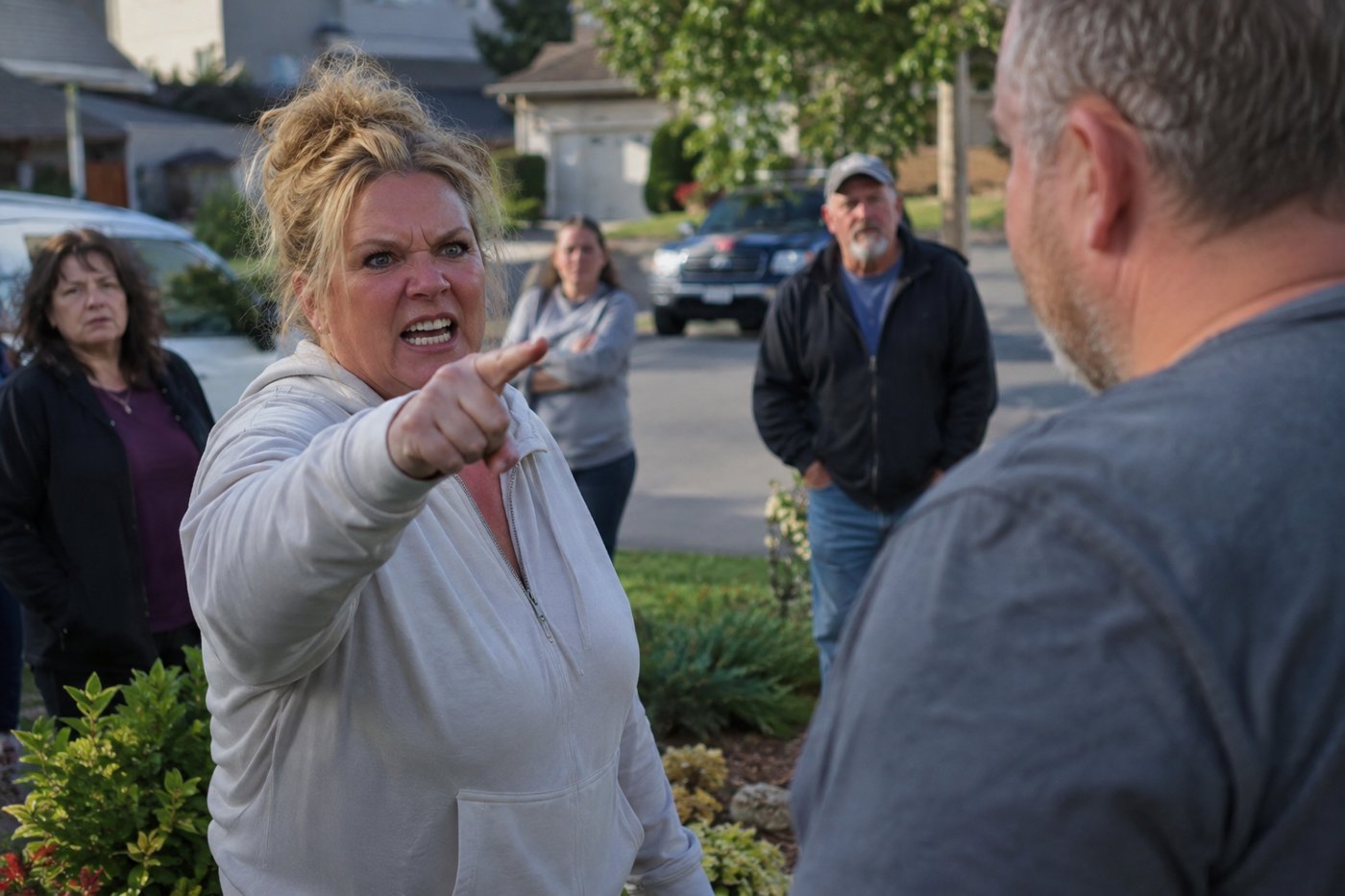

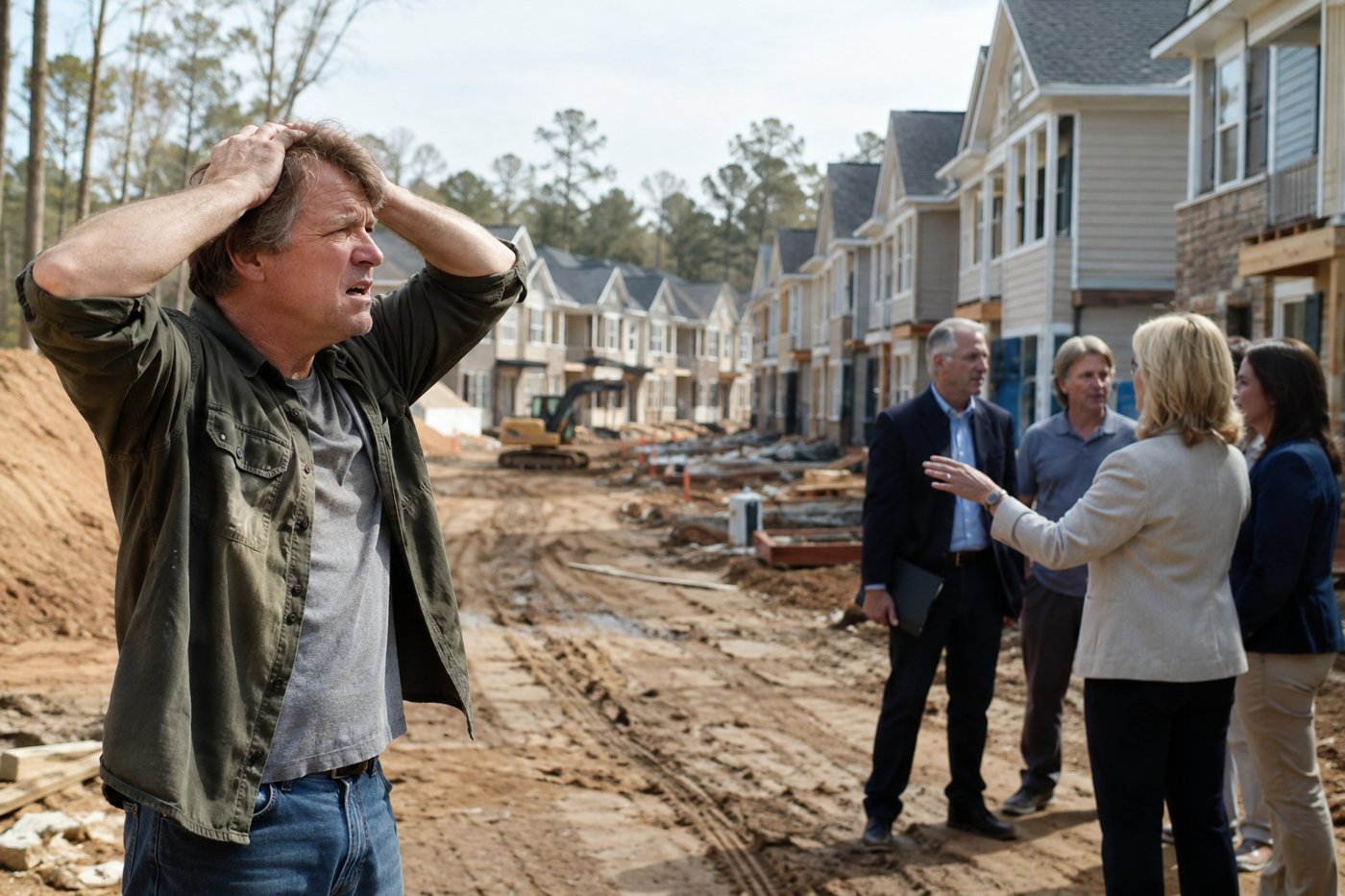
COMMENTS
Loading…