HOA Tore Down My Private Bridge—Then Learned I Owned Their Only Road
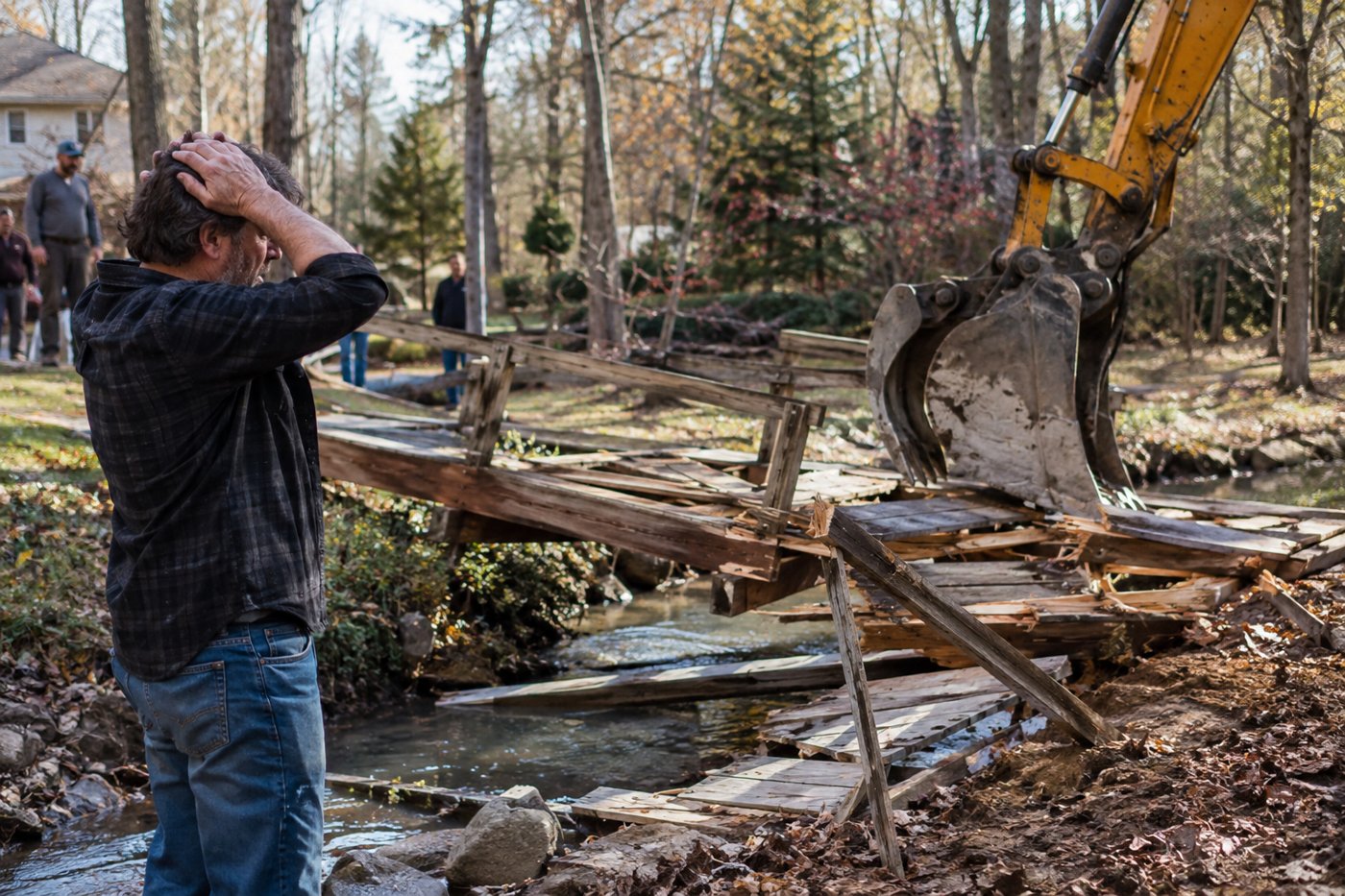
A raw, empty chasm hung over Holloway Creek where our heavy oak timber span had stood steadfast for nearly eight decades.
In place of hand-hewn stringers and solid floorboards, nothing lingered but fractured limestone footings, torn riverbanks, and cold rushing water swirling through the void.
The timber crossing had vanished without a trace.
Not carried away by a flash flood.
Not gated off.
Completely wiped from the earth.
I lingered near the water's edge, taking in the ruin: two battered stone pillars, gouged soil, scattered oak splinters, and deep yellow clay trenches where a heavy wooden structure had safely supported a farm wagon just ten days before.
The wrecking crew hadn't even left the salvage behind.
They had hauled away the massive oak girders, leaving only splintered timber ends wedged too deep into the masonry to pry loose, sheared iron bolts, and the hand-shaped limestone footings my grandfather had quarried and placed in 1964.
I had been out of state in Denver for nine days.
Exactly nine days.
Apparently, that brief absence was all the opening the Cedar Hollow Homeowners Association needed to conclude they could trespass onto deeded farmland and pulverize private property.
Tires crunched over the river gravel behind me.
A spotless white crossover backed into the turnabout and clicked into park.
The driver-side door unlatched.
A woman stepped down onto the stones wearing pressed trousers, dark loafers, an olive-green blazer, and the cold, unshakeable poise of a bureaucrat arriving to confirm that an unpleasant chore had been crossed off her list.
I had encountered Marjorie Keller twice before.
She was right around sixty.
The freshly seated president of the Cedar Hollow HOA.
She cast a dismissive glance toward the empty creek gap.
Then her eyes locked straight onto mine.
No greeting.
No remorse.
She spoke first:
“You see the outcome.”
“I see an act of vandalism.”
“The board finally took decisive action.”
I locked eyes with her.
“You smashed my private family crossing into kindling.”
“The crossing was an active public hazard.”
“You crossed my fence line and smashed private property on my farm.”
She crossed her arms across her chest.
“WHAT’S DONE IS DONE. ACCEPT REALITY.”
I looked back at the empty air hovering above the current.
My grandfather had hauled fresh-cut pine over that deck.
My father had guided our tractors across it through forty harvests.
My own kids had perched on the lower stringers, trailing lines for crawfish in the shallows.
Yet deep sentiment wasn't the core issue.
Legal, deeded land title was.
I turned back to her.
“You sent an excavator across my boundary to destroy an asset you had zero legal authority to touch.”
A casual shrug lifted her shoulders.
“SO HIRE A LAWYER AND TAKE US TO COURT.”
For a long stretch of seconds, neither of us broke the silence.
I let out a slow breath, then asked:
“Are you genuinely positive that’s the road you want to travel down?”
A smug, condescending sneer touched the corners of her mouth.
Cold and deliberate.
“SERIOUSLY, WHAT OTHER CHOICE DO YOU POSSIBLY HAVE?”
I let my eyes drift past her.
Past the line of river willows.
Past the bend in the water.
Past the wooded ridge where sixty-three executive custom homes sat tucked inside the gates of Cedar Hollow.
Then my gaze dropped to the two-lane ribbon of blacktop winding out of the trees and slicing right through my eastern hay pasture.
“You really should have verified what else I owned before doing this.”
Her sneer twitched, losing its edge.
“What is that supposed to mean?”
I raised my arm and pointed straight ahead.
Directly at the single roadway that allowed all sixty-three families to enter and exit their development.
Her forehead creased with annoyance.
Then the color suddenly drained from her face.
“Hold on… you mean THAT blacktop?”
“That exact stretch of asphalt.”
The smugness evaporated instantly.
And for one frozen heartbeat, pure panic gripped her expression.
She assumed I was about to drop a padlocked chain across the lane or pile twenty tons of crushed limestone across both lanes.
I harbored no such plan.
I had no intention of trapping sixty-three blameless households behind an arbitrary barricade just to strike back at an overreaching HOA officer.
More importantly, I didn't have to.
The recorded courthouse instruments governing that pavement were about to land Cedar Hollow in a nightmare far worse than any locked gate could ever produce.
My name is Nathaniel Holloway—folks around here have always called me Nate.
I had just turned fifty-seven when the Cedar Hollow board shattered our family bridge into kindling.
My farm spans ninety-four acres in the foothills of eastern Tennessee.
This soil has belonged to the Holloway name since 1946.
My grandfather, Walter Holloway, bought the original boundary shortly after he returned from the war in Europe.
At the time, the property was little more than rock-strewn pasture, steep pine ridges, and thick hardwood timber.
There was a modest farmhouse.
Two weathered barns.
Holloway Creek cutting straight down the middle.
And a rutted wagon track leading from the county blacktop out front all the way up to our high western tree line.
A rough log crossing spanned the creek when Grandfather first set foot on the property.
Old sepia prints from the late forties showed two peeled pine logs supporting split-oak planks.
Grandfather rebuilt the entire crossing from the bedrock up during the summer of sixty-four.
My father replaced the entire oak roadbed in 1989.
And back in 2008, I hauled heavy jacks underneath and bolted treated reinforcement plates across the primary stringers.
It was never a public crossing.
It was never deeded to the township or the county.
It was private, working infrastructure on an active farm.
That distinction would soon tear the HOA's legal defense to ribbons.
And their entrance blacktop was about to do the rest.
When I was growing up, the subdivision didn't exist.
The high timber ridge bordering our eastern hayfield was owned by an old hill farmer named Edwin Mercer.
Edwin held roughly 130 acres of mountain hardwood.
For half a century, the only practical way Edwin could haul timber down to the county blacktop was across a strip of Holloway acreage.
It had always been a simple twin-rut farm trail.
Nothing had ever been entered into courthouse record books in those early years.
Just two neighboring farmers keeping their word.
Then, around 1978, when Edwin began talking to commercial surveyors about partitioning his acreage, bank attorneys stepped in.
Informal neighborly arrangements wouldn't satisfy mortgage lenders.
Grandfather Walter and Edwin spent three months hammering out an eleven-page recorded easement agreement.
That legally binding document carved out a dedicated fifty-foot-wide right-of-way across a specific corridor of Holloway acreage.
It secured perpetual, irrevocable ingress and egress between the county thoroughfare and the Mercer parcel.
In exchange for that permanent passage, Edwin—and any future landowners or entities deriving benefit from that right-of-way—accepted full, non-negotiable legal liability for road maintenance, ditch upkeep, and culvert management.
The indenture was properly recorded with the county registrar of deeds.
Precise surveyor metes and bounds.
Corridor boundaries.
Allowable uses.
Stormwater runoff restrictions.
Division of expenses.
Operational rules.
Every parameter spelled out down to the surveyor's pin.
Years later, that designated corridor was paved and christened Cedar Hollow Drive.
Edwin's heirs eventually sold the entire mountain parcel to a suburban development group.
That firm engineered Cedar Hollow.
Sixty-three executive lots.
An imposing stone guardhouse at the front.
A single road in, a single road out.
The first nine hundred feet of Cedar Hollow Drive crossed my deeded soil under that 1978 easement before ever touching the community's common ground or a single private lot.
To anyone commuting home from work, the blacktop looked like any other suburban county street.
It was nothing of the sort.
The county commission had never incorporated those first nine hundred feet into the public road grid.
That reality didn't grant me the right to string barbed wire across the asphalt whenever I lost my temper.
The homeowners possessed legitimate, deeded access protections under the recorded agreement.
Those access covenants ran with the land.
Selling my farm wouldn't dissolve them.
Losing my patience wouldn't dissolve them.
An ugly neighborhood spat wouldn't dissolve them.
Yet that recorded easement never transferred underlying ownership of the dirt.
And it carried strict, enforceable maintenance covenants.
That legal boundary was about to become the anvil that crushed Marjorie's case.
The wooden crossing Marjorie tore down was not located anywhere near Cedar Hollow Drive.
That detail is paramount.
It sat roughly a quarter-mile upriver to the north, along an interior farm lane spanning Holloway Creek.
That private timber bridge gave me direct access to thirty acres of northern hay ground and woodlot.
None of the residents of Cedar Hollow had any reason to set foot on it.
Their paved road crossed the creek well to the south, supported by an engineered twin-barrel concrete culvert poured during original construction.
The HOA board had zero authority or reason to approach my bridge.
What the subdivision did possess, however, was a private walking trail.
And that was where the brushfire started.
When the subdivision was first platted, the builders cleared a mulch walking trail along the community’s western boundary.
The trail terminated cleanly at the HOA's property line.
My private farm track carried on past that boundary, winding down toward our timber bridge.
For years, no one was confused about where one property ended and the other began.
A cedar split-rail fence clearly divided their common grounds from our cattle meadow.
Heavy enameled metal signs hung on the posts:
POSTED: PRIVATE PROPERTY
HOLLOWAY ACRES - NO TRESPASSING
Nearly every homeowner honored that boundary line.
Every so often, a jogger or dog walker would step past the cedar rails.
I would simply stroll over, point them back to the mulch path, and we’d share a friendly wave.
Never any tension.
Then the Cedar Hollow board began dreaming up an ambitious trail expansion.
Newer homeowners lobbied for a larger running loop.
Some wanted scenic paths down along the creek banks.
Others wanted a smooth gravel track for mountain bikes.
Looking at an overhead satellite view of the valley, the easiest route was glaringly obvious:
Extend the neighborhood path straight over my fence onto my farm lane.
Cross my private timber bridge.
Wind through thirty acres of my hardwood timber.
And tie back into their common ground on the southern flank.
A picturesque loop.
Except they didn't hold title to a single square inch of it.
The first board president who approached me about it was Robert Gaines.
Robert was an upfront, level-headed fellow.
He came down to the barn and asked if I might consider granting a recorded recreational easement across our lower acreage.
I told him I was open to reviewing a formal written draft.
We spent an afternoon sitting on my tail-gate discussing the hard realities:
Premises liability.
Supplemental commercial insurance policies.
Buffer fencing.
Designated daylight hours.
Trail maintenance costs.
Mandatory leash rules.
Emergency vehicle gates.
Fair financial compensation.
Then the initiative ran into a brick wall.
The HOA’s primary insurance carrier raised severe liability objections regarding unsupervised pedestrian traffic alongside a steep creek bank.
I harbored plenty of misgivings myself about having strangers roaming through an active cattle operation.
Robert’s term on the board wrapped up.
No papers were ever drafted or signed.
No recreational easement existed.
In any sensible world, that would have put an end to the scheme unless someone returned with a viable, properly insured agreement.
Instead, Marjorie Keller took the gavel.
And she brought an entirely different approach.
Unchecked arrogance.
She assumed the presidency two years after Robert stepped down.
Her initial communication with me was not a handshake or a phone call, but a curt, demanding email:
Nathaniel Holloway,
Our directors are taking steps to reopen the historical creek walkway and timber bridge previously enjoyed by Cedar Hollow residents. Kindly deliver any records you maintain purporting to limit neighborhood passage.
I stared at the screen, rereading the lines in disbelief.
A historical right-of-way?
Formerly used by residents?
I typed back a clear, measured reply:
There is no public right-of-way or HOA access across my farm lane or bridge. If the association wishes to negotiate a formal recreational easement, I will review a written proposal.
Her response hit my inbox in less than forty minutes:
Our association files substantiate a long pattern of neighborhood recreational use.
I replied instantly:
Mail those alleged files to my address immediately.
She never produced a single page.
Two weeks later, strips of neon-pink surveyor’s tape fluttered from my boundary fence posts.
I didn't disturb them.
I pulled out my phone and captured clear, timestamped photographs.
Then I fired off an email to the HOA's property management company.
They wrote back claiming an outside landscaping crew had been conducting a preliminary feasibility check for prospective trail improvements.
I replied asking who had granted anyone permission to climb over a private fence onto deeded Holloway soil.
Radio silence.
That very afternoon, I carried a cellular trail camera down to the creek and strapped it to a mature shagbark hickory overlooking the bridge.
Four days later, the camera pinged my phone with motion alerts.
The lens caught Marjorie Keller.
She was standing at my split-rail fence accompanied by two other board directors and a contractor clutching a clipboard.
They didn't climb over the fence that afternoon.
Yet she pointed deliberately toward my wooden bridge.
Then her hand swept across the water toward the timber on my opposite bank.
The leaves muffled parts of their conversation.
Yet the camera's high-gain microphone caught one sentence with absolute clarity:
“Once we demolish this old span, we can finally finish off the loop.”
A cold chill ran down my spine.
I didn't waste time arguing over email.
I called my attorney, Sam Ortiz, and instructed him to draw up a formal certified cease-and-desist letter.
Professional.
Uncompromising.
The bridge, the interior farm path, and the surrounding timber belonged solely to the Holloway estate.
No authorization was granted for access, surveying, alteration, or path clearing.
Any formal easement request had to be submitted in writing through legal counsel.
The HOA's property management agency signed for the certified delivery.
Marjorie chose to ignore every word of it.
Then came the regulatory maneuver.
An anonymous safety grievance was lodged with the county building inspection office.
The caller had alleged the existence of an “unsecured, deteriorating pedestrian bridge immediately adjacent to a residential trail corridor.”
The complaint was completely disingenuous.
It was not a pedestrian bridge.
It was never open to the public.
Nevertheless, municipal building inspectors are legally obligated to investigate life-safety complaints.
A county inspector named David Chen reached out to me that week.
I met him at the main farm gate, and we walked down to the creek together.
Chen examined the structure thoroughly.
He pointed out surface graying and checking on several deck planks, along with slight play in a single upright post on the left railing.
Nothing out of the ordinary.
I already knew routine seasonal upkeep was on the docket.
Chen looked up from his clipboard:
“Do subdivision residents have permission to walk this crossing?”
“None at all.”
“Any public right-of-passage of any kind?”
“Zero.”
“Do you operate farm machinery across it?”
“Regularly. Tractors, round balers, and loaded hay wagons.”
He nodded slowly.
He recommended holding off on hauling heavy machinery across the deck until the surface boards were refreshed, and suggested having a certified structural engineer evaluate the framework.
Sound, sensible guidance.
I didn't argue.
I immediately positioned heavy oak barricades across both bridgeheads, chained them securely, and retained an engineer.
The structural engineer I retained was Dr. Lauren Pierce.
Lauren spent nearly five hours examining every beam, forged drift pin, and limestone pier.
Her detailed engineering assessment concluded:
The oak deck planks were nearing the end of their service life and required replacement.
Two secondary outer stringers exhibited localized wet rot that warranted sistering or replacement.
The handrails did not conform to modern commercial pedestrian safety standards.
Crucially, however, the massive primary load-bearing oak stringers and the underlying stone abutments were completely sound.
Demolition was utterly unwarranted.
She formally recommended maintaining the temporary closure while executing targeted structural rehabilitation.
I opted for a thorough structural reconstruction without a moment's hesitation.
The limestone piers had stood firm for over half a century.
The enormous hand-hewn oak balks possessed decades of working life.
And I had no intention of discarding the heritage my grandfather had crafted.
Dr. Pierce began drawing up formal structural repair schematics.
A local specialty sawmill drew up material estimates for replacement white-oak timbers.
Construction was slated to commence the following month.
As a courtesy to forestall any further confusion, I forwarded a digital copy of the engineer’s temporary closure advisory to Marjorie Keller.
Not because I owed her an explanation.
Simply to eliminate any possible pretext for meddling.
Her reply arrived within an hour:
We appreciate your written acknowledgment that the bridge poses an active safety hazard.
I fired back an immediate correction:
I confirmed it is temporarily closed for private structural rehabilitation. I have authorized zero HOA intervention of any kind.
She never responded.
That short email exchange would soon become a smoking gun.
Nine days before I found our bridge reduced to rubble, I boarded an early flight out of Knoxville for Denver.
My youngest daughter, Caroline, was scheduled for reconstructive knee surgery.
It wasn't an emergency, but she was facing a painful rehabilitation, and I wanted to be at her bedside to help with her recovery.
I anticipated being away from the farm for roughly eight or nine days.
Before heading to the airport, I took a complete walk of the perimeter.
Padlocked every machinery shed.
Tested the perimeter sensors.
Everything stood in pristine order.
The bridge rested quietly above the murmuring waters of Holloway Creek.
Heavy oak barricades blocked both ends.
Laminated copies of Dr. Pierce’s engineering closure advisory were stapled firmly to the timber crossbars.
Blaze-orange trespass warnings were posted along the boundary fence.
Then I drove to the airport and caught my flight.
On my third morning in Colorado, the cellular trail camera overlooking the crossing went offline.
I assumed the external lithium battery pack had drained early or a rainstorm had knocked out the cell reception.
The hardwired cameras monitoring my tractor barns and house were operating without a glitch.
No perimeter trips triggered.
No phone calls arrived.
Not a single word from the subdivision office.
When my return flight touched down nine days later, I drove straight from the interstate to the farm gates before even dropping my bags at home.
The moment my truck rolled through the pasture gate, I saw the gouges.
Deep, fresh yellow clay turned inside out by wide steel bulldozer treads.
The churned mud led straight past my tree line and angled downward toward the creek.
A knot formed in my stomach.
I stepped out of the truck, leaving the engine running, and jogged down the slope following the tracks.
And emerged onto bare, empty space hanging over the water.
The destruction had been executed with ruthless, heavy-handed speed.
The deck had been torn loose.
The side railings snapped off.
The diagonal bracing ripped away.
Even the massive longitudinal oak stringers had been wrenched from their stone beds and loaded away.
All that remained were the two stone piers, a pair of splintered beam ends with sheared iron bolts protruding like broken bones, and wide, jagged tread marks gouging the stream bed.
One of my heavy timber barricades lay splintered in the nettles.
My enameled private-property sign had been rammed face-down into the wet mud.
Dr. Pierce’s laminated structural warning placard was nowhere to be found.
I stood in the silence of the hollow for several minutes, my mind struggling to process the sheer audacity of what lay before me.
Then I pulled out my phone and dialed Lauren Pierce.
“Lauren… somebody came in and tore the bridge down.”
The line went completely dead for five seconds.
“What? Did the sawmill crew start the overhaul without telling you?”
“No. It isn't an overhaul. The entire span is gone. Hauled away.”
“Call Sam Ortiz this second.”
“I’m dialing him right now.”
Sam had handled real estate and boundary matters for three generations of my family.
I snapped half a dozen photos of the wreckage and texted them to his cell.
My phone rang before thirty seconds had ticked by.
“Nate, do you have eyewitness proof or license plates for whoever ran those machines?”
“Not at this exact second.”
“Don't start pointing fingers until we have hard evidence. What happened to that trail camera you mounted?”
“The cellular signal cut out six days ago.”
“Go examine the tree. If they sliced the mounting strap, there's a strong chance the camera is lying in the underbrush with the SD card intact.”
I scrambled back up the bank toward the shagbark hickory.
The heavy woven nylon strap had been cleanly severed with a box cutter.
The bark was bare.
I dropped down onto my hands and knees, parting the wet sycamore leaves and brush.
Thirty paces downhill, nearly swallowed by rotting leaf mulch, I spotted the dull olive-green plastic shell.
The glass over the lens was scratched, but the heavy waterproof cam-locks were still clamped tight.
I popped the side latches open.
The micro-SD card was resting securely in its spring slot.
In an instant, what might have been dismissed as an anonymous vandalism claim became an undeniable digital record.
I carried the card to the cab of my truck and slid it into my tablet.
The high-definition video files captured the entire operation from start to finish.
A Caterpillar mini-excavator rumbling down my private lane.
A heavy hydraulic dump trailer backing into the turnaround.
A four-man demolition crew wearing high-visibility vests.
And pacing along the creek bank with a manila project folder clutched in her hands was Marjorie Keller.
She walked out onto the wooden deck before the engine was even throttled up.
She gestured toward the structural timbers, conferred with the crew supervisor, and pointed toward the wooded bank across the water.
Then she took several steps back into the clearing as the steel bucket began smashing through the oak decking.
Roughly twenty-five minutes into the footage, one of the laborers pointed directly up toward the hickory tree.
A crewman marched toward the camera holding a heavy steel pry bar.
The frame shuddered violently.
A gloved hand blocked the sensor.
The screen went black.
Crude, arrogant, and caught on camera.
I immediately dialed the Cedar Hollow property management office.
When their senior manager, Alicia Monroe, answered, I kept my voice dead level:
“Alicia, an excavation crew just entered my boundary line and demolished my private bridge.”
A sharp intake of breath hissed through the receiver.
“Please tell me our board didn't authorize something like that.”
“I have Marjorie Keller on high-definition video directing the contractor on my deeded property.”
I could hear the frantic rustle of paperwork on her desk.
“I need to pull the board’s recent committee files immediately.”
“That doesn't undo the damage, Alicia.”
“Nate, I understand how catastrophic this is.”
“What is the name of the demolition company?”
A nervous pause hung on the line.
“I cannot release contractor files until I consult our association’s legal counsel.”
“You do that. Because I’m calling the county sheriff’s department right now.”
I ended the call and dialed dispatch.
Deputy Miller pulled his cruiser down the farm lane twenty minutes later.
He spent forty-five minutes inspecting the torn banks, photographing the heavy tread marks, reviewing my property deed, and collecting the sliced mounting strap as physical evidence.
A sheriff's deputy isn't going to draw a weapon or cuff an HOA director on the spot over a property boundary dispute.
Their role on rural acreage is to document criminal trespass, establish a chain of custody for evidence, and file an official incident report for the district attorney and civil courts.
Deputy Miller took down his notes, downloaded a direct copy of the trail camera footage onto his laptop, and handed me an official incident card.
Just as the deputy’s cruiser kicked up dust heading back toward the county blacktop, Marjorie Keller’s white crossover swept into the lane.
She stepped out of her vehicle.
Walked over to the jagged lip of the creek.
Stared down at the empty gap.
Turned her head and looked me straight in the eye.
Not the slightest hint of regret.
“You see the outcome.”
“I see an act of vandalism.”
“The board finally took decisive action.”
“You smashed my private family crossing into kindling.”
“The crossing was an active public hazard.”
“You sent heavy machinery across my property line and leveled private farm infrastructure.”
“WHAT’S DONE IS DONE. ACCEPT REALITY.”
The staggering arrogance left me speechless for a beat.
“Accept reality?”
“It was an abandoned, decrepit safety risk.”
“You didn't own a single splinter of it.”
“The community had massive safety exposure.”
“You held no claim to it whatsoever.”
“The county cited severe hazards.”
“The county never issued a demolition warrant to anyone.”
She tossed her hands up in a careless shrug.
“SO HIRE A LAWYER AND TAKE US TO COURT.”
That was the exact instant a deep, icy calm washed over me.
Anger makes a man reckless; quiet patience makes him lethal.
I asked:
“Are you thoroughly convinced that’s the strategy you wish to pursue?”
A patronizing sneer tugged at her mouth.
“WHEN IT COMES RIGHT DOWN TO IT, WHAT CARDS CAN YOU EVEN PLAY?”
I looked across the pasture toward the blacktop of Cedar Hollow Drive.
“You should have researched what else I owned first.”
She scowled.
“WHAT KIND OF NONSENSE ARE YOU BABBLING ABOUT?”
I lifted my arm and pointed straight toward the sole paved route servicing her entire subdivision.
Her cheeks went completely white.
“Hold on… you mean THAT blacktop?”
“Yes.”
She stood frozen, staring in sudden horror.
“You're claiming you own Cedar Hollow Drive?”
“The first stretch of ground sitting directly beneath it.”
Panic cracked her polished composure.
“You have no right to close off our entrance!”
“I never suggested I planned to.”
“You cannot blockade sixty-three households!”
“I’m well aware of that.”
“The homeowners hold legal access rights!”
“I am fully aware of their legal protections.”
“Then what exactly is this little performance?”
“I haven't threatened a single thing,” I answered calmly. “I’m suggesting you study the recorded instrument that gives Cedar Hollow those access rights in the first place before you invite someone to sue you.”
She stood rooted to the gravel, utterly bewildered.
For the moment.
The 1978 recorded easement ran eleven single-spaced pages.
Marjorie should have scrutinized every single paragraph before issuing a challenge to take the association to court.
The instrument guaranteed the benefited parcel an irrevocable right of ingress and egress.
That clause protected the families living in Cedar Hollow.
It was ironclad.
I had no legal authority to drop an iron gate across the pavement or strand working families.
Yet that same agreement squarely laid the entire burden of roadway upkeep, ditch clearing, shoulder stabilization, and drainage management upon the benefited property owners and their successors.
When the developer platted the subdivision, those binding responsibilities were formally assigned to the HOA.
Fundamental real property jurisprudence.
Then came the covenant's most restrictive covenant:
The agreement explicitly barred the benefited party from expanding its use beyond the designated fifty-foot strip or disturbing the rest of the Holloway farm without prior written consent.
Our family bridge was situated four hundred yards north of that right-of-way corridor.
Completely and indisputably outside the easement.
The very homeowners association that depended entirely on my deed for its sole access route had deliberately trespassed onto my farm and leveled private property after receiving certified legal warning against doing so.
That unlawful act didn't terminate their access easement.
Yet it stripped away any defense of an innocent clerical error or neighborly misunderstanding.
And it meant that every corporate claims adjuster and real estate litigator involved would now subject the entire roadway agreement to intense forensic scrutiny.
Including road maintenance covenants the HOA had quietly ignored for over a decade.
Sam immediately retained an independent surveying firm, an abstract title company, and a civil engineering group to conduct a forensic audit of the entire corridor.
We weren't looking for cheap revenge.
We were establishing verified legal and physical facts before taking our next step.
That technical review unearthed a major engineering violation I had never suspected.
Four years prior, during a subdivision resurfacing project, the HOA had re-engineered the drainage network along my pasture boundary without county permits or engineering approval.
They had deepened an uphill ditch.
Swapped two metal culverts.
And redirected a massive volume of concentrated stormwater discharge directly onto my low hay meadow.
The 1978 covenant strictly mandated that all roadway drainage must remain within historical natural channels unless the Holloway estate granted formal written consent.
I had never signed a waiver.
I had never even been notified.
Over the preceding three spring seasons, I had watched an ugly erosion gully eat into our hay sod.
I had chalked it up to heavier seasonal rainstorms.
Now, the civil engineer’s topographical survey proved that the HOA's unpermitted road alterations were deliberately dumping thousands of gallons of runoff across my hayfield.
We had an undeniable case of unlawful drainage trespass.
The structural review of Cedar Hollow Drive uncovered even more deferred maintenance:
Extensive alligator fatigue cracking through the asphalt surface.
Severely washed-out gravel shoulders.
A rusted, collapsed corrugated metal culvert that was actively undermining the roadbed from underneath.
The road was still drivable for daily traffic, but the substructure was decaying rapidly.
Under the recorded covenants, the association was legally obligated to maintain that entire corridor in sound condition and prevent structural damage to my adjoining acreage.
All at once, Marjorie’s condescending ultimatum—
“SO HIRE A LAWYER AND TAKE US TO COURT”
—looked completely suicidal.
Because my legal counsel was no longer looking solely at a broken timber bridge.
He was scrutinizing every single contractual failure tied to the association's use of my land.
I didn't block the asphalt.
I erected no toll gates.
I didn't park tractors across the roadway.
I didn't stop school buses, delivery vans, or evening commuters.
Those families held legitimate access rights under the law.
The vast majority had no idea what reckless choices Marjorie had made.
Punishing sixty-three innocent households would have been both morally bankrupt and legally self-defeating.
Instead, Sam Ortiz delivered a devastating twenty-eight-page formal legal demand.
Attached were forty-seven evidentiary exhibits:
Certified deeds and recorded plat maps.
Photographs of the leveled bridge and excavator tracks.
High-resolution stills from the trail camera footage.
County inspection reports proving no emergency demolition order existed.
The certified mail signature card from our prior warning.
Comprehensive civil engineering reports documenting the illegal stormwater diversion across my pasture.
A formal spoliation notice requiring the preservation of all board text messages, emails, and financial ledgers.
And a formal tender of claims directly to the HOA’s master insurance carriers.
That single packet accomplished more than a fleet of bulldozers ever could.
Alicia Monroe called my personal cell the very morning the packet landed on her desk.
“Nate.”
“Morning, Alicia.”
“What on earth happened between you and Marjorie down at the creek?”
“She leveled my bridge.”
“I’m aware of that part.”
“It’s a rather substantial part of the story, wouldn't you say?”
“She told the board members you were preparing to barricade Cedar Hollow Drive.”
“I said no such thing.”
“Did you inform her you owned the road?”
“I told her my family holds fee-simple title to the underlying land, and suggested she read the 1978 easement agreement before advising folks to take the HOA to court.”
Alicia let out a long, trembling breath.
“Thank heaven for that.”
“Why?”
“Because the frantic briefing I was given involved tractors, logging chains, and padlocks.”
I chuckled quietly.
“Nothing of the sort, Alicia.”
“Good.”
“Don't get too comfortable, though. Your directors need to hire an independent litigation attorney immediately.”
“I’m already dialing their office.”
The association convened an emergency executive meeting two nights later.
I didn't attend—Sam advised maintaining our distance until formal counsel made an appearance.
Yet the residents were in an absolute uproar.
Not simply because a historic timber bridge had been torn down.
Most of them had never laid eyes on our farm lane.
They were furious because Marjorie Keller had deliberately misled the board before signing the demolition contract.
We learned the full details through subpoenaed board minutes and discovery disclosures.
She had pitched my bridge to her fellow directors as:
“a derelict, unsafe impediment encroaching across the perimeter of the neighborhood greenway.”
Completely untrue.
She told them the county building authority had mandated its emergency removal.
Completely untrue.
She swore the property owner had refused to address the issue.
Completely untrue.
I had already engaged an engineer, priced lumber, and scheduled private repairs.
She assured the board that association legal counsel had signed off on “nuisance abatement.”
A gross distortion of the truth.
The HOA’s retainage attorney had specifically warned that any action taken beyond common subdivision grounds required verified boundary surveys and written owner consent.
Marjorie had tossed that legal warning straight into the trash.
The board had originally voted to authorize up to $12,500 for “trail-area clearing subject to final legal review.”
Marjorie executed the demolition contract before that legal review was ever completed.
The contractor was told the bridge sat entirely inside community open space.
It fell well short of that.
Their formal work order was based on a rough trail sketch.
Not a professional boundary survey.
A colored-pencil sketch on a sheet of bond paper.
No surveyor's stakes.
No recorded easement verification.
No title search.
And on that reckless pretext, an excavator crossed onto my farm and smashed eighty years of family history.
The contractor, Peter Walsh, phoned me directly two days later.
The man sounded completely sick to his stomach.
“Mr. Holloway, I want to assure you right now that every timber we pulled off that crossing is secured in our fenced compound.”
“Where?”
“Our commercial facility out on Route 411. Locked up and covered under heavy canvas tarps.”
“Do not cut, discard, or burn a single piece.”
“We haven't touched a stick, sir.”
“Some of those primary timbers can be salvaged.”
“We’ve already separated the structural beams from the scrap.”
“Who told you the association held legal title to that crossing?”
A long, uncomfortable silence stretched over the phone.
“Our signed work order identified the site as HOA trail infrastructure. Mrs. Keller personally assured my foreman that all municipal permits and right-of-way permissions were fully executed.”
“Did your company pull a plat map or verify the county deed?”
“No, sir. And that is an oversight I will regret for the rest of my life.”
At least the man was willing to look me in the eye and own his failure.
Within seventy-two hours, Peter Walsh’s commercial insurer contacted Sam.
The HOA’s master liability carrier assigned a senior litigation adjuster.
The property management company’s insurance group entered the fray.
Every carrier immediately filed reservation-of-rights letters and started pointing fingers at everyone else.
The contractor argued he acted strictly upon express client warranties.
The HOA board argued the contractor should have independently verified property lines before unloading an excavator.
Marjorie argued she was simply following through on county life-safety concerns.
The county building department confirmed in writing that it had never authorized private property destruction.
The management agency documented that Marjorie had bypassed administrative protocol and ignored counsel.
The HOA directors insisted their approval had been strictly conditional.
Reams of legal motions and finger-pointing flew back and forth.
Meanwhile, my daily farm operations were ground to an infuriating halt.
Without that creek crossing, getting to the northern thirty acres was an exhausting ordeal.
To check on fence lines or haul hay, I had to load tractors onto a flatbed trailer, pull onto the county highway, drive three miles north, and crawl down a rutted, overgrown logging lane across my cousin’s property.
My cattle tenant had to haul feed along that exact same roundabout path twice a day.
That bridge was not an ornamental lawn ornament; it was a functional artery of our livelihood.
Dr. Pierce returned to the creek to inspect the damaged limestone footings.
Her second structural survey brought another heavy blow:
When the excavator operator dragged the main white-oak stringers out with the machine's hydraulic bucket, the embedded anchor pins had sheared through the top tier of stones.
Five massive limestone blocks had been cracked, knocked askew, and displaced.
The structural foundation had been severely compromised.
Reconstructing the bridge would now require specialized historic stone masonry and concrete underpinning, drastically escalating the overall rebuild estimate.
Later that week, Peter Walsh invited us out to his equipment yard to examine the salvaged lumber.
I drove out accompanied by Lauren Pierce and a historic timber restoration specialist.
Seeing eight decades of family sweat and timber stacked on wooden pallets in an industrial gravel lot was a gut punch.
Scattered pieces of our farm labeled in bright yellow grease pencil.
A significant portion of the deck boards was spongy and rotten beyond redemption.
That confirmed what the county inspector had seen regarding surface decay.
Yet the primary load-bearing stringers were dense, seasoned white oak.
Heartwood, still bearing the adze and broadaxe marks from when they were squared.
Then, buried near the bottom of the second pallet, we uncovered something that stopped all of us in our tracks.
Carved deep into the flank of a twelve-by-twelve beam:
WH 64
Walter Holloway—my grandfather's own hands.
1964.
I dropped down onto one knee in the gravel and ran my calloused thumb over the carved numbers.
Peter Walsh stood a few feet back, watching in silence.
“I didn't know, Mr. Holloway.”
“I know you didn't, Peter.”
“I give you my word, if I had seen that, we would have packed up our equipment and walked away.”
“I believe you.”
Lauren and I spent the following two weeks designing our replacement crossing.
We weren't building a museum piece or an exact copy of the 1964 span.
That wouldn't have been practical.
The original bridge had load constraints, and our modern round balers and farm implements demanded a substantially higher weight rating.
Yet we refused to abandon the soul of the original craftsmanship.
The damaged limestone piers would be fully rebuilt, repointed, and anchored into newly poured, steel-reinforced concrete footings.
High-capacity glulam engineered timber stringers with heavy-gauge galvanized steel saddles would bear the vehicle weight.
Sound, reclaimed white-oak beams would be shaped into arch braces and guide rails.
And Grandfather Walter’s original beam—bearing WH 64—would be prominently mounted under a protective cedar overhang at the southern entrance of the span.
Contemporary structural engineering carrying the heavy tonnage.
Eighty years of family history watching over every crossing.
It felt like the right way to set things square.
Then the financial fallout from the entrance road hit the association.
The HOA’s independent civil engineer conducted his own inspection of Cedar Hollow Drive.
His formal engineering report confirmed everything our surveyor had documented:
The unauthorized ditch deepening had indeed concentrated torrents of stormwater onto my lower meadow, carving an active, widening erosion chasm through the topsoil.
The road’s corrugated drainage culvert was severely rusted and failing.
The gravel shoulders were heavily degraded.
A major section of the asphalt required complete sub-base stabilization and resurfacing.
The HOA maintained a capital reserve account.
Yet those funds were nowhere near sufficient to absorb every mounting liability simultaneously:
Bridge reconstruction damages.
Climbing legal defense retainers.
Hefty civil engineering invoices.
Stormwater re-engineering and pasture remediation.
Excavating and replacing collapsed culverts.
Full-depth asphalt resurfacing.
Multiple commercial insurance deductibles.
Marjorie’s reckless stunt had not created every road flaw on its own.
That is an important distinction to maintain.
Routine wear-and-tear would have eventually forced resurfacing anyway.
Yet by arrogantly daring me to take the HOA to court instead of discussing boundary lines like a neighbor, she had triggered the very forensic legal and engineering audit that brought every hidden violation to light at once.
That was the heart of what I meant when I warned her to check my deed.
Not:
I own your road, so I get to hold your lives hostage.
What it truly signaled was:
Our properties are governed by binding legal instruments that your board is recklessly ignoring.
Word of the crisis inevitably leaked through the subdivision gates.
At first, wild, hysterical rumors swept through the cul-de-sacs:
“Nate Holloway is dropping a gate across the entrance.”
“He’s setting up a private toll plaza.”
“He’s filing individual lawsuits against every homeowner.”
“He’s seizing our access road.”
None of it had a shred of truth.
So I did something Sam Ortiz initially cautioned against:
I sat down at my kitchen table and drafted a calm, factual letter addressed directly to the homeowners of Cedar Hollow.
Sam reviewed and polished the phrasing.
The message was brief and transparent:
I harbored zero intention of disrupting lawful residential traffic.
The recorded 1978 easement remained fully valid, binding, and respected.
Our legal actions pertained strictly to the unlawful destruction of private farm property and separate contractual violations regarding roadway upkeep and stormwater diversion.
Residents should direct questions regarding board decisions and reserve funds directly to their elected officers.
Not a single threat.
No anger.
Just plain, unvarnished facts.
The neighborhood panic vanished within forty-eight hours.
The following Tuesday afternoon, a woman named Angela Morris came walking down my gravel driveway.
Her home sat along the higher circular lane within Cedar Hollow.
A mother of two young school-age boys; her husband flew as an emergency flight paramedic out of Knoxville.
She paused at the bottom of the porch steps:
“Mr. Holloway, do you have a quick minute?”
“Of course, ma'am. Come on up.”
“Could you actually shut down our entrance road if you felt like it?”
“No,” I told her plainly.
She blinked, caught off guard.
“Is that the actual law?”
“Your subdivision holds permanent, deeded access rights recorded at the courthouse.”
“Then why did Marjorie swear to the neighborhood that you were threatening to trap us inside?”
“You'd have to ask Marjorie that question.”
Angela looked down at her sneakers, visibly embarrassed.
“Fair point.”
She paused, then added:
“I’ve lived up on that ridge for eight years. I had no idea our road crossed your private family land.”
“Most folks never have any reason to know,” I told her.
“Until someone behaves recklessly.”
“That’s usually how it goes.”
Her gaze drifted across the pasture toward the tree line where the creek flowed.
“Was that bridge very meaningful to you?”
“It was.”
“Because of how long it had stood?”
“Partly. And because of the hands that built it.”
She looked directly at me with soft, genuine eyes.
“I am so sorry, Mr. Holloway. For all of it.”
That was the very first sincere apology I heard from anyone associated with Cedar Hollow.
And it came from a resident who had played no role whatsoever in the destruction of my property.
I made sure she knew I recognized that.
She gave a small, quiet shake of her head:
“Still. It was wrong.”
Sometimes decent neighbors have to apologize on behalf of an institution because the institution is too stubborn to find its own conscience.
Marjorie Keller did not apologize.
Not at that stage.
Instead, she dug in her heels even deeper.
At the next scheduled HOA meeting, she stood before the room and insisted that razing the bridge had eliminated a severe community hazard, thereby delivering a lasting “public benefit” even if “certain administrative procedures had been imperfect.”
When Sam Ortiz read that transcript, he burst out laughing.
“Certain administrative procedures had been imperfect.”
“That is definitely one of the most creative ways to describe intentional trespass and grand vandalism I’ve ever heard in my legal career.”
Her fellow board members weren't amused in the least.
Three directors publicly declared they would have voted against any action had they known the structure sat entirely outside HOA property.
One director submitted his resignation on the spot.
Another demanded an immediate independent governance inquiry.
When Marjorie refused to vacate the president's chair, outraged residents launched an official recall petition.
I stayed completely out of their internal politics.
It wasn't my neighborhood, and it wasn't my ballot to cast.
The community turned out in record numbers and voted overwhelmingly to recall Marjorie Keller from office.
She remained a resident of Cedar Hollow.
Being removed from a neighborhood board doesn't force you out of your house.
The homeowners elected Angela Morris as their new board president.
The morning following the certification of the vote, my landline rang.
“Nate, I think I’ve made a monumental mistake.”
“Taking the gavel?”
“Yes.”
“Most likely,” I chuckled.
She laughed ruefully, then her tone shifted to quiet determination.
“I want to resolve this properly. Like neighbors.”
“I’d welcome that, Angela.”
“Can we have our attorneys sit down and hammer out a fair agreement?”
“Whenever you're ready.”
That single conversation transformed everything.
No more:
What can we bully through?
No more:
How do we wriggle away from our responsibilities?
Just:
How do we fix what was broken?
Settlement conferences kicked off three weeks later.
Quietly and methodically.
Peter Walsh’s commercial carrier sat at the table.
The HOA’s master insurance group was present.
The association formally placed into the record an admission that it had ordered work performed on private property without lawful authority.
There was no sudden lottery-style payout.
Instead, there were grueling, granular debates between claims adjusters:
Policy exclusions.
Deductible thresholds.
Pre-existing structural deterioration.
Depreciation tables.
Lumber salvage offsets.
Design upgrades.
Our replacement crossing was designed to withstand significantly heavier equipment loads than the 1964 span ever could.
It was only equitable that I fund the incremental expense required to achieve modern heavy-machinery ratings.
Right is right.
Lawyers traded balance sheets.
Adjusters argued over line items.
Eventually, the ledger balanced out into signed settlement documents.
The final executed agreement funded the vast majority of the bridge replacement costs attributable to wrongful destruction and foundation ruin.
I covered the cost differential for the engineered load enhancements.
The contractor safely transported every stick of salvaged white oak back to my equipment shed.
The HOA agreed to finance the complete redesign and construction of the drainage swales along Cedar Hollow Drive, while binding itself to a strict, court-enforceable road maintenance covenant under the 1978 easement.
The board reimbursed our core engineering and legal expenses.
Mutual legal releases were executed, bringing finality to the claims.
No theatrical delusions about bankrupting sixty-three families.
No chains or padlocks across the lanes.
A realistic, legally enforceable resolution.
Costly enough to instill a permanent institutional memory in the association, yet manageable enough to keep the community solvent.
Rebuilding the crossing required four months of meticulous labor.
I stood on the stream bank watching almost every stage.
Skilled stone masons repaired the shattered limestone abutments, tying them into steel-reinforced concrete footings anchored into the creek bed.
The massive engineered glulam stringers were set into place.
Heavy galvanized steel connectors were bolted down.
Thick, rough-sawn white-oak decking was laid.
Substantial timber side rails were framed.
Proper runoff diversions were cut into the approach slopes.
Comprehensive load testing was conducted.
Dr. Pierce personally inspected every timber connection.
The county building inspector signed off on every phase of the permits.
Nothing was hurried.
The polar opposite of the morning they tore it down.
When the crane lifted Grandfather Walter’s original beam into place beneath the entrance canopy, I walked out and stood beneath it in the fading evening light.
WH 64
The chiseled letters remained weathered yet crisp.
I had forgotten those carved initials even existed until the teeth of an excavator bucket ripped them out from beneath the floorboards.
Life has a way of operating like that.
It destroys one thing.
And in doing so, reveals what truly matters underneath.
My son Ethan drove down from his home in Nashville the Saturday the bridge officially reopened.
He was thirty-one then.
He had spent his boyhood running these pastures before moving to the city for work.
He strolled out onto the middle of the bridge deck.
He took two hard jumps on the fresh oak planks.
“Quit that,” I called out from the approach.
He turned and grinned.
“The structural engineer stamped it for fifty tons, didn't she?”
“She did.”
“Then what are you sweating for?”
“Because I’m your father.”
That was true enough.
He walked back to the entrance overhang and placed his palm against the carved oak.
“Grandfather Walter?”
“Your great-granddad framed it.”
Ethan traced the grain with his finger.
“That’s really something, Dad.”
It truly was.
Road repairs along Cedar Hollow Drive were wrapped up that same August.
A few residents complained on social media about single-lane paving delays.
That was to be expected.
Yet the engineered drainage corrections performed flawlessly.
The first real test rolled in during late September.
A torrential mountain rainstorm pounded the hollow for thirty-six straight hours.
Runoff coursed cleanly through the newly graded swales and passed harmlessly through the enlarged concrete culvert.
The erosion gully cutting across my hayfield finally ceased its advance.
The road shoulders held solid without shifting an inch.
For the first time in fifteen years, the 1978 easement functioned exactly as my grandfather and Edwin Mercer had intended:
Reliable access for them.
Absolute protection for me.
Practical neighborly cooperation without an inch of surrendered ownership.
Angela Morris invited me to attend an association meeting after the asphalt had cured.
I hesitated, but ultimately agreed to go.
She stood at the podium before her neighbors and laid out the legal reality of the easement with total clarity:
“The residents of Cedar Hollow possess a permanent, deeded access right. Mr. Holloway holds fee-simple title to the underlying land. Our association carries the strict legal obligation to maintain that corridor. Those three truths exist simultaneously.”
A masterclass in straightforward communication.
Unemotional.
Precise.
I wished Marjorie had possessed the humility to understand those words two years prior.
Marjorie was sitting in the room, tucked into the back row against the wall.
Her arms remained folded tight across her chest.
Yet she didn't utter a single protest.
When the meeting adjourned, she walked across the foyer toward me.
Our very first face-to-face interaction since our confrontation by the creek.
“Nate.”
“Hello, Marjorie.”
She looked back over her shoulder toward Angela.
“She makes it sound so uncomplicated.”
“The core principle is uncomplicated,” I replied.
“The paperwork certainly isn't.”
“It definitely isn't simple.”
She let out a quiet sigh.
She hesitated briefly, then added:
“I still maintain that the old crossing was hazardous.”
“The deck boards were certainly due for replacement,” I acknowledged.
“So I wasn't completely wrong.”
“No.”
The answer took her by surprise.
I paused, then spoke in a lower tone:
“You were wrong about what that hazard gave you the right to do.”
Her shoulders went rigid.
Then the tension slowly drained out of her frame.
“Yes.”
Her first genuine admission of fault.
Brief.
Yet honest.
She lowered her gaze toward the carpet.
“When you stood there by the water that morning… I was convinced you were going to barricade our entrance.”
“I know you were.”
“You pointed across the meadow like you held a loaded rifle.”
“I pointed at the road because I needed you to understand that our properties were legally joined at the hip.”
“It certainly felt like an intimidation tactic.”
“You had just challenged me to sue you.”
A faint, wry smile touched her lips.
“Not my proudest hour.”
“Not by a long shot.”
“You enjoyed pulling the rug out from under me, didn't you?”
“A little bit,” I admitted.
Right is right.
She looked up at me again:
“If you had possessed the absolute legal right to shut down our road… would you have done it?”
“No.”
The answer was immediate.
She blinked, genuinely puzzled.
“Why wouldn't you have?”
“Because sixty-three families didn't demolish my family bridge, Marjorie. You did.”
That answer seemed to land with more weight than any legal brief Sam had ever filed.
She gave a slow, contemplative nod.
“I never looked at it through that lens.”
“I know you didn't,” I told her.
That had been the fundamental flaw all along.
One full calendar year slipped by.
Then another.
Cedar Hollow settled back into a quiet, peaceful routine.
That is perhaps the finest compliment anyone can pay to a rural community.
Angela Morris served three full terms as HOA president.
Under her leadership, the board instituted a strict property-action protocol that became binding policy.
Before any contractor’s tires could touch grass near an outer boundary line:
Verify fee-simple ownership through certified deeds.
Commission a professional boundary survey.
Establish the exact scope of work.
Verify municipal permitting authority.
Confirm commercial liability riders.
Provide certified written notification to every adjoining property owner thirty days in advance.
Plain, everyday common sense.
Codified into binding bylaws at long last.
The community walking trail never crossed our creek bridge.
I never executed the recreational easement agreement.
That wasn't born out of lingering spite.
After walking the acreage with my agricultural insurer and farm manager, we concluded that having suburban foot traffic meandering across an active cattle farm with heavy machinery operating was simply an unacceptable liability risk.
Yet we established something far more constructive in its place.
Every October, Cedar Hollow coordinates a supervised watershed cleanup day with my express permission.
A single scheduled Saturday.
A clearly delineated stretch of the stream bank.
Signed liability waivers from every participant.
Zero permanent encumbrances clouding my deed.
Homeowners haul out fallen storm branches and stray plastic.
Young kids wade in rubber boots, learning about stream health and clean water.
It runs like clockwork every autumn.
Because they take the courtesy to ask first.
Permission changes the entire complexion of human interaction.
Marjorie Keller actually showed up for one of those cleanups two years later.
She was hauling a heavy trash bag full of river debris along the bank when our paths crossed near the crossing.
She paused and pointed up toward the deck:
“May I walk across?”
I turned and met her gaze.
She gave a small, self-deprecating smile and rolled her eyes.
“I am formally asking your permission, Nate.”
“You're welcome to cross, Marjorie.”
She stepped up onto the oak boards.
Halfway across, she stopped beneath the entrance canopy and looked up at Grandfather Walter’s scarred timber.
WH 64
“Carved by your granddad?”
“Yes.”
She reached up and ran her hand over the weathered wood.
“We almost hauled that into an incinerator.”
“Your crew did haul it off, Marjorie.”
“Peter Walsh salvaged it.”
“Only after your contractor pulled it down.”
She gave a quiet nod of acknowledgment.
“Right.”
She paused, staring at the grain.
“I’m truly glad you got it back.”
“I share that relief.”
It wasn't until three years after the reconstruction that I finally learned what had fueled Marjorie’s frantic obsession with that trail.
She had stopped by my porch one afternoon to drop off an annual watershed notice.
During our conversation, she confessed that her youngest granddaughter had been born with severe mobility limitations.
Marjorie had harbored a dream of creating a wide, flat nature trail along the water where the girl could navigate a specialized wheelchair under the canopy of trees.
The existing neighborhood path was too steep and rocky.
She had envisioned a peaceful creek loop where her granddaughter could hear the rushing water.
A loving, deeply personal motivation.
Her tragic mistake was allowing the nobility of her ambition to convince her that private ownership was merely an obstacle to be smashed.
My boundary became an inconvenience.
My bridge’s age became an excuse.
Legal advice became a barrier.
In her mind, using brute force to clear a path had become indistinguishable from doing good.
It never is.
As I listened to her explain that on my front porch, I felt a deep, genuine pang of sadness.
“Marjorie… you could have brought that accessibility dream straight to me.”
“I’m well aware of that.”
“We might have worked out a dedicated route along the flat bottom of the lower pasture.”
“I’m well aware of that.”
“You never once asked.”
“I was certain you’d tell me no.”
“I might have had questions and concerns,” I admitted. “That’s always the risk when you ask for something. But by bringing an excavator onto my farm without permission, you completely stole my chance to say yes.”
She looked away toward the blue ridges in silence.
That was the heavy realization she had to carry.
Cedar Hollow eventually found a far superior solution for that accessible path.
And it didn't cross my farm.
The association negotiated a formal pedestrian easement with an adjoining landowner along the southern bend of the creek.
That route traversed a wide, naturally level meadow.
No creek bridge required.
Gentle, smooth grades fully compliant with accessibility standards.
Uncomplicated insurance underwriting.
Accessible to every family in the valley.
The trail had its grand opening three years after our bridge was rebuilt.
Marjorie’s granddaughter was there for the ceremonial ribbon cutting.
I was there as well.
Marjorie stood beside me, watching the young girl smile as her wheels rolled smoothly along the water's edge.
Marjorie leaned over:
“This route is infinitely better than the one I tried to take.”
I gave her shoulder a gentle nudge.
“Keep your voice down, or you’ll ruin your reputation.”
She let out a rich, genuine laugh.
My father used to remind me that rural property disputes turn toxic when folks blur the lines between three basic questions:
What do I actually own?
What am I legally permitted to use?
What am I contractually responsible for maintaining?
Our clash with Cedar Hollow entangled every single one.
I held fee-simple title to the soil beneath a section of their entrance road.
The homeowners held an irrevocable deeded easement to travel that blacktop.
The association carried the legal and financial burden to maintain that corridor.
Three distinct legal concepts.
Three distinct obligations.
None of them cancelled out the others.
And none of them gave an association officer the right to march into my woods and demolish a private bridge hundreds of yards away.
I still work this acreage every day.
I turned sixty-six this past spring.
Ethan is making concrete arrangements to move his wife and children back to the farm to take over the cattle operation.
Caroline brings the grandkids down from Knoxville nearly every weekend.
Just last Saturday, my eight-year-old grandson caught his very first smallmouth bass right out from beneath the shadow of the new oak crossing.
The same clear mountain stream.
A newly engineered structure.
I told him his great-great-grandfather had set the original stone foundations by hand.
He looked up at the weathered beam resting under the cedar shelter.
“Why did they tear it down, Granddad?”
I paused, thinking through the best way to explain HOA hubris and property deeds to an eight-year-old boy.
Then I kept it plain:
“They convinced themselves they had permission.”
“Did they have it?”
“Not a bit.”
He nodded firmly.
Children have an innate sense for simple truths.
The old demolition photographs still sit inside a manila folder in my office desk.
One frame shows the creek bank the morning I returned from Denver.
Gouged river clay.
Shattered limestone.
Bare space above the water.
Another captures Marjorie standing beside the excavator treads.
Another shows the sliced nylon strap dangling from the hickory trunk.
Another shows my crushed wooden barricade lying in the weeds.
Evidence documents foolish choices.
Yet my favorite picture hangs in a cedar frame above the hearth.
It captures the rebuilt bridge at sunrise on a crisp November morning.
Golden Appalachian light spilling across the fresh white-oak deck.
The reinforced limestone abutments standing rock-solid in the swirling current.
Grandfather Walter’s beam watching over the lane from beneath the shelter.
No diesel machinery.
No courtroom litigators.
Just a strong timber bridge doing its quiet work for another generation.
People who only know the abridged version of the tale always get hung up on the pavement:
“You actually owned their only road?”
The underlying fee-simple title, precisely.
“Why didn't you just drop a padlocked gate across it?”
Because that is not how a recorded ingress-and-egress easement functions under the law.
“Couldn't you have set up a toll booth and charged them?”
Not without committing an illegal act myself.
“Could you have threatened to take the road away?”
No.
“Then what was the real turning point?”
The turning point was never that I possessed some secret lever to hold a neighborhood hostage.
It was that the HOA had a permanent, legally binding dependency on land it did not own.
That delicate dependency should have made its leadership extraordinarily mindful of property lines.
Instead, their president entered that very same landowner’s farm and demolished private property without verifying the deed.
The legal vulnerability was staggering.
And the irony was absolute.
Marjorie’s fundamental failure wasn't that she didn't fear my temper.
I had no interest in being feared.
Her fatal error was refusing to verify the public record.
She knew the bridge deck had worn boards.
True.
She knew homeowners wanted a longer walking trail.
True.
She was aware the county official had cited weathered timber.
True.
She knew the board had allocated discretionary funds.
True.
Then she took those unconnected truths and leaped to a reckless conclusion:
“Therefore we have the right to tear it down.”
That was where she drove off the cliff.
I could have easily fallen into that very same trap afterward.
The entrance blacktop crossed my deeded soil.
True.
The subdivision was completely dependent on that road.
True.
I was furious about the loss of my bridge.
Extremely true.
I could have taken those facts and jumped to my own reckless conclusion:
“Therefore I can trap sixty-three innocent families until they pay my price.”
Completely wrong.
The law is not a bludgeon you get to wield recklessly just because someone injured you.
The recorded covenants defined their access rights.
The courthouse records protected my ownership.
Honoring the documents resolved the dispute.
Ignoring the documents brought an excavator bucket crashing into our creek.
I crossed paths with Marjorie for the final time this past autumn.
She had put her home on the market and was packing her belongings to move closer to her daughter's family.
She drove down my lane the evening before her moving van was set to arrive.
No clipboard or official folder.
No HOA files.
Just a cardboard box sitting on the passenger seat of her car.
Inside was an item I hadn't laid eyes on in nearly eight years:
The original wooden PRIVATE PROPERTY sign that had been knocked into the river clay during the demolition.
She had discovered it tucked away in a maintenance shed behind the community tennis courts.
One corner was splintered, and dried creek mud was still caked into the black lettering.
She handed it to me through the car window.
“I believe this belongs on your fence post, Nate.”
I held the weathered board in my hands.
“Learning to honor boundaries… that’s a welcome development.”
A soft, self-effacing laugh escaped her.
“I certainly had that coming.”
“You definitely had that coming.”
She paused, looking at me with total sincerity.
“I truly am sorry, Nate. For destroying that crossing. And for telling you to take us to court.”
“You know,” I told her, “that dare turned out to be remarkably useful.”
She winced, shaking her head.
“Because it forced Sam to audit the drainage networks?”
“Every single paragraph and contour.”
She covered her eyes with one hand and groaned.
“So I’m the sole reason the HOA got slapped with an enormous road reconstruction assessment too?”
“Through your own recklessness, yes.”
“No wonder some of my neighbors cheered out loud when the recall passed.”
“Nobody carried pure malice toward you, Marjorie.”
“A few of them certainly did.”
That was true enough.
She glanced across the pasture toward Cedar Hollow Drive.
The evening commute was in full swing.
A local delivery van.
A father in a sedan with soccer gear in the back.
A neighbor walking a golden retriever along the freshly paved shoulder.
Ordinary, peaceful neighborhood life.
“You truly never would have blocked that road, would you?”
“No.”
“Even after what I pulled at the creek?”
“No.”
She gave a slow, thoughtful nod.
“I spent six months convinced you were biding your time, waiting to drop a gate across our lives.”
“And I spent six months wondering why you viewed property ownership as a declaration of war.”
A gentle, rueful smile crossed her face.
“Most likely because I turned it into a combat zone from day one.”
An exceptionally honest reflection.
Before she pulled onto the county highway, she asked if she could stand on the new bridge one last time.
We drove down in my pickup.
She stepped out onto the oak deck.
Watched the clear water curl around the stone piers.
Reached out and brushed her fingers across Grandfather Walter’s beam.
Then she spoke:
“This crossing is substantially better than the original.”
“From an engineering standpoint?”
“In every imaginable way.”
“That’s the right answer.”
She laughed aloud.
When we reached my truck, she turned back one last time.
“Do you know what moment stands out most vividly in my memory?”
“Which one?”
“The exact second you pointed your finger across the meadow toward our road.”
“I remember.”
“I honestly thought my world had ended.”
“That seems a bit over the top.”
“I was an HOA president, Nate. Over the top was in our job description.”
We both shared a hearty laugh.
Then her voice softened, repeating the very phrase she had thrown in my face years before:
“So hire a lawyer and take us to court.”
She shook her head slowly.
“I still cannot fathom the sheer arrogance it took to say those words to you.”
“I can.”
“Thank you for being fair with us, Nate.”
“I’m glad we reached peace, Marjorie.”
A faint, weary smile touched her mouth.
Then she looked toward me and asked:
“What went through your head the moment I dared you to sue?”
I looked across the green hay meadow toward the blacktop.
“The exact words I told you that morning.”
“That I should have researched what else you owned first?”
“Yes.”
“Yet you weren't plotting against the blacktop.”
“No.”
“Then what were you actually thinking?”
I looked her in the eyes:
“I was thinking that if you were willing to destroy property on my farm without checking a deed, you almost certainly hadn't read the recorded covenants for the only road your entire neighborhood depends on to get home.”
She stared at me in stunned silence.
Then she erupted into the loudest, most genuine laugh I had ever heard from her.
“You hit the nail squarely on the head.”
“I usually do.”
“Don't let it swell your ego.”
“Far too late for that.”
She drove out of the hollow early the next morning.
Cedar Hollow Drive remained wide open.
Just as it always should have.
Our timber bridge stands rock-solid over the rushing waters of Holloway Creek.
The HOA diligently budgets for its road and drainage reserves every year.
My farm remains peaceful, private family land.
Their deeded right to travel home remains secure.
The accessible trail meanders through the southern bottomlands where everyone agreed it was welcome.
Dry legal contracts.
Boring title deeds.
Boring infrastructure maintenance.
A beautiful thing.
Sometimes the most devastating response to someone trampling over a line isn't to trample over one yourself.
It’s knowing where the boundary actually lies.
Locating it.
Reading the text.
Surveying the ground.
Comprehending what the deed actually mandates.
And holding everyone accountable to the standard it sets.
Marjorie failed to do that before directing heavy steel onto my farm.
I made certain I did that before taking a single legal step.
That restraint protected sixty-three blameless households from paying for a fight they never picked.
It kept me from mutating a righteous grievance into an unlawful retaliation.
And in the end, it forced an arrogant board to confront something far more unyielding than a padlocked gate:
The recorded obligations they owed under their own deed.
The morning I touched down from Colorado, none of that clarity existed yet.
There was only a jagged gap above the water.
Shattered oak.
Fresh excavator ruts.
Marjorie Keller standing in the river gravel in her driving loafers.
Zero regret.
“WHAT’S DONE IS DONE. ACCEPT REALITY.”
“You destroyed private farm property on deeded soil.”
Her indifferent, dismissive shrug.
“SO HIRE A LAWYER AND TAKE US TO COURT.”
“Are you thoroughly convinced that’s the strategy you wish to pursue?”
That smug sneer.
“WHEN IT COMES RIGHT DOWN TO IT, WHAT CARDS CAN YOU EVEN PLAY?”
I looked past her shoulder toward the ridge homes.
Then toward the blacktop of Cedar Hollow Drive.
“You really should have researched what else I owned first.”
Her sharp scowl.
“WHAT KIND OF NONSENSE ARE YOU BABBLING ABOUT?”
I extended my arm.
Her gaze tracked my hand across the meadow.
The lone roadway connecting her subdivision to the outside world.
Her face drained of all life.
“Hold on… you mean THAT blacktop?”
“Yes.”
For a brief, terrified moment, she believed that road was my weapon for revenge.
It was nothing of the sort.
It gave both of us something far more lasting:
A recorded reminder that ownership, access, and neighborly responsibility are irrevocably tied together.
The HOA possessed the legal right to travel across one specific strip of my acreage every single day.
It possessed zero authority to treat the rest of my farm as its personal domain.
Learning that distinction cost them a major bridge settlement, engineering invoices, drainage reconstruction, legal fees, and months of hard humility.
Yet the community absorbed the lesson.
Marjorie took it to heart.
And I learned a great deal as well.
Our original timber bridge is gone.
I couldn't resurrect those old timbers from the past.
Yet when we erected the new crossing, we secured Grandfather Walter’s weathered 1964 beam right where every person crossing can see it.
Not out of spite toward Cedar Hollow.
Not as a monument to a legal victory.
As an enduring testament.
Some things in this life can be shared.
Some things can be traveled by mutual agreement.
Some things shattered can be rebuilt.
Yet before you drop a machine's bucket onto what belongs to your neighbor, you had better know with absolute certainty where your rights end.
Because sometimes the landowner whose bridge you smash into splinters also holds the deed to the only road you use to drive home.
And if you’re fortunate, he will read the deed before he decides what to do next.
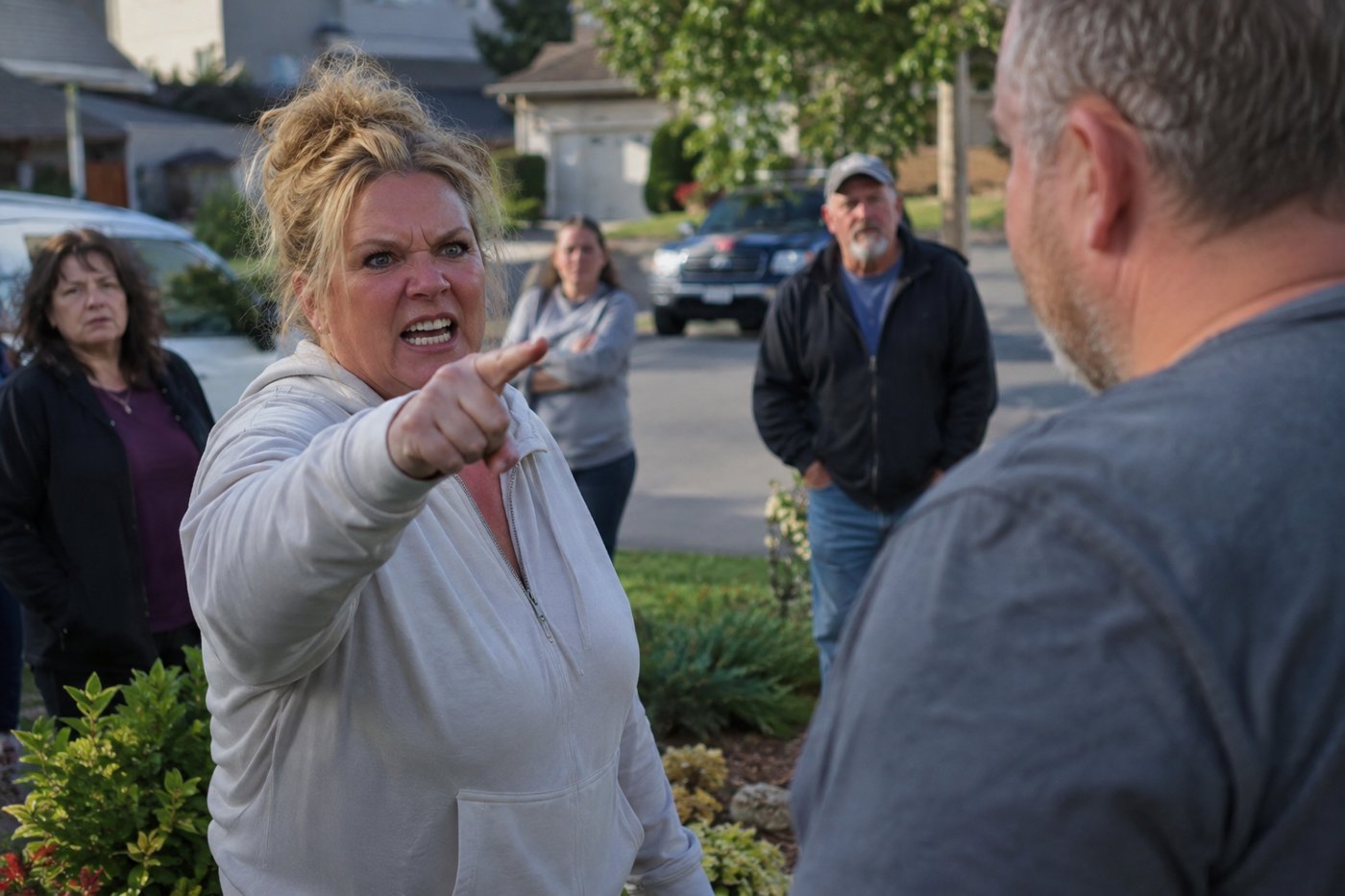
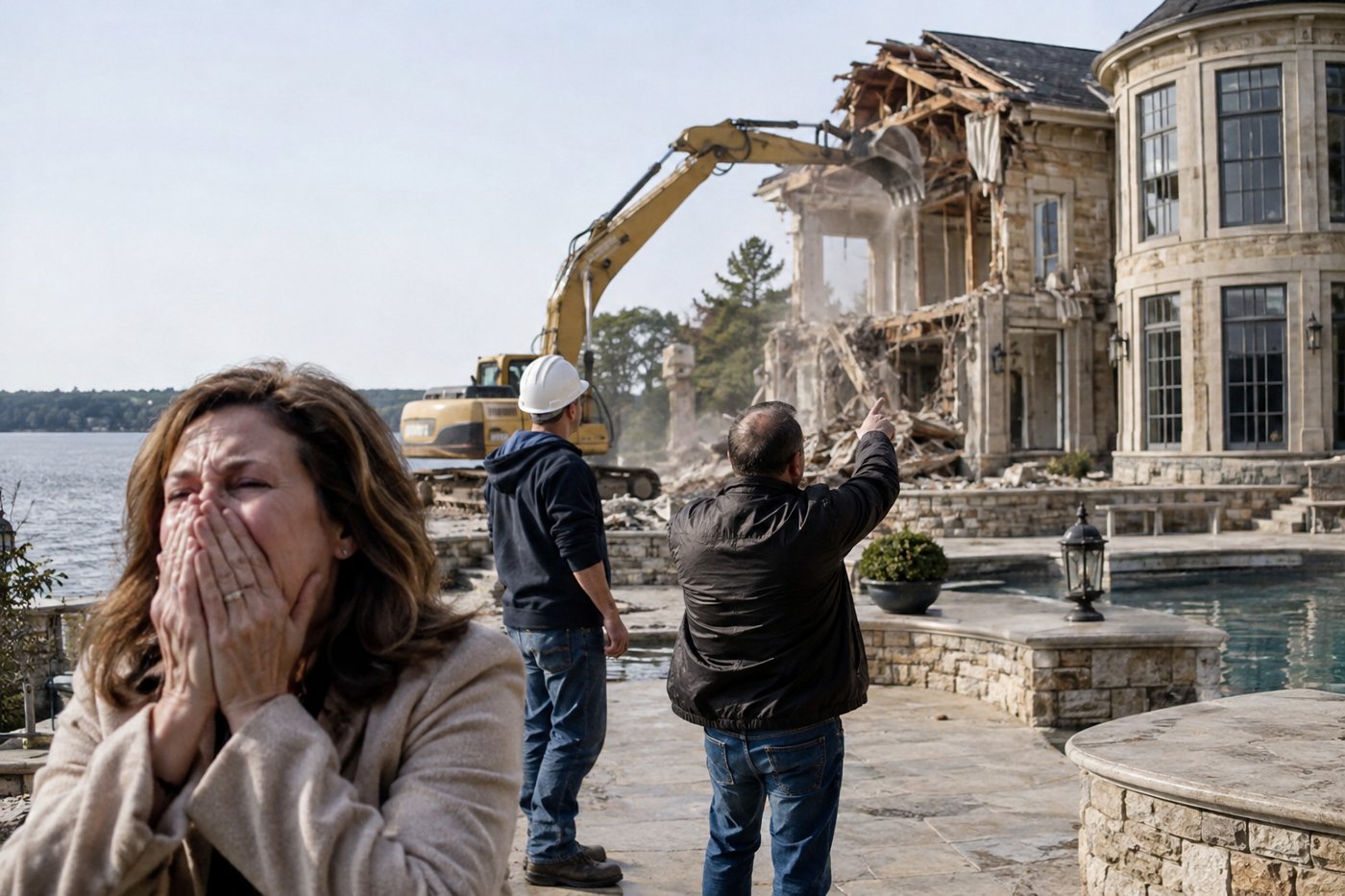
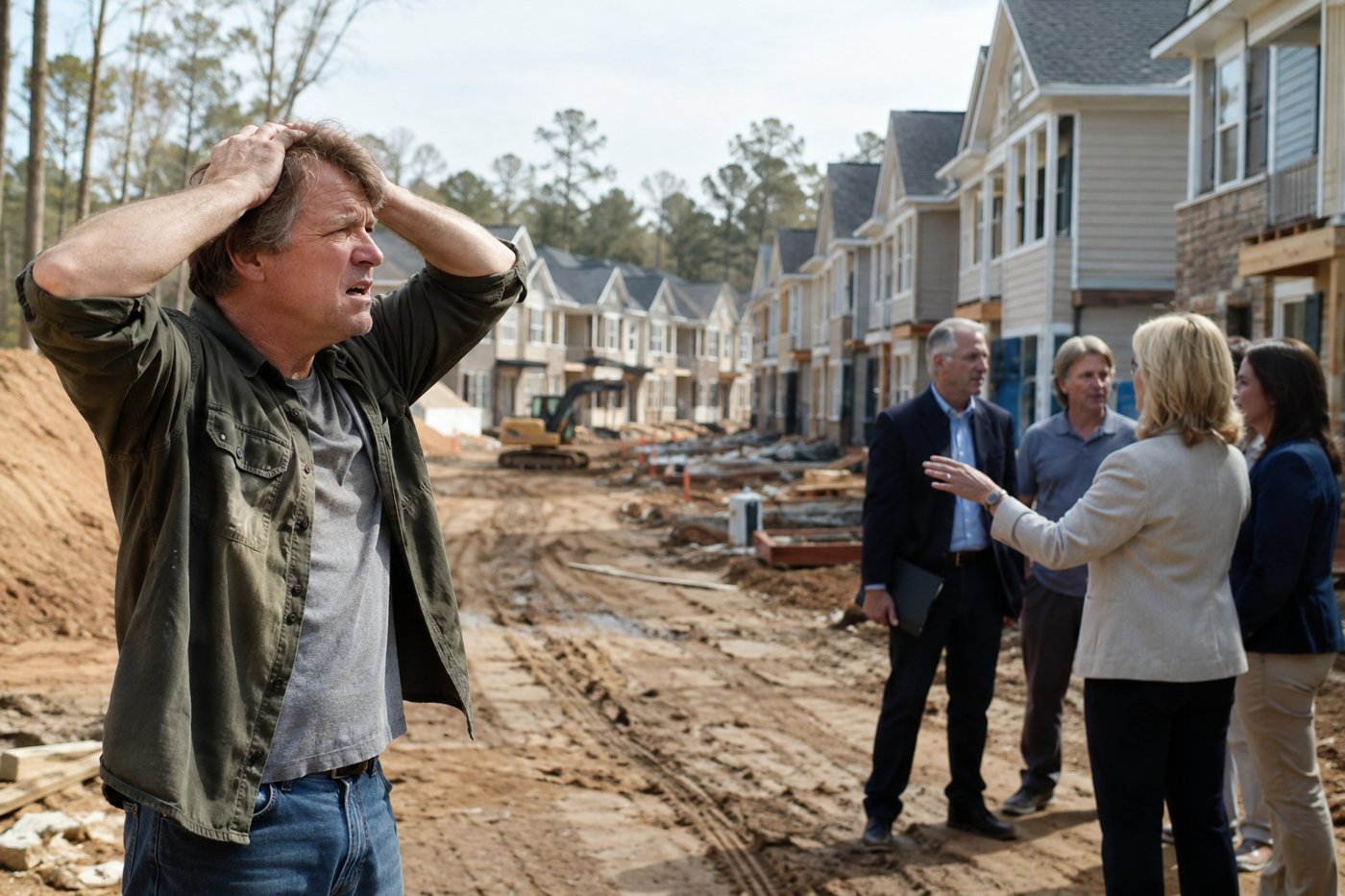
COMMENTS
Loading…