HOA Karen Smashed Her Produce-Washing Station—Then the Farm Owner Stepped Out
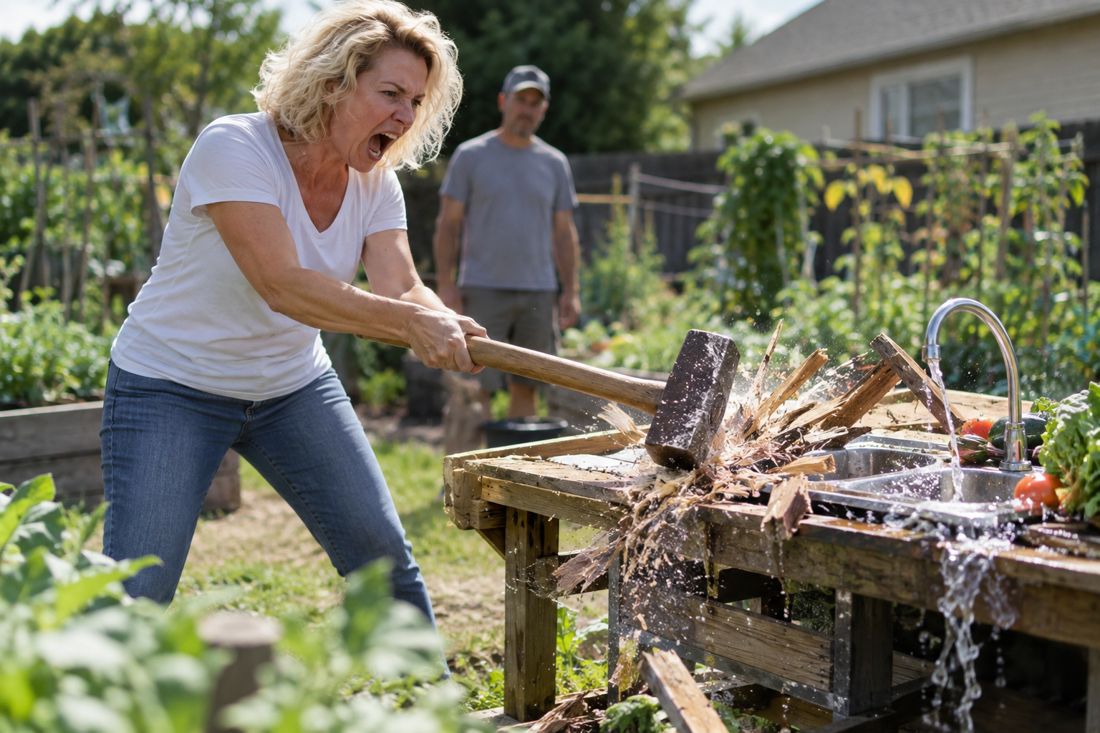
The heavy iron wrench slammed against the electrical housing before Emma Parker could sprint halfway across the wash house.
CRACK!
Tough gray PVC fractured straight down the seam.
The emerald indicator diode died instantly.
Line pressure vanished in a heartbeat.
The stainless rinse bar let out two wheezing coughs—
and went dead.
Directly beneath the silent nozzles lay thirty pounds of freshly picked pickling cucumbers.
Emma pulled up rigid on the wet deck.
“What on earth did you just do?”
Denise Holloway stood there with the tool still gripped in both hands.
Flanking her were four members of the Briarwood Hills board.
Barely three minutes had passed since the delegation had marched unannounced through the barn's open equipment bay.
Now Denise brandished the wrench toward the disabled machinery like a conquered banner.
“RECESS IS OVER, LITTLE GIRL!”
Snickers rippled through the small entourage behind her.
Emma could only stare in disbelief.
She was eighteen years old.
Brick-red Virginia clay caked the knees of her washed-out duck dungarees.
Her dark curls were tied back in a hurried ponytail.
Her muck boots glistened from the washroom drainage slab.
A quarter-hour earlier, she had been systematically grading market cucumbers for an upscale restaurant order.
Now, five middle-aged suburbanites were standing in the middle of her family's commercial shed, carrying on as though they had just busted an illicit neighborhood lemonade stand.
“Drop the wrench.”
To Denise's left, a silver-haired man let out an arrogant chuckle.
Greg Talbot.
Emma recognized him immediately from his daily jogs along the boundary fence.
Greg stepped forward, eyeing a slatted wooden harvest crate.
“You actually think you give orders around here?”
Emma lunged forward.
“Don't you touch that crate!”
He looked her dead in the eye with a patronizing smirk.
Then shoved the basket hard.
CLATTER!
Cucumbers spilled violently across the stainless sorting table.
Dozens hit the wet concrete floor with wet thuds.
Two rolled into the floor trench, and another vanished beneath a stack of oak pallets.
Greg spread his arms wide, turning to his companions.
“GO TO A GROCERY STORE LIKE CIVILIZED FOLKS!”
More chuckles echoed through the shed.
Emma stared down at the bruised, scattered produce.
Then back at the shattered breaker housing.
Her fists trembled with pure adrenaline.
“This is a working packing house on private land.”
Denise hurled the heavy wrench onto the wet concrete.
CLANG.
“NOT ANYMORE IT ISN'T!”
Emma went ice-cold.
She turned toward the partitioned office framed at the back of the barn.
“Mom?”
Denise rolled her eyes with exaggerated theatricality.
“Oh, marvelous. Go run and find a real adult.”
The brass latch gave a dull click.
The door swung back against the wooden stud.
A woman walked out onto the wash floor.
Forty-six years of age.
Skin cured bronze by decades of field sun.
Dark hair gathered into a low, uncompromising bun.
Worn steel-toed work boots.
Dust-streaked denim work pants.
And over her faded shirt, a heavy olive-green canvas chore jacket stitched across the chest in bold gold lettering:
PARKER FAMILY FARM — OWNER
Laura Parker looked down at her daughter.
Then at the cucumbers rolling in puddles across the slab.
Then at the shattered electrical controls dripping onto the floor.
Finally, her gaze settled on the heavy wrench resting by Greg's feet.
“Emma?”
Emma pointed across the concrete.
“She smashed the console.”
The smug chuckles died instantly.
Laura stepped forward, her heavy soles clicking against the damp floor.
Denise cleared her throat, regaining her composure first.
“You're the owner?”
Laura offered no immediate reply.
She knelt down, scooped up a single dirtied cucumber, studied the grit clinging to its bruised wax rind, and tossed it into the red cull bin.
“I am.”
Denise drew her shoulders back.
“Good.”
She sounded almost relieved, as though an adult face finally granted legitimacy to her crusade.
“We have spent months attempting to resolve this unauthorized agricultural operation.”
Laura glanced up at the high timber rafters of her barn.
“Have you?”
“We certainly have.”
“With whom?”
“The board.”
Laura remained motionless.
Denise's brows tightened in frustration.
“The Briarwood Hills HOA board.”
“I know precisely who you are.”
“Then you must realize this facility generates intolerable conditions along our residential perimeter.”
Laura nodded toward the fractured plastic casing.
“And you calculated that committing property destruction against my machinery would improve those conditions?”
Denise's superior expression flickered.
Just a fraction.
Greg puffed his chest and stepped between them.
“Nobody broke anything here.”
Emma stared at him in utter astonishment.
“I literally watched her take a swing with a pipe wrench!”
Greg shrugged carelessly.
“Could have been cracked for weeks for all we know.”
Laura looked at Denise.
Then at Greg.
Then she tilted her chin toward the timber support beam overhead.
Emma followed her gaze upward.
Bolted high against the central post was a weatherproof security dome.
A steady red recording diode blinked beside the wide-angle glass.
Denise looked up.
Every trace of color drained from her face.
Laura murmured dryly:
“How convenient.”
Not a single soul in the entourage muttered a word.
Yet that camera was only the tip of Denise Holloway's legal catastrophe.
The far greater disaster was history: Briarwood Hills had broken ground eleven years after Parker Family Farm had already been planting fields.
What was more, barely half a year earlier, the HOA's own retained legal counsel had delivered a formal memorandum spelling out exactly where the association's governance stopped:
Right at the surveyor's iron pins along the farm's deeded boundary.
Denise had chosen to bury that warning.
And now here she stood, nearly three hundred feet past that boundary.
Trespassing inside a state-inspected produce facility.
Hovering over broken machinery.
Surrounded by four eyewitnesses from her own organization.
Leaving a steel wrench coated in her clear fingerprints lying in a puddle.
Laura pointed an outstretched arm toward the gravel driveway.
“Off my land. Every last one of you.”
Denise folded her arms, digging in her heels.
“We haven't finished our inquiry.”
Laura's voice dropped into a calm that was colder than ice.
“No.”
She checked the blinking lens overhead once more.
“You're completely finished.”
Parker Family Farm sprawled across thirty-seven rolling acres just outside Charlottesville, Virginia.
The Parker clan had tilled, seeded, and harvested this acreage for three unbroken generations.
It hadn't survived in the romantic, golden-hour fashion folks loved to idealize from calendars.
There had been lean, brutal years.
Mortgaged equipment.
Leased field plots.
A grueling stretch when Laura's father had pulled midnight forklift shifts at a regional warehouse because the farm alone couldn't keep food on their table.
A blistering drought that baked the clay into brick.
Two catastrophic river floods that drowned early seedlings.
A punishing national recession.
One disastrous blight that turned an entire harvest of heirloom tomatoes to black rot on the vine.
A painful divorce.
And a fast-moving barn fire that incinerated two tractors and decades of tools, sparing livestock and humans only through an unexpected shift in the midnight wind.
Working a family farm, Emma had discovered from childhood, looked considerably less like a glossy lifestyle magazine when you were the one staring at the stack of unpaid invoices.
The farm produced food.
Crisp slicing cucumbers.
Sweet vine-ripened tomatoes.
Tender summer squash and zucchini.
Bell peppers in every shade.
Snap beans.
Cool-season brassicas and tender salad greens.
Potted culinary herbs.
A sea of orange pumpkins in October.
And a rotation of cover crops keeping the soil rich and alive.
They marketed their yield through an on-site roadside stand, two lively Charlottesville weekend markets, wholesale chef accounts, a local green distributor, and a dedicated sixty-member community-supported agriculture program.
Nothing about their business was vast or corporate.
And nothing about it was make-believe.
Emma had been raised right in the center of the dust and rain.
At age five, she stood on an upturned milk crate scrubbing radishes in a galvanized wash basin.
By eight, she could walk a cucumber trellis and tell by touch alone which fruit was ready for market and which needed another morning on the vine.
At twelve, she was managing the cash box at crowded Saturday farmers markets.
By fifteen, she was boxing complex custom orders for demanding restaurant kitchens.
At seventeen, she tore up the farm's archaic paper harvest logs and engineered an automated digital tracking spreadsheet because the chaotic binders were driving her out of her mind.
And at eighteen, she was spending the final summer before college laboring full-time as her mother's field lieutenant.
And yes—
she relied heavily on the internet.
Constantly.
She devoured agricultural extension webinars from Virginia Tech and Cornell.
Read research bulletins on postharvest handling.
Compared food-grade sanitation gear online.
Analyzed modern drip-irrigation specs.
Followed innovative market growers on social media.
Combed academic journals.
And swapped troubleshooting tips on grower discussion boards.
She also learned at the elbows of experienced elders.
Her mother.
Her grandfather before he passed.
Their loyal seasonal crew.
Veteran growers across the county.
Their produce distributor.
Their diesel mechanic down the highway.
And the loyal patrons who bought their greens week after week.
The accusation that learning modern techniques online somehow made a young grower a fake was endlessly amusing to Emma, particularly because her mother regularly watched YouTube tutorials whenever an aging tractor engine threw a mechanical tantrum that the dog-eared manual failed to explain.
Laura never called that cheating.
She simply called it “doing your research.”
The washing assembly Denise had just battered had been running for roughly eighteen months.
It wasn't an industrial showpiece.
But it was the operational spine of the farm.
As chef accounts and CSA memberships expanded, produce volume through the shed had doubled.
Their previous cleaning setup was an exhausting nightmare of tangled garden hoses, cracked plastic wash tubs, constant bending, and an ad-hoc arrangement Laura had stubbornly patched together for over twenty years.
Emma detested every inefficient inch of it.
One freezing January evening, she dropped a thick spiral notebook across the kitchen table.
“We are throwing away hours every single sunrise.”
Laura didn't look up from her vegetable soup.
“We've been throwing away hours since 1998.”
“I'm dead serious, Mom.”
“So am I.”
Emma shoved the notebook directly into her mother's line of sight.
She had sketched the entire shed layout with meticulous arrows.
Incoming field crates.
Primary cull.
Rinse and sanitation zone.
Stainless drainage rack.
Secondary grading table.
Packing and boxing station.
Cold storage room.
Loading bay for restaurant vans.
Laura squinted at the complex flow diagram.
“You've made my wash shed look like an international airport terminal.”
“It's a commercial packhouse.”
“It has a tin roof and swallows in the rafters.”
“We're crossing unwashed field crates directly over our clean, packed inventory,” Emma insisted, tapping the paper. “We're breaking food-safety hygiene rules and moving heavy crates twice when they only need to move once.”
Laura put down her spoon, her joking tone vanishing.
Emma pointed to a neat column of numbers.
“And we're wasting three miles of foot traffic every single week.”
“How do you know that?”
Emma had clocked their steps with a stopwatch.
Of course she had.
Laura stared at the data log.
“You actually stalked us with a timer?”
“For seventy-two hours straight.”
“That is deeply unsettling, Emma.”
“It proves we can cut handling labor by forty percent.”
“And what magical pot of gold pays for this miracle?”
That was the inescapable question.
Emma had planned for it.
She flipped the page to an itemized budget.
A surplus commercial food-grade pump.
Secondhand stainless-steel prep tables from a closed diner.
Reinforced wash nozzles and food-safe braided supply hoses.
A proper waterproof electrical console.
And a re-sloped concrete drainage trench feeding into the sediment trap.
It wasn't pocket change.
But with savings and a micro-grant, it was completely doable.
Laura poured over every line item, checking figures twice.
Finally, she looked up at her daughter.
“You've been nursing this scheme for quite some time, haven't you?”
“Ever since my back gave out lifting squash crates last August.”
“You might have spoken up sooner.”
“I spoke up constantly!”
“When?”
“Every single morning when I groaned about the garden hoses.”
“That was a proposal?” Laura asked with a dry grin. “I assumed that was just your natural adolescent temperament.”
Emma balled up a paper napkin and threw it at her head.
Laura ducked, laughing.
Then she greenlit the project.
With revisions.
She slashed the equipment allowance by twenty percent.
Emma argued passionately.
Laura trimmed another four hundred dollars.
They met in the middle.
By the time warm April sun touched the fields, the new washing line was humming.
It was neither an industrial marvel nor a high-tech robotic plant.
It didn't quadruple their bank account overnight.
It simply made their mornings cleaner, safer, faster, and infinitely more humane on their joints.
Laura celebrated it as a quiet triumph.
Emma regarded it merely as Version 1.0.
Briarwood Hills flanked the eastern tree line of the Parker farm.
The subdivision was composed of 212 sprawling suburban homes.
Cut-stone entry gates.
Sweeping, curving streets named after trees that had been cleared to build them.
Asphalt jogging trails.
A colonial-style clubhouse.
A community pool.
A manicured tot lot.
A retention basin politely labeled “the scenic pond.”
And a relentlessly active Homeowners Association.
When the heavy earthmovers first began leveling the ridge years ago, Laura's father was still alive.
He had squinted across the tree line with immediate dread.
“Suburbanites are in love with the romance of a farm until the breeze shifts toward their patio.”
Back then, Laura believed he was being unnecessarily pessimistic.
And for the first decade, her optimism seemed justified.
The overwhelming majority of Briarwood homeowners proved to be delightful neighbors.
Dozens of families strolled over to patronize the farm stand on Saturday mornings.
Parents brought eager toddlers to pick out Halloween pumpkins.
Locals snapped up heirloom tomatoes by the peck.
A handful even volunteered during the hectic late-summer harvest crush.
At one point, the HOA social committee had officially hired Parker Farm to supply three hundred decorative gourds for their annual autumn social.
Then Denise Holloway bought a home on the perimeter.
Denise was fifty-seven.
She had spent three decades climbing the ladder of commercial real estate management.
That corporate career had equipped her with undeniable administrative competencies.
Drafting budgets.
Enforcing vendor contracts.
Running orderly meetings.
Squeezing contractors on pricing.
Regrettably, that same background had endowed her with a suffocating, unchecked arrogance whenever she stepped into arenas where her actual authority was nonexistent.
She secured a seat on the Briarwood board eighteen months after moving into the neighborhood.
Within another year, she was wielding the gavel as board president.
Initially, the community embraced her leadership.
General meetings suddenly ran on schedule.
Delinquent dues were pursued with ruthless consistency.
The groundskeeping contract was re-bid, trimming maintenance expenses.
And a persistent standing-water issue behind the tennis courts was finally resolved.
Denise was undeniably effective.
Yet that very effectiveness bred a toxic obsession.
She began regarding every single visual imperfection or minor inconvenience in the surrounding valley as an offense her HOA was ordained to suppress.
Recycling bins left out four hours past collection.
Portable basketball hoops in driveways.
Unauthorized shades of beige on window trim.
On-street visitor parking.
Bermuda grass exceeding three inches in height.
Contractor vans parked on lawns.
Those matters, at the very least, fell within the four corners of the neighborhood bylaws.
Then her gaze wandered across the fence line.
Directly onto Parker Family Farm.
Her opening grievance arrived via email at 6:42 on a Tuesday morning.
OPERATION OF DIESEL AGRICULTURAL MACHINERY PRIOR TO 8:00 A.M. CONSTITUTES A DIRECT VIOLATION OF BRIARWOOD HILLS RESIDENTIAL QUIET HOURS.
Laura read the message at the kitchen island between sips of black coffee.
She read it a second time, incredulous.
Then forwarded it up to Emma's phone.
Emma stomped down the stairs half a minute later.
“Is this woman out of her mind?”
“Evidently.”
“Our deed isn't part of Briarwood Hills.”
“That had not escaped my attention.”
“What are you going to tell her?”
Laura set her mug down and calmly typed a response:
Parker Family Farm is an independent, tax-paying agricultural parcel. Our operations are not governed by Briarwood Hills private covenants or residential restrictions. If you believe our equipment exceeds a municipal or county noise ordinance, please cite the applicable statute and we will gladly review the matter.
Emma leaned over her shoulder, reading the screen.
“You're being entirely too polite to her.”
“Which is why I'm the one holding the keyboard.”
Denise fired back before the coffee pot had even finished cooling.
YOUR FIELD ACTIVITIES DIRECTLY COMPROMISE THE QUIET ENJOYMENT OF OUR DUES-PAYING RESIDENTS.
Laura replied with two brief lines:
I understand your sentiment. However, proximity to your subdivision does not bring our private land under your corporate jurisdiction.
Then she put her boots on and walked out to the tractor.
The second complaint targeted delivery vans picking up restaurant orders.
The third attacked an organic compost pile that was completely invisible from Briarwood unless one stood on tiptoe at an exact bend in the trail during midwinter defoliation.
The fourth took issue with white spun-bond row covers shielding early greens from frost.
The fifth targeted “unsightly commercial containers cluttering the landscape.”
Emma stared at that line in utter disbelief.
“She's talking about wooden harvest crates?”
Laura gave a dry nod.
“That appears to be her meaning.”
“She's filing a formal grievance because an active farm uses vegetable crates to hold vegetables?”
“That is the gist of it.”
“What's next on her hit list? Dirt?”
Two weeks later, following a torrential spring thunderstorm, Denise fired off a venomous email demanding the immediate cleaning of field mud that had washed onto the farm's private gravel approach.
Emma printed out the email in bold type, scrawled across the top with a black marker—WHAT'S NEXT? DIRT?—and taped it to the breakroom refrigerator.
Laura made her rip it down two days later when an executive chef from downtown arrived to tour the beds.
The skirmish escalated into outright war when the farm modernized its packing station.
The open-sided utility shed had stood in that exact clearing for over thirty years.
The installation of Emma's redesigned washing setup had altered its interior appearance slightly.
Sleek stainless prep surfaces.
Fresh white food-safe plumbing lines.
A graded wash trench.
A covered staging shelter for outbound crates.
Through a small gap in the cedar windbreak along the community trail, sharp-eyed walkers could catch glimpses of the metal counters and the low roofline.
Denise immediately drafted a neighborhood memo denouncing it as an “illegal industrial processing plant.”
Laura nearly choked on her sandwich when a neighbor passed along a copy.
The county zoning board, however, saw no issue whatsoever.
Laura had meticulously pulled every required agricultural building permit and complied with state Department of Agriculture food-safety guidelines long before turning the first screw.
She maintained comprehensive records.
Every single inspection.
Every water test.
Every electrical sign-off.
Her father had drilled that discipline into her head since childhood:
A farmer with proper documentation is a legitimate business. A farmer without documentation is whatever your angriest neighbor claims you are.
Laura had rolled her eyes at his lectures as a girl.
As an adult business owner, she had become a woman who guarded her filing cabinets like Fort Knox.
Denise soon mailed a formal, certified document to the farmhouse.
It was printed on heavy bond paper embossed with the official Briarwood Hills seal.
OFFICIAL CEASE-AND-DESIST: TERMINATION OF UNAPPROVED COMMERCIAL FOOD PROCESSING OPERATIONS.
Laura didn't reply to Denise.
She immediately forwarded the certified letter to the regional property management firm overseeing Briarwood Hills.
The portfolio manager rang Laura's office phone that very afternoon.
“Ms. Parker, I want to apologize profusely for this mailing.”
“On what grounds, exactly?”
“That letter was issued completely outside board protocol and should never have left our office.”
“Is my thirty-seven-acre farm part of your residential association?”
“No, ma'am, it is not.”
“Has my deed somehow been annexed overnight?”
“Not at all.”
“Then we have no business discussing my barn.”
The manager sighed with deep embarrassment.
“President Holloway has convinced herself that our covenants apply through an obscure provision in the original 1990s county development proffers.”
“If she has an enforceable legal document signed by my family, she is welcome to present it to my attorney.”
“She has produced no such documentation.”
“Because none exists.”
“I understand, Ms. Parker. Again, we are terribly sorry.”
Laura was gracious, which brought palpable relief to the exhausted property manager.
Reasonable folks make life bearable for property managers.
Unreasonable ones make them question their career choices.
The association's legal counsel was finally dragged into the fray to issue a definitive finding.
The attorney's formal memorandum was blunt and unequivocal.
Parker Family Farm was a separate, pre-existing agricultural freehold.
The private restrictive covenants and architectural guidelines of Briarwood Hills possessed zero legal authority beyond the association's platted property line.
State agricultural protections applied.
Private suburban rules did not jump boundary fences.
The legal opinion concluded with a stern advisory warning board directors against representing or implying that the association possessed any regulatory jurisdiction over the neighboring farm.
Denise was personally served with a copy.
Every sitting board member received one.
Laura obtained a certified copy through her own legal representative.
Emma read through the dense legal paragraphs at the kitchen table.
“Well, thank goodness. That puts an end to that nonsense.”
Laura peered over the top of her reading glasses at her daughter.
“Don't hold your breath.”
“Why not? Their own lawyer told her to back off!”
“Because Denise Holloway has stopped caring about legal documents.”
“Then what does she care about?”
“She cares about winning.”
Laura's assessment proved dead accurate.
Denise ceased sending formal letterhead notices.
Instead, she transformed her hostility into personal, ground-level surveillance.
She began guiding small delegations of residents along the boundary trail.
She stood at the fence line snapping photos with a telephoto lens.
Tractors pulling cultivators.
Wooden bins stacked near the barn.
Refrigerated delivery trucks idling in the drive.
Field hands tying up tomato vines.
The open side of the wash station.
On one occasion, Emma spotted Denise lingering near the boundary stakes with three neighbors, gesturing emphatically toward the fields like a tour guide lecturing on a toxic waste site.
Emma smiled cheerfully and waved both hands.
Denise stiffened and turned her back without acknowledging the greeting.
Another morning, Denise actually leaned over the farm's boundary fence to interrogate an immigrant field worker trimming cover crops.
“Do you possess proper legal authorization to operate equipment on this property?”
The young man stared at her in mild confusion.
“Yes, ma'am?”
“Authorized by whom?”
“By Laura.”
“Laura who?”
The worker pointed a gloved hand toward the red farmhouse.
“The lady whose signature is on my paycheck every Friday.”
Denise spun around and marched away in a huff.
Emma spent ten uninterrupted minutes howling with laughter when the worker recounted the exchange.
Laura did not share the humor.
“Stop encouraging this circus.”
“I wasn't even there!”
“You're feeding into it emotionally.”
“What does that even mean, Mom?”
“It means drop it. We have beans to pick.”
Then Denise shifted tactics to something far more dangerous: public food safety.
That instantly commanded Laura's undivided attention.
Not because Denise had uncovered an actual health violation—there were none.
Rather, because careless, poisoned rumors regarding food contamination can torpedo an agricultural business before the truth has even put on its boots.
Denise authored an inflammatory post inside the private Briarwood neighborhood group:
As homeowners, our families deserve total transparency regarding the uninspected produce-washing procedures and mysterious chemical runoff occurring literally yards from our children's backyard fences.
She stopped short of an outright accusation.
She simply seeded malicious suspicion.
Emma was beside herself with rage.
“She's talking about us like we're rinsing vegetables in nuclear sludge!”
Laura grabbed her daughter's shoulder before Emma could touch her laptop.
“Do not write a single word in anger.”
“Can I respond with verifiable facts?”
“Yes. But keep it clinical.”
Together, they crafted an objective, transparent statement for the farm's public social media page.
They made no mention of Denise.
They avoided any reference to the HOA.
They simply laid out the farm's rigorous safety standards: regular laboratory testing of their deep-well water supply, certified organic cleaning agents, strict sanitation logs, and their adherence to federal Food Safety Modernization Act rules.
To cap it off, they announced an open-invitation “Morning on the Farm” for neighbors wishing to tour their packing area and meet the family.
Denise interpreted their polite, measured response as fear.
It was the most catastrophic miscalculation of her life.
The four HOA members who flanked Denise Holloway as she marched into the packing shed were Greg Talbot, Sheila Barnes, Ron Whitaker, and Melissa Crane.
Greg Talbot was the man who had aggressively overturned the harvest crate.
He was fifty-two and chaired the HOA landscaping committee.
Sheila Barnes was sixty, a longtime neighborhood resident who organized the summer barbecue and holiday socials.
Ron Whitaker was forty-nine and an active, elected director on the Briarwood board.
Melissa Crane was fifty-five and had recently joined a “community standards task force” Denise had personally formed.
Not one of them possessed the slightest legal warrant to set foot across the Parker fence line, let alone inspect private utility equipment.
Yet Denise had rallied them that afternoon under the pretext of “documenting an active zoning and environmental violation.”
When later deposed by attorneys, Ron sheepishly admitted he had simply assumed Denise had cleared their visit with the farm owners in advance.
Greg admitted under questioning that he had never bothered to ask.
Sheila claimed she genuinely believed the open barn sat within a disputed municipal buffer easement.
Melissa confessed that she had merely tagged along out of passive curiosity.
Laura would later remark to Emma over dinner:
“When four grown adults offer four completely contradictory justifications for trespassing, it means not a single one had any business being there.”
That humid July afternoon, Emma had been standing at the wash table processing cucumbers freshly picked from the north field.
A major restaurant order had to be palletized before evening.
Two dozen CSA subscribers were arriving first thing in the morning to collect their weekly shares.
The rinse line was operating smoothly, its pressurized jets spraying a cool, steady mist.
Emma noticed the intruders the second their shadows fell across the gravel apron of the side bay.
She immediately reached up and flipped the manual valve to silence the spray manifold.
“Can I help you folks?”
That was when she noticed the heavy pipe wrench hanging from Denise's fingers.
It should have set off every alarm bell in her head.
Emma stared at the tool.
“What's the wrench for?”
“We're conducting an official site inspection,” Denise stated flatly.
“An inspection on behalf of whom?”
“The Briarwood Hills association.”
“You don't have inspectors, and this isn't your neighborhood.”
Denise ignored her, stepping right past the sorting table into the center of the workspace.
Emma stepped sideways, blocking the path toward the walk-in cooler.
“You need to head around front to the office if you want to speak with someone.”
Greg Talbot let out a barking laugh.
“Listen to her. The little girl thinks she runs the show.”
Emma held her ground, her voice steady.
“My mother owns this business.”
Denise snapped:
“Then go summon her.”
“I'll go get her. Do not touch a single piece of equipment while I'm gone.”
Denise looked over the stainless steel wash manifold, her lips curling with open contempt.
“And what is this contraption supposed to be?”
“It's a produce washing station.”
“You are operating unpermitted heavy industrial equipment in plain view of residential properties.”
Emma nearly laughed out loud at the sheer absurdity of the claim.
It was a food-grade booster pump, a stainless pipe manifold, a set of brass spray nozzles, and an sloped drain trough.
Describing it as “heavy industry” sounded like something out of a bad science-fiction movie.
She kept her voice even:
“Please wait outside the office door.”
Denise raised the iron wrench to chest height.
“I wonder what happens when this unauthorized rig stops running?”
A sudden knot of ice seized Emma's stomach.
“Drop that wrench.”
Denise swung.
CRACK!
The iron jaws struck the PVC console dead center.
The plastic housing sheared apart.
Wires sparked and shorted.
The hum of the electric pump died in an instant.
The rinse line gasped, spitting its last droplets of water.
Everything in the wash house ground to a dead, terrifying silence.
When Laura emerged and ordered the trespassers off the premises, Ron Whitaker was the first to retreat.
His face burned bright crimson with sudden humiliation.
“Denise... we need to leave. Right now.”
Denise spun around, glaring at him.
“We are standing here under official HOA authority!”
Laura took another step forward, her gaze boring into Denise.
“Not a single committee in your entire subdivision possesses legal standing to step inside my barn.”
Greg stepped forward, attempting to recover the group's swagger. He pointed toward the disabled wash table.
“That machinery has been generating an unacceptable acoustic disturbance across our neighborhood!”
“Acoustic disturbance?” Laura asked quietly.
“Excessive noise!”
“Have you documented a decibel reading with certified equipment?”
Greg opened his mouth, then shut it.
“Have you lodged a formal complaint with county code compliance?”
Dead silence.
“Have you requested a health department inspection?”
Nothing.
Laura shifted her gaze onto Ron Whitaker.
“Mr. Whitaker, you hold an elected seat on that board, don't you?”
Ron nodded weakly, refusing to meet her eyes.
“Did your board convene an executive session to formally authorize this entry onto my private property?”
He swallowed hard, shifting his weight on the wet floor.
Denise snapped defensively:
“The board does not require formal resolutions to investigate open public nuisances!”
Laura ignored her completely, keeping her eyes fixed on Ron.
“I didn't ask her, Mr. Whitaker. I asked you.”
Ron's collar suddenly looked three sizes too small.
“No... not formally.”
Denise wheeled on him.
“Ron! Keep your mouth shut!”
Laura nodded once.
“Thank you for your candor.”
She turned her arm toward the open doorway, her hand pointing steadily toward the gravel drive.
“Get off my property.”
Sheila Barnes had already spun around and was practically jogging toward the lane.
Melissa Crane hurried after her without looking back.
Only Greg remained planted beside Denise, trying to salvage his pride.
Denise spat:
“We aren't finished with this farm.”
Laura pulled her mobile phone smoothly from her coat pocket.
“I have formally ordered you to vacate private commercial land. My security system has recorded you willfully destroying agricultural machinery. If you remain on this property another sixty seconds, I will contact the sheriff's office and report five individuals refusing to leave while committing criminal trespass.”
Denise glanced up at the red eye of the camera.
Then down at the iron wrench lying on the concrete.
Then at Emma's rigid, unwavering posture.
Without another syllable, Denise spun on her heel and stormed out.
Greg hurried behind her like a scolded hound.
Emma stood frozen until the sound of car doors slamming and tires crunching across the driveway gravel faded into the distance.
Then the dam broke.
“WHAT IN THE LITERAL HELL WAS THAT?”
Laura was already crouching on the wet concrete beside the mangled control console.
“Emma. Go check the main breaker panel in the corridor.”
“Mom!”
“Emma, move.”
“She took a pipe wrench to our wash line!”
“I am looking right at the damage, Emma.”
“She marched in here with a weapon and smashed our equipment!”
“I know.”
“Why are you acting like this is just a normal Tuesday morning?”
Laura rose slowly to her feet.
Her face was chalk-white.
Her lips were pressed into a bloodless line.
It was only then that Emma realized her mother wasn't calm at all.
Her mother was operating under iron-fisted, white-hot discipline.
Two entirely different animals.
Laura said, her voice dropping into a razor-sharp whisper:
“Because we have two hundred pounds of freshly picked cucumbers sitting in the heat, and I need to determine what machinery still works so we don't lose tomorrow's harvest.”
Emma took a deep, shaking breath.
She swallowed her rage.
Work took precedence over drama.
Always.
Together, they followed emergency shutdown protocols.
Isolated the breaker.
Cut power to the entire washing circuit.
Moved the harvest crates away from the damaged line.
Every cucumber that had touched the concrete or rolled near the muck boots was discarded directly into the cull bins.
The undamaged produce was restaged for manual handling.
Then Laura walked into the office.
She placed three phone calls.
In exact, deliberate order.
First: their equipment technician.
Second: their agricultural legal counsel.
Third: the county sheriff's non-emergency dispatch line.
Emma watched her from the desk doorway.
“Why call the mechanic before the police?”
Laura hung up the receiver and met her daughter's eyes.
“Because the sheriff cannot deliver forty boxes of clean cucumbers to the downtown bistro by seven o'clock tomorrow morning.”
That was Laura Parker in a nutshell.
Suburban arrogance didn't cancel commercial payroll.
Deputy Marcus Bell arrived in a patrol cruiser forty-five minutes later.
He didn't swagger into the packhouse barking about handcuffs.
He was a veteran country deputy who understood property lines and farm disputes.
He listened carefully.
Laura showed him the shattered electrical console.
The steel wrench still resting where Denise had dropped it.
The scattered cucumbers.
The surveillance camera perched in the rafters.
Emma provided a separate, detailed eyewitness statement.
Laura provided hers.
The deputy asked a series of methodical questions:
Did anyone sustain bodily injury?
No.
Did the trespassers make explicit verbal threats of physical violence against persons?
No.
Were they instructed to vacate the premises?
Yes, repeatedly.
Did they eventually depart?
Yes.
Deputy Bell took photographs of the damaged unit, bagged the pipe wrench as physical evidence, and secured the initial incident report.
He explained that the case would be referred to the commonwealth's attorney for review regarding potential misdemeanor property destruction and trespass charges.
Emma felt a pang of bitter disappointment.
She had secretly envisioned Deputy Bell speeding into Briarwood Hills with sirens blaring, hauling Denise Holloway out of her manicured front yard in handcuffs.
That didn't happen.
Only later would Emma recognize the wisdom in the deputy's measured approach.
The surveillance recording wasn't evaporating.
The broken console wasn't going anywhere.
Cold, documented evidence could afford the luxury of patience.
Caleb Morris, their independent agricultural equipment technician, arrived just as the late-afternoon sun was casting long golden shadows across the cucumber fields.
He dismantled the cracked outer cover and inspected the internal terminal blocks.
“Well, you got lucky in one respect.”
Emma crossed her arms, unconvinced.
“Nothing about this feels particularly lucky, Caleb.”
“It usually cheers your mother up when I say that.”
Laura managed a faint, tired smirk.
“It does. Keep talking, Caleb.”
The main rotary switch was pulverized.
The waterproof enclosure was ruined.
A bundle of control wiring had been severed.
The system was completely repairable, but replacement parts would take seventy-two hours to ship from the regional supplier.
Caleb refused to rig an unsafe electrical bypass.
Instead, he spent two hours helping them rig an emergency, gravity-fed manual rinse basin so they could salvage tomorrow's deliveries.
It was slow, backbreaking, cold work.
Emma and Laura labored under the hanging work lights until nearly midnight.
At 10:40 p.m., her fingers numb from ice-cold well water, Emma scrubbed the last crate of chef-grade slicing cucumbers.
She wiped a strand of wet hair from her forehead with the back of her forearm.
“I hate that woman. I genuinely despise her.”
Laura continued sorting cucumbers into five-pound flats.
“No, you don't.”
“Grandma always taught me that hate is a poison you brew for yourself. But right now, I'm choosing to drink it with a straw.”
Laura's shoulders shook with a silent chuckle.
“Fair enough.”
“She thinks this is a harmless game, Mom. She thinks she's starring in her own little suburban drama.”
Laura stopped sorting, her hands resting flat on the edge of the stainless table.
“No.”
Emma blinked.
“What do you mean, no?”
“I don't believe Denise thinks it's a game at all.”
“Then why pull a stunt like that?”
Laura stared into the dark fields stretching beyond the open bay.
“Because she genuinely believes that if she makes our daily existence painful and expensive enough, we will eventually break.”
“Break how?”
“Cut back our hours. Stop running early tractors. Stop expanding our accounts. Maybe eventually sell off our road frontage to a developer.”
Emma gaped at her mother.
“Why should we change a single thing we do for her?”
“Exactly,” Laura replied, picking up another cucumber. “Which is why we get these boxes packed.”
The digital video recording was devastatingly clear.
High-definition.
Crystal audio.
Denise striding into the packhouse brandishing the wrench.
Emma calmly ordering the trespassers to wait at the office.
Denise approaching the electrical panel.
Emma shouting:
“Drop that wrench!”
The deliberate overhead swing.
CRACK!
Denise shouting her triumphant taunt:
“RECESS IS OVER, LITTLE GIRL!”
Greg Talbot's two-handed shove of the harvest basket.
The cascade of cucumbers hitting the wet deck.
His sneering cry:
“GO TO A GROCERY STORE LIKE CIVILIZED FOLKS!”
The smug snickers of the committee.
Emma's voice shaking with fury:
“This is a working packing house on private land.”
Denise tossing the tool into the puddle:
“NOT ANYMORE IT ISN'T!”
Then Emma calling out:
“Mom?”
The office door swinging open.
Laura stepping out in her embroidered OWNER canvas coat.
The immediate, suffocating silence that swallowed the room.
Emma watched the video file twice on the office laptop.
Then her thumb immediately hovered over the upload button on her phone.
Laura's voice cut through the dim room:
“Put the phone down.”
“I haven't posted anything yet!”
“You are about to upload that video to TikTok and Instagram.”
Emma frowned.
“How could you possibly know that?”
“Because you are eighteen years old and furious.”
“That is blatant age discrimination.”
“Put the phone on the desk, Emma.”
“Mom, this video would annihilate her! It would destroy her reputation across the entire county by sunrise!”
“Which is precisely why it is staying on this hard drive tonight.”
Emma stared at her mother in sheer disbelief.
“She has spent four months publicly smearing our food safety on neighborhood message boards!”
“And we are going to resolve this through institutions that carry legal authority before we turn our family business into cheap viral entertainment.”
Emma hated that response with every fiber of her being.
Mostly because, deep down, she knew her mother was entirely right.
The regional HOA management company received the uncompressed video file by 8:15 the following morning.
The association's general counsel received it at 8:30.
The panic that rippled through the corporate office was instantaneous and electric.
Not because Denise had belittled an eighteen-year-old girl.
And not because Greg Talbot had ruined forty dollars' worth of slicing cucumbers.
The terror was pure, unadulterated corporate liability.
The sitting president of an incorporated homeowners association had been captured in high-definition video invoking the board's name while committing willful property destruction on sovereign land that the HOA's own legal counsel had formally declared outside its jurisdiction.
If the Parkers chose to file an institutional lawsuit naming the HOA, the association's commercial liability insurance might decline coverage based on willful criminal misconduct.
An emergency executive board session was convened for that evening.
Denise protested bitterly.
She fired off an all-caps email claiming the video had been “maliciously edited to strip away crucial context.”
Laura Parker obliged her immediately.
She sent the board the entire raw video archive.
Thirty-two unbroken minutes of continuous footage.
No trims.
No voiceover.
No theatrical captions.
No dramatic background soundtrack.
It turned out that full context was the very last thing Denise Holloway needed.
Ron Whitaker telephoned the farm office that evening at seven.
“Ms. Parker?”
“Speaking, Mr. Whitaker.”
“This is Ron Whitaker. From the Briarwood board.”
“I recognized your voice.”
“I am calling to offer my deepest personal apologies.”
Laura remained silent, letting the pause stretch across the line.
“I should never have crossed your fence line,” Ron stammered.
“No, you shouldn't have.”
“Denise assured us that she had obtained proper authorization to conduct an administrative inspection.”
“Why would you take her word for that?”
Another heavy silence.
“I made an assumption. A foolish one.”
Laura said evenly:
“Assumptions are how grown adults end up as named defendants in trespass actions.”
“I understand that now, Ms. Parker. Believe me, I do.”
“Do you?”
Ron let out a long, ragged exhale.
“I'm beginning to. When your daughter told us to step into the office, I should have turned around and walked out. More than that, I should have stepped in between Denise and your machine. And I should have grabbed Greg before he touched that crate.”
“Yes,” Laura said. “You certainly should have.”
Two days later, Ron drove over to the farm stand in person to apologize directly to Emma.
Emma accepted his apology with a polite nod.
She did not, however, smile and tell him that everything was fine.
Because it wasn't.
Dealing with Greg Talbot proved considerably more pathetic.
When first questioned by the board's legal counsel, Greg claimed the harvest basket had been balanced precariously on the table edge and he had merely brushed past it.
The surveillance video, showing his hands planted squarely on the crate before shoving it forward, shredded that fabrication.
He then shifted his story, claiming he was simply moving the crate to a safer location.
The audio recording, capturing his mocking roar of “GO TO A GROCERY STORE LIKE CIVILIZED FOLKS!” obliterated that excuse as well.
Finally, backed into a legal corner, Greg blurted out the unvarnished truth:
“I lost my temper. I was frustrated.”
Emma was endlessly fascinated by that admission.
She remarked to Laura over lunch:
“Just imagine what would happen if I marched into his backyard on a Saturday afternoon and kicked over his Weber grill because I felt a little frustrated.”
Laura paused with her fork halfway to her mouth.
“Do not even joke about that.”
“I said imagine, Mom.”
“Do not imagine in a loud voice where people can hear you.”
The washing assembly was restored to full operation within seventy-two hours.
From a purely financial standpoint, the catastrophe was contained.
Caleb's repair bill.
A few overtime hours.
Three bins of bruised cucumbers relegated to compost.
A morning of delayed shipments.
And several hours lost compiling documentation for the sheriff's office.
No permanent commercial shutdown.
No foreclosure.
No financial ruin.
Laura was profoundly grateful for those small mercies.
Emma, on the other hand, felt cheated.
She longed for the retribution to match the sheer, ugly arrogance of the assault.
Laura sat her down on the tailgate of the pickup.
“Emma. Real-world consequences are not calculated by the temperature of our fury.”
It was another one of her mother's calm, pragmatic maxims that Emma resented in the moment.
And another one that would stay etched into her brain for the rest of her life.
The emergency HOA session was conducted in executive confidentiality due to the pending threat of litigation.
Yet Briarwood Hills was a suburban cul-de-sac community.
Secrets in Briarwood possessed the shelf life of fresh milk on an August porch.
Wild rumors ripped through the neighborhood within twenty-four hours.
One version claimed Denise had padlocked the farm's front gate.
Another claimed Emma had attacked the delegation with a commercial pressure washer.
A third claimed the Parker family was filing a class-action lawsuit against every homeowner on the tax roll.
Emma was itching to jump onto social media and set the record straight with screenshots.
Laura refused. Instead, she posted a single, dignified message to the farm's official business page:
Parker Family Farm experienced an incident involving unauthorized individuals entering our private, nonpublic packing facility. Equipment was damaged. The event was captured on security video and has been referred to law enforcement and legal counsel. Our farm remains open, licensed, and operating on schedule. We extend our heartfelt thanks to our community for their continued patronage.
That was the entirety of it.
No names named.
No surveillance clips leaked.
No villainizing rhetoric.
Yet within two hours, the post was overwhelmed by hundreds of supportive comments from loyal patrons:
So glad everyone is safe!
We'll be there bright and early Saturday morning for sweet corn!
You grow the finest cucumbers in Albemarle County.
Tell Emma nobody messes with her wash station on our watch!
Emma proudly held her phone up to show Laura the screen.
“Can I give that last comment a heart?”
Laura gave a faint smile.
“You may heart whatever you like.”
That felt like progress.
At the conclusion of their emergency meeting, the Briarwood board voted unanimously to strip Denise Holloway of the presidency pending a formal administrative inquiry.
While a private neighborhood board possessed no authority to adjudicate criminal charges, it held complete dominion over who represented its office.
Ron Whitaker voted in favor of her removal.
Denise reacted with apocalyptic outrage.
She issued a furious diatribe accusing her fellow directors of “treasonous capitulation to commercial farming interests.”
Her neighbors, however, were not buying it.
At the next regular open meeting, homeowner after homeowner stepped to the microphone.
A resident named Tom stood up first:
“Can someone explain why this association is spending thousands of dollars in retained legal fees fighting an agricultural neighbor that isn't even part of our development?”
A woman named Sarah followed:
“Did our directors bother checking with our commercial insurance carrier before marching across property lines to conduct vigilante inspections?”
Then an older homeowner named David spoke up:
“My family has bought fresh produce from the Parkers every summer for a decade. What actual problem were we trying to fix here?”
Those were devastating questions because they demanded specific, concrete answers.
Denise's crusade had always thrived on sweeping, nebulous abstractions.
Community prestige.
Aesthetic harmony.
Property protection.
Suburban integrity.
The second ordinary homeowners demanded:
What specific harm were you attempting to eliminate?
her entire campaign crumbled like dry clay.
Laura was formally invited to address the Briarwood homeowners at their following monthly assembly.
Emma demanded to accompany her.
“I was the one standing on the wash floor, Mom!”
“I know you were.”
“Then why shouldn't I be in that room?”
“You are welcome to come.”
“Then why are you hesitating?”
Laura placed a steady hand on her daughter's arm.
“Because you are still angry enough that you will make Denise Holloway the star of the show.”
Emma stared.
“And you aren't furious?”
“I am incandescent with rage.”
“You certainly don't look like it.”
“I have forty-six years of experience keeping my mouth shut until words will do the most damage.”
Emma had no counter to that.
She stayed home on the porch.
Reluctantly.
Laura Parker's address to the crowded HOA meeting lasted precisely four minutes.
She did not insult Denise's character.
She did not paint the homeowners as suburban snobs.
She did not threaten lawsuits against the neighborhood.
She stated calmly that Parker Family Farm was a separate agricultural freehold that had farmed that soil for three generations.
She explained that while they respected public health codes and county statutes, their family operation was entirely independent of private residential covenants.
Then she paused, her gray eyes sweeping across the packed clubhouse room.
“My daughter Emma was mocked because she is eighteen years old.”
A pin could have dropped onto the carpet and echoed.
“She has worked our soil since she was old enough to carry a trowel. When she directs an unauthorized intruder to step away from active machinery, her youth does not render that instruction optional.”
Several mothers and fathers in the audience nodded firmly.
Laura continued without raising her voice:
“You are not required to adore our tractors. You are not required to purchase our produce. If you possess legitimate concerns regarding zoning or noise, the appropriate public agencies exist to receive them. But private aesthetic displeasure does not grant any citizen the right to invade our packing house armed with a pipe wrench.”
She gave a polite nod, picked up her notebook, and walked out.
Four minutes flat.
When a neighbor later shared a smartphone recording of the speech, Emma watched it on the sofa.
“You should have let them have it, Mom! You held back!”
Laura looked up from her ledger.
“What else was there to say?”
Emma opened her mouth, thought about it, and closed it.
“Nothing, I suppose.”
“Exactly.”
The Briarwood association drafted sweeping new governance protocols.
Board members were strictly barred from conducting off-site “inspections” of neighboring parcels under any circumstances.
All communication regarding perimeter properties was required to flow exclusively through licensed management and legal counsel.
Any future covenant violation notice required verified deed research confirming the target property was actually subject to the association's restrictions.
Denise openly despised the new bylaws.
Laura welcomed them.
Emma labeled them painfully dull.
Laura countered:
“Dull rules are what keep exciting stupidity from happening.”
Emma wrote that sentence down in the back of her farm journal.
The formal legal resolution moved forward with bureaucratic slowness.
There were property claims.
The criminal trespass citations.
Insurance subrogation files.
Deposition transcripts.
Settlement conferences.
Laura didn't walk away with a million-dollar Hollywood settlement check.
Denise wasn't shipped off to a federal penitentiary in chains.
Greg Talbot wasn't run out of the state on a rail.
Real life is rarely cinematic.
Every penny of the repair expenses, lost produce value, emergency technician labor, and legal fees was fully reimbursed through the responsible parties and their insurance policies.
The commonwealth's attorney resolved the criminal citations through deferred adjudications conditioned on restitution, formal trespass warnings, and mandatory community service.
Laura complied meticulously with her attorney's instructions.
And Emma absorbed an invaluable life lesson:
Real justice is ninety percent paperwork.
Mountains of dry, exhausting paperwork.
She collapsed onto the kitchen bench one evening after signing another stack of disclosures.
“Nobody ever shows this part in television courtrooms.”
“Shows what?” Laura asked.
“The endless PDF attachments.”
Laura let out a genuine belly laugh.
Then an outcome occurred that neither of them had anticipated.
Farm stand revenue jumped thirty percent.
Not because they had released the viral security footage.
They had kept the file locked away.
Rather, sheer community curiosity drew Briarwood residents out of their subdivisions and into the fields.
Suburbanites who had lived next door for seven years without stopping by suddenly walked down the gravel drive.
They bought sweet corn.
They bought heirloom slicing tomatoes.
They asked friendly questions about seasonal varieties.
They observed the stainless-steel washing station through the barn bay.
They saw the field hands laughing in the rows.
The terrifying “heavy industrial processing plant” was revealed to be nothing more than two women and their crew washing dirt off cucumbers.
One afternoon, a young father from Briarwood brought his twin seven-year-old sons to the farm stand.
One of the boys leaned over the wooden counter, watching Emma sort yellow crookneck squash.
“Miss Emma, is that the magic machine the mean lady tried to break with the wrench?”
The father's face turned the color of a ripe beefsteak tomato.
Emma glanced over at Laura in the office.
Laura suddenly developed an intense interest in a paperwork folder, pretending she was deaf.
Emma leaned down across the counter, smiling at the boy.
“It was damaged, yes.”
“Why did she hit it?”
“Because she made a very foolish choice.”
“Did the police put her in jail?”
The father looked as though he might evaporate from sheer mortification.
Emma smiled gently.
“That's something the grown-ups sorted out.”
The boy pointed toward the stainless-steel spray manifold.
“Can I watch it spray the water?”
Now that was a marvelous question.
Emma flipped the valve, letting the cool mist shimmer under the barn lights.
The twin boys cheered.
The farm held its scheduled “Morning on the Farm” later that August.
Laura had contemplated canceling the event to avoid tension.
Emma had flatly refused to back down.
“If we cancel our community day, Denise Holloway wins.”
Laura countered:
“This isn't an armed conflict, Emma.”
“Fine. If we cancel, the weeds win.”
“That makes even less logical sense.”
“We are opening the gates, Mom.”
And open them they did.
Over two hundred neighbors strolled down the farm road.
Families toured the vegetable beds in small, guided groups.
Emma stood beside the washing station, explaining the science of postharvest food handling.
Water purification.
Hydraulic flow rates.
Chlorine-dioxide sanitizing washes.
Rapid core cooling.
Batch traceability.
Why field-damaged cucumbers were aggressively culled to prevent microbial spread.
Why specific leafy greens required hydro-cooling while root crops required mechanical brushing.
Why real food safety was a matter of disciplined engineering rather than vague assumptions about cleanliness.
An elderly woman from Briarwood raised a liver-spotted hand.
“Did you personally design this wash system, young lady?”
Emma felt her cheeks warm.
“I drafted the initial workflow, yes.”
“And how old are you, dear?”
“Eighteen.”
The woman shook her head in genuine admiration.
“That is extraordinary.”
A strange, quiet sensation settled over Emma's chest.
Only weeks earlier, Denise had weaponized her youth to diminish her, treating her labor like a toddler's game of make-believe.
Now, receiving praise solely based on her youth felt equally hollow.
Emma looked over at her mother, who was watching from the doorway.
Emma cleared her throat and addressed the crowd:
“It wasn't just me. It was a complete team effort. My mother funded and refined the specs. Caleb, our technician, engineered the safety circuits. And we've upgraded three different parts since we turned it on.”
Laura caught Emma's eye and offered a silent, knowing smile.
Her daughter was growing up.
Emma left for Virginia Tech in late August to pursue a degree in Agricultural Systems Technology.
Laura wept openly in the dorm parking lot after unloading the last laundry hamper.
Emma made a valiant effort to pretend she didn't notice the tears.
Her first month in Blacksburg was thoroughly miserable.
She ached for the wide-open Virginia skies and the familiar scent of damp soil.
Her assigned roommate stayed awake chatting on speakerphone until two in the morning.
Her introductory inorganic chemistry course felt deliberately constructed by an academic who harbored a personal vendetta against human joy.
She rang the farm phone on a rainy Tuesday evening.
“Mom. I made a colossal mistake.”
“Most freshmen do,” Laura replied dryly.
“I'm serious. I need to come home.”
“No, you don't.”
“You didn't even let me explain my reasons!”
“I already know your reasons.”
“I despise it here.”
“Splendid.”
Emma let out a loud groan into the receiver.
“How on earth is that splendid?”
“It's not permanently splendid,” Laura explained gently. “It's useful splendid. You know every ditch and tractor on our farm like the back of your hand. You need to discover who you are in a place where you aren't the owner's daughter.”
Emma hated that wisdom almost as much as she hated chemistry.
So she gritted her teeth and stayed.
Higher education reshaped her thinking.
Not by invalidating the hard-earned practical lessons she had absorbed in the dirt.
Rather, by revealing the vast ocean of agricultural science she had never even contemplated.
Postharvest physiology.
Thermodynamics of evaporative cooling.
Sanitary stainless welding standards.
Hydraulic backflow prevention.
Biological pathogen vectors.
Macro-scale supply chain logistics.
She discovered that washing a vegetable was never as simple as “spraying water on dirt.”
Varietal skin thickness mattered.
Washing water temperature differentials mattered—if water was colder than the tomato's core, the fruit created an internal vacuum, sucking pathogens directly through the stem scar.
Contact dwell times mattered.
Turbulence mattered.
Drain angles mattered.
Record traceability mattered.
Emma telephoned Laura one afternoon following a three-hour engineering lecture on flume mechanics.
“Mom. We have been making a massive ergonomic error on the cucumber wash line.”
Laura sighed on the other end of the line.
“Good afternoon to you as well, sweetheart.”
“I'm talking about the discharge angle off the rinse table!”
“What about it?”
Emma launched into a rapid-fire explanation of friction coefficients, water-film surface tension, and wrist-strain ergonomics.
Laura listened in patient silence for ten minutes.
Then she said:
“Draft the schematic. We will fabricate the adjustment the second you're home for Thanksgiving.”
No stubborn defensiveness.
No dismissive claims of:
We've done it this way for forty years.
That humility was the exact reason Parker Family Farm was still solvent while other operations folded.
Denise Holloway formally tendered her resignation from the Briarwood board before Emma finished her first semester exams.
She continued living in the subdivision.
For eleven months, she avoided the farm road entirely.
Then, nearly a full year following the wrench incident, she appeared unannounced at the farm stand on a quiet Thursday morning.
Laura spotted her through the open counter window.
Denise carried no clipboard.
And no wrench.
That represented distinct progress.
She stepped cautiously up to the wooden counter.
“Is Emma around today?”
“She's in Blacksburg at college.”
“Ah. Of course.”
Laura waited behind the scale, her expression neutral.
Denise appeared visibly older.
Her hair had gone more silver, and a heaviness hung across her shoulders.
“I had hoped to address both of you together.”
“You are speaking with the owner.”
Denise swallowed and gave a tight nod.
She stood in silence for several seconds, wrestling with her words.
Then:
“I was entirely in the wrong.”
Laura did not interrupt.
“I possessed no legal or moral right to invade your workspace.”
Laura nodded once.
“I had no right to lay hands on your machinery.”
“None at all.”
“And I had no right to belittle your daughter.”
“Certainly not.”
Denise looked away, staring toward the low tin roof of the packing shed in the distance.
“I convinced myself that your enterprise was growing uncontrollably... that it would eventually swallow the peace and character of our neighborhood.”
Laura leaned against the wooden counter, her curiosity finally piqued.
“Why on earth would you believe that, Denise?”
Denise looked toward the stone boundary wall of Briarwood Hills.
“When we bought our lot from the developer, the sales agent assured us that this valley was peaceful and quiet.”
Laura could barely suppress a dry scoff.
“You purchased a home alongside thirty-seven acres of deeded farmland.”
“I realize that now.”
“Was the barn invisible?”
“No.”
“Were the tractors hidden under a tarp?”
“No.”
“Then what did you think you were moving next to?”
Denise's cheeks flushed with profound embarrassment.
“I assumed... everyone in the sales office assumed... that your land was simply awaiting future residential phases. That you were holding out for a developer's offer.”
Laura froze.
The missing piece of the puzzle finally clicked into place.
There it was.
The core delusion behind the entire feud.
Denise Holloway had never viewed the farm as a legitimate, permanent enterprise.
She had convinced herself it was merely an interim placeholder—a picturesque, temporary open space waiting to be paved into Phase Three of Briarwood Hills.
And when the farm refused to wither away—when the Parkers invested capital, upgraded their packhouse, erected stainless wash tables, and expanded their restaurant contracts—it shattered her suburban fantasy.
The new washing station didn't look like a quaint, dying family relic.
It looked like permanence.
And Denise had experienced that permanence as a mortal threat to her orderly world.
Laura finally grasped the obsession.
It didn't excuse the pipe wrench for a second.
Yet it explained the fever that had consumed her neighbor.
Denise continued quietly:
“When I looked across the fence and saw that new stainless machinery going in, I panicked. I thought you were turning the parcel into a full-blown commercial packing factory.”
“You could have walked up my driveway and asked me over a cup of coffee.”
“I know.”
“You could have dialed the county zoning administrator.”
“I know.”
“Instead, you marched in with an iron wrench and swung it in front of an eighteen-year-old girl.”
Denise looked down at her shoes.
“Yes.”
Laura waited.
Denise looked back up, her eyes clear.
“I am truly, deeply sorry.”
No qualifiers.
No defensive excuses.
No trailing “but.”
Laura respected that unvarnished concession.
She didn't offer a hug.
She didn't utter platitudes about everything being water under the bridge.
She simply held out a hand across the counter.
“Thank you for having the courage to say so.”
That was sufficient.
Emma returned home for Thanksgiving break two weeks later.
Laura recounted the encounter while they prepped sweet potatoes in the kitchen.
“She actually apologized to you?” Emma asked, peeling a root.
“She did.”
“To you.”
“Yes.”
“Not to me.”
“She specifically asked for you first, Emma.”
“Because she knew I was two hours away in Blacksburg!”
Emma crossed her arms over her chest, scowling.
“How terribly convenient.”
Laura chuckled.
“You are under no moral obligation to grant her absolution.”
“Good. Because I haven't.”
“She may stop by again.”
“Let her.”
Emma glanced out the kitchen window toward the wash shed.
Then her expression softened into an impish grin.
“I still think we should have kept that pipe wrench.”
Laura glanced over.
“What on earth for?”
“To frame it in mahogany velvet over the sorting table.”
Laura laughed out loud.
“Absolutely not, you little menace.”
“You have no sense of historical drama, Mother.”
Denise did return.
Three months later, during the biting chill of January.
Emma was staffing the farm stand alone, pricing jars of preserved blackberry jam and honey.
The front door chimed.
Denise Holloway stepped across the threshold and froze the instant she saw Emma behind the register.
Emma's spine stiffened by pure instinct.
Her pulse spiked.
Denise stopped six paces back, keeping her distance with hands clasped in front of her coat.
“Hello, Emma.”
“Denise.”
“I spoke with your mother in the autumn.”
“She informed me.”
“I owe you an apology far more than anyone else in this valley.”
Emma didn't offer an easy out. She leaned against the wooden counter and waited.
“I'm listening.”
Denise took a slow, steady breath.
“I ridiculed your age.”
“You did.”
“I treated your labor as if it were a joke.”
“You called it playing farmer.”
“I swung an iron tool at equipment you had spent months installing, after you explicitly ordered me not to touch it.”
“That is accurate.”
“I was entirely out of line, Emma.”
The small shop fell into total silence. The hum of the jam cooler filled the room.
Denise said:
“And I am genuinely sorry.”
Emma studied the older woman's face.
Then a question that had haunted her for eighteen months surfaced.
“Why did you bring the wrench in the first place?”
Denise blinked, clearly caught off guard.
In all the official hearings and board meetings, no one had asked that specific mechanical question.
“I... I believed the main electrical console was a simple external disconnect.”
Emma's eyes narrowed.
“So you arrived on our property with the premeditated goal of shutting our water off?”
A painful flush crept up Denise's neck.
“Yes.”
That admission was the final, devastating piece of the truth.
The swing had not been a sudden, impulsive flare of temper.
She had marched across the tree line armed with the deliberate intent to sabotage active machinery.
Emma felt the old embers of anger flare in her throat.
Denise saw the change in her eyes and held up an open palm.
“I told myself at the time that I was merely testing whether the system complied with emergency shutoff regulations. But that was a lie I told myself to justify my behavior.”
“That makes zero sense.”
“I know it doesn't.”
Emma stepped forward, her voice low and cutting.
“You came into our barn to prove you could control us.”
Denise looked away for a long second.
When she looked back, her eyes were tired and stripped of all pride.
“Yes. That is precisely what it was.”
That was the single most painfully honest sentence Denise Holloway had ever spoken.
Emma stood behind the counter, staring at the woman who had once loomed so large and terrifying.
Now, Denise looked ordinary.
Fragile, even.
Emma let out a slow breath.
“I accept your apology.”
Denise's shoulders visibly dropped as if a physical weight had slipped off her coat.
Emma held up a finger before Denise could speak.
“Accepting your apology does not mean what you did was acceptable.”
“I understand that completely.”
“Have a safe drive home, Denise.”
Denise nodded, turned, and walked out the door into the January wind.
Emma stood alone in the silence.
The office door creaked open.
Laura peeked her head out from behind the doorframe.
“Were you eavesdropping that entire time?” Emma demanded.
“Certainly not.”
“You were standing three inches from the wood!”
“I am the legal owner of this establishment, young lady. I am conducting an acoustic inspection.”
Emma burst into laughter.
Years turned into seasons, and seasons rolled into a decade.
Emma graduated from Virginia Tech with top honors in Agricultural Systems Technology.
She did not return to the family farm immediately.
Instead, she accepted an engineering position with a specialized postharvest equipment manufacturer in Raleigh, North Carolina.
Laura had pushed her out the door with firm encouragement:
“Go master your trade on somebody else's payroll. Break their expensive prototypes before you come back to tinker with mine.”
Emma spent four grueling, exhilarating years on the road.
She commissioned commercial washing flumes.
Installed hydro-cooling tunnels for massive berry operations.
Calibrated automated optical sorters.
Engineered complex water-recycling and ozone-sanitation plants.
She walked packing sheds that made Parker Family Farm look like a backyard postage stamp.
Yet she also consulted with tiny five-acre diversified market growers who performed engineering miracles with secondhand stainless parts and pure ingenuity.
The deeper she plunged into the industry, the less seduced she became by flashy, multi-million-dollar technology for its own sake.
A magnificent piece of machinery was only as good as its operational fit.
Scale.
Simplicity.
Ergonomics.
Cleanability.
A hundred-thousand-dollar electronic sorter was a useless white elephant if the local crew couldn't service its sensors.
Whereas a well-thought-out twelve-hundred-dollar flume table could double a small farm's net margin in a single season.
Whenever she drafted a new design on her laptop, she saw that first packing shed in her mind's eye.
Version 1.0.
The fractured plastic switch.
Cucumbers rolling across the wet slab.
Laura turned fifty-four.
Then fifty-seven.
The landscape around Charlottesville continued to evolve.
An adjoining cattle farmer retired and leased twelve prime bottomland acres to the Parkers.
Wholesale restaurant sales grew steadily.
Their CSA expanded to ninety families.
Laura refused to pursue hyper-growth, keeping their footprint manageable and debt-free.
Emma admired that discipline far more in her late twenties than she had as a teenager.
At eighteen, expansion had seemed like an obvious, automatic virtue.
At twenty-eight, she recognized that reckless scaling had buried more good farmers than bad weather ever had.
Emma moved back home to the farm.
Not out of filial guilt.
Not because Laura demanded a successor.
She came home because her heart lived in that soil.
They engaged a certified agricultural accountant and a seasoned succession attorney to draft a rigorous, equity-based transition contract.
Emma bought into the operating LLC incrementally with each harvest.
Laura stepped back from direct liability while retaining legal ownership of the deeded acreage.
There were no tearful, cinematic promises exchanged on a tractor at sunset.
There were balance sheets.
Depreciation schedules.
Capital accounts.
Operating agreements.
Succession clauses.
Emma joked across the attorney's conference table:
“This is undeniably the most unromantic family farm transition in the history of American literature.”
Laura adjusted her glasses, signing another addendum.
“Splendid. Drama doesn't service the bank loan.”
On a crisp April morning shortly after Emma's thirtieth birthday, Laura walked into the packing house carrying a heavy cardboard box.
Inside lay an unzipped, moss-green duck-canvas chore jacket.
Heavy brass snaps.
Flannel lining.
And over the breast pocket, stitched in bold golden thread:
PARKER FAMILY FARM — OWNER
Emma lifted the coat from the tissue paper, stunned into silence.
“You've got to be kidding me.”
“Try it on,” Laura said quietly.
“You already have one of these.”
“And now you have one.”
Emma slipped her arms through the stiff, brand-new canvas sleeves.
The fabric smelled of fresh dye and cedar.
She caught her reflection in the dark glass of the office window.
For a split second, the years vanished.
She saw her mother at forty-six, pushing open that wooden door to step into the humid July light.
The five intruders frozen in place.
The sudden silence swallowing the barn.
Back then, Emma had genuinely believed that coat was a magical cloak of invincibility.
Now, standing in her own boots, she saw the reality clearly.
The canvas was just cotton and thread.
The true authority that afternoon hadn't been an embroidered word.
It had been meticulous records.
Clear legal boundaries.
Unyielding evidence.
A refusal to be bullied by suburban pretension.
And the discipline to sweep up the spilled cucumbers and finish the work long after the trespassers had fled.
Inevitably, the original washing station reached the end of its useful mechanical lifespan.
Emma fought against replacing it with surprising stubbornness.
Laura watched her daughter nurse the ancient pump through another July harvest.
“You're turning into a sentimental fool, Emma.”
“The booster pump is still delivering forty PSI!”
“The motor is screaming like a wounded banshee and the electrical leads are taped together.”
“I can re-wire the switch in twenty minutes.”
“Emma.”
Emma wiped her greasy hands on an apron.
“What?”
“You are refusing to scrap that line solely because Denise Holloway hit it with a wrench twelve years ago.”
Emma glared at her mother.
“That is an absurd psychological diagnosis.”
“It is entirely accurate.”
Emma turned and looked at the scarred wash table.
The replacement PVC housing they had installed after the incident was pitted and yellowed with age.
The stainless surface bore a dozen small dents from twelve years of steel harvest crates.
The memory surged back with startling sensory clarity:
“RECESS IS OVER, LITTLE GIRL!”
And Greg Talbot's sneering roar:
“GO TO A GROCERY STORE LIKE CIVILIZED FOLKS!”
A sudden, quiet laugh broke from Emma's lips.
Laura smiled.
“What's funny?”
“Nothing,” Emma said, shaking her head. “Order the new parts. We're tearing it out on Monday.”
The replacement line was a masterpiece of mid-scale agricultural engineering.
Emma drafted every millimeter of the layout.
Custom-height stainless tables eliminating lower-back strain.
A variable-speed roller bed with recirculating spray bars.
Dual sediment settling tanks that reduced water consumption by forty percent.
Quick-disconnect sanitary clamps that allowed the entire line to be sanitized in under twenty minutes.
When the final bolt was torqued, Laura walked slowly around the gleaming metal assembly.
She crossed her arms, feigning annoyance.
“It's entirely too fancy. It looks like a spaceship.”
“You said the same thing when I set up automated email invoicing.”
“And I was correct. Email is an unnecessary complication.”
“You answer client emails on your tablet three times a day, Mother.”
“Under profound psychological duress.”
Emma laughed, shaking her head.
Then she walked into the small office, pulled out the bottom drawer of the oak filing cabinet, and lifted an object from beneath a stack of old harvest ledgers.
The heavy steel pipe wrench.
Laura stopped in her tracks, her jaw slack.
“You kept that thing?”
“The deputy returned it to us after the court dismissed the file,” Emma confessed with a sheepish grin. “It's been sitting in this drawer for twelve years.”
“I specifically ordered you not to frame it on the wall.”
“I didn't frame it. It's been living under the tax returns.”
“That is the thinnest technical compliance I have ever witnessed.”
Emma held the tool in her hands.
An ordinary, pitted, twelve-inch iron pipe wrench.
For over a decade, she had kept it tucked away as an emotional relic—a physical monument to survival and defiance.
Yet standing beside her state-of-the-art wash table, the heavy iron tool looked surprisingly small.
Unimportant, even.
She slid the drawer shut.
The wrench was just a piece of scrap metal.
The harvest moving through the water was what mattered.
Briarwood Hills continued to shift as well.
Houses changed hands.
Children grew up and moved to college.
Denise Holloway eventually put her home on the market.
Her husband had developed severe cardiovascular issues, and they had decided to relocate to Charlotte to be closer to their daughter.
The week before the moving vans arrived, Denise walked up the farm driveway on an overcast Tuesday.
Emma was in the farm stand arranging pints of heirloom cherry tomatoes.
Denise walked through the screen door, carrying a reusable shopping tote.
She paused, looking across the wooden counter.
“Afternoon, Emma.”
“Afternoon, Denise.”
Denise pointed toward the back barn.
“I noticed the new stainless equipment through the trees.”
“We replaced the old line last spring.”
“It looks very impressive.”
“It cuts our washing time in half.”
Denise managed a faint, fragile smile.
“I promise you I won't touch this one.”
A short, genuine laugh burst from Emma's mouth.
“That would be highly recommended.”
Denise selected three pounds of ripe tomatoes and placed them gently onto the hanging brass scale.
As Emma rang up the purchase, Denise lingered by the register.
“I was an absolute terror to you, Emma.”
Emma handed her the brown paper bag.
“We made peace with that years ago, Denise.”
“I know we did,” Denise said softly, staring out the window toward the green cucumber trellises. “But before I left this valley for good, I wanted to say it one last time. When you are younger, you convince yourself that if something unfamiliar happens near you, you have a duty to conquer it. I spent far too many years confusing control with peace.”
Emma looked at the woman across the counter.
All trace of the haughty, blustering HOA president had been washed away by time and hardship.
“Farming taught me that you can't control the weather, Denise. You can only manage your soil and put on a raincoat.”
Denise smiled, her eyes slightly wet.
“You always were much wiser than your years.”
“I had an exceptional teacher.”
They shook hands across the counter.
No weeping.
No dramatic embrace.
Just two neighboring women leaving an ancient, bitter ghost exactly where it belonged: in the dust behind them.
Greg Talbot made his own peace two years later.
He arrived at the farm stand on a crisp October Saturday holding the hand of his seven-year-old granddaughter.
The little girl possessed fierce pigtails and an iron will.
She had bypassed two hundred flawless, symmetrical carving pumpkins to select the single most grotesque, warty, lopsided gourd in the entire pile.
Greg had spent twenty minutes trying to cajole her into picking a pretty one.
She had refused with immovable obstinacy.
When Greg hauled the warty monster up to the counter, he caught Emma's eye.
He froze, his face flushing with immediate, awkward recognition.
Emma maintained a perfectly professional expression as she weighed the pumpkin.
His granddaughter leaned over the counter, spotting a wooden basket of late-season pickling cucumbers.
“Grandpa! Look at those gross green things! I hate cucumbers!”
Greg cleared his throat nervously, adjusting his jacket.
“Yes, sweetie... cucumbers.”
Emma smiled at the little girl, then looked up at Greg.
Greg shifted his boots on the floorboards.
Then, taking a deep breath, he said:
“Emma. I have owed you a proper apology for an awfully long time.”
His granddaughter instantly snapped her head upward, her big eyes darting between them.
“An apology for what, Grandpa?”
Greg looked as though he would rather be swallowed whole by a sinkhole.
Emma took pity on him.
Sort of.
“Your grandfather had a small disagreement with a vegetable basket in our barn many years ago,” Emma said with a straight face.
The girl gasped, scandalized.
“Did you knock over vegetables on purpose, Grandpa?”
Children are magnificent, ruthless judges.
Greg shut his eyes in agony.
“I was... I was behaving very poorly, yes.”
The girl stared at him in unvarnished horror.
“Did you pick them back up?”
A helpless snort of laughter escaped Emma's throat.
Greg looked ready to expire on the spot.
“No, sweetheart. I didn't.”
The girl wagged a scolding finger at him.
“You always tell me that if I make a mess, I have to clean it up! That is bad manners, Grandpa!”
Greg looked across the counter at Emma with utter defeat in his eyes.
“I believe my sentence has been fully served.”
Emma smiled warmly.
“Apology accepted, Greg. Happy Halloween.”
Laura Parker's retirement occurred in slow, stubborn increments.
First, she took Monday mornings off.
Then she surrendered Tuesdays.
Then she stopped waking up at 4:30 a.m. for the Charlottesville market.
Eventually, she ceased pretending she was still running the daily operations.
Yet she continued wandering into the farm office almost every single afternoon.
Emma would look up from her balance sheets with an exasperated sigh:
“Mother. You are retired. You do not work here.”
Laura would tap her knuckles against the wooden sign hanging beside the bay door.
“My family name is still carved into that timber post.”
“That is not how corporate LLC governance functions.”
“I own the dirt beneath your boots, young woman.”
“Go home and read your gardening mysteries, Mother.”
Laura would give a triumphant smirk.
“You sound exactly like me twenty years ago.”
“Which is why I am currently booking an appointment with a therapist.”
One July afternoon, a delegation of local high school vocational students toured the packhouse as part of an agricultural apprenticeship program.
Emma guided the teenagers along the concrete sorting lane.
She walked them through the harvest intake.
Hydraulic wash manifolds.
Core temperature pulldowns.
Pathogen sanitization logs.
Cold-storage temperature curves.
Traceability barcodes.
An eighteen-year-old student named Jasmine, wearing scuffed work boots and a ponytail, raised her hand.
“Did you always know you were going to take over this farm?”
Emma stopped beside the sorting table, looking into the girl's eager eyes.
“Not even close.”
“But you grew up on this land, right?”
“I grew up on this specific farm,” Emma answered gently. “That didn't mean I understood agriculture.”
Jasmine tilted her head, curious.
“What's the difference?”
Emma leaned against the stainless edge.
“Growing up around an operation gives you physical familiarity. It doesn't give you automatic wisdom. Real expertise requires formal education, curiosity, relentless trial and error, and the humility to realize that the single most dangerous sentence in any family business is: We've always done it this way.”
Jasmine nodded slowly, absorbing the thought.
She pointed toward the modern stainless washing line.
“Did you build this setup yourself?”
“I designed the operational layout,” Emma said. “With knowledge I gathered from college professors, equipment mechanics, my mother, and fellow growers.”
She paused, an amused grin tugging at the corners of her mouth.
“And from YouTube videos.”
The students broke into appreciative laughter.
Emma smiled.
This time, no one was using the internet as a weapon to make her feel small.
When the rest of the tour group wandered toward the high tunnels, Jasmine lingered behind.
“My parents have six acres on the other side of the ridge,” she said quietly.
“What are they growing?”
“Mostly tall fescue and weeds right now.”
Emma chuckled.
“Fescue has its uses. It holds the topsoil.”
“My dad wants to put in three acres of market vegetables next spring.”
“Tell him to start with three-quarters of an acre.”
“He spends four hours a night watching homesteading influencers on the internet,” Jasmine admitted with a grimace. “He thinks he has the entire enterprise figured out.”
Emma let out a sympathetic sigh.
“Online tutorials are a tool, Jasmine. Just like an iron wrench.”
The words left Emma's mouth before she consciously registered the metaphor.
Her eyes drifted toward the office filing cabinet.
A tool.
An iron wrench could torque down a loose manifold bolt to save a morning's harvest.
Or it could be swung in a blind fit of arrogance to smash an electrical console.
Information worked the exact same way.
Authority worked the exact same way.
The virtue was never in the tool itself.
It lived entirely in the heart and discipline of the person holding the handle.
Years rolled forward, and Emma's own daughter, Lucy, began trailing her boots through the fields.
At age six, Lucy stood on a plastic crate rinsing spring radishes in a wash tub.
Exactly as Emma had done thirty years before.
At age nine, she threw epic temper tantrums about getting her sleeves soaked in the wash bay.
At eleven, she announced a passionate obsession with growing organic strawberries, despite Emma patiently explaining that their heavy clay soil was notoriously hostile to berries.
At thirteen, Lucy marched into the kitchen and made a dramatic formal proclamation:
“Mom. I am never going to be a farmer.”
Emma looked up from her laptop, utterly unfazed.
“Understood.”
Lucy squinted suspiciously.
“That's all you have to say?”
“That's all.”
“You aren't furious?”
“Why would I be furious?”
“Because of the Parker family legacy!”
Emma smiled, leaning back in her chair.
“It's a commercial vegetable farm, Lucy. It isn't a life sentence in a medieval dungeon.”
Grandma Laura, sitting in the rocking chair by the woodstove, let out a laugh so loud it startled the barn cat off the hearth.
Emma pointed an accusing finger at her mother.
“Do not encourage her, Mother.”
Laura wiped a tear of mirth from her eye.
“You delivered the exact same speech to me in that exact spot when you were twelve.”
“I was vastly more articulate,” Emma insisted.
By age sixteen, Lucy had developed a fascination with digital logistics.
At seventeen, she rebuilt the farm's online inventory portal, streamlining wholesale orders for twenty regional restaurants.
At eighteen, she was heading off to university to study supply chain management, still undecided whether agriculture would be her ultimate home.
Emma never applied an ounce of pressure.
She had learned the most profound lesson Laura had ever taught:
True ownership must be chosen freely.
Never inherited as an unpayable debt.
On a sweltering July afternoon shortly before Lucy's high school graduation, the girl went rummaging through the farm office hunting for replacement AA batteries for the barcode scanner.
She yanked open the bottom drawer of the oak filing cabinet.
“Mom?”
Emma walked into the office wiping grease from her knuckles.
“Find them?”
Lucy was holding the heavy twelve-inch steel pipe wrench by the handle.
“Why is there a rusty plumbing tool buried under your old tax binders?”
Emma looked at the heavy iron jaws.
For a heartbeat, thirty-two years vanished like morning mist off the fields.
The wet concrete floor.
The split PVC housing.
The green cucumbers rolling under the pallets.
The arrogant chorus of laughter.
“RECESS IS OVER, LITTLE GIRL!”
“It's an old story,” Emma said softly.
Lucy's eyes flared with sudden recognition.
“Wait... is this the wrench? The one the crazy HOA president smashed your wash line with back when you were eighteen?”
Emma sighed.
“Who told you that story?”
“Grandma, obviously.”
“Of course she did.”
Lucy turned the heavy steel tool over in her hands, inspecting the scratched, oxidized jaw teeth.
“Why on earth have you kept it locked in a desk for thirty years, Mom?”
Emma stood there, searching her mind for an answer.
For decades, she had believed she kept it as an artifact.
A trophy of survival.
A symbol of vengeance.
A physical anchor to the day her mother had stepped through that door to defend her.
Yet looking at her daughter holding the rusted tool, all of those grand, dramatic interpretations felt curiously empty.
“I honestly don't know,” Emma admitted.
Lucy shrugged casually.
“Can I borrow it for five minutes?”
“What for?”
“The caster wheel on the green harvest cart has a loose locking nut. It's wobbling like crazy.”
Emma stared at her daughter.
Then, slowly, a wide, luminous smile spread across her face.
“Take it.”
Emma walked over to the office window and watched through the glass.
Lucy crouched beside the harvest cart on the apron.
Flipped the adjustment knurl.
Clamped the jaws over the nut.
Heaved her shoulder into it and torqued the bolt tight.
She kicked the caster wheel—solid as a rock.
Then, instead of carrying the wrench back into the office, Lucy casually walked over to the magnetic tool board on the barn wall and hung the pipe wrench on an empty peg right between a pair of channel-lock pliers and an adjustable crescent wrench.
Emma almost stepped out to correct her.
Then she stopped herself.
The wrench didn't belong in a shrine.
It wasn't a sacred monument to an ancient suburban feud.
It was just an iron tool.
Let it earn its keep as one.
Laura noticed the tool board two days later during her afternoon stroll.
She stopped, peering closely at the pegboard.
“Is that Denise Holloway's pipe wrench hanging between the vice grips?”
“It is,” Emma said, adjusting a crate.
Laura turned, her gray brows raised.
“You allowed someone to use it as an actual tool?”
“Lucy tightened a wheel on the harvest dolly.”
A quiet, radiant smile illuminated the old woman's lined face.
“Good.”
Emma wiped her hands.
“No grand speech? No historical moral?”
Laura scoffed.
“What were you expecting, Emma? A military parade?”
Emma laughed.
Some women become grandmothers without softening their edges by a single millimeter.
The digitized surveillance recording of that fateful July afternoon remained stored inside the farm's cloud archive.
Emma hadn't watched the video in nearly fifteen years.
Then, the state Department of Agriculture invited her to deliver the keynote address at their annual conference on farmland preservation and urban-edge conflict.
Emma sat at her laptop preparing her presentation slides.
She considered embedding the thirty-second security clip of Denise swinging the wrench.
It was undeniably electrifying footage.
It had high drama.
A villain.
A shattered console.
A dramatic reveal when Laura stepped out in her green canvas coat.
It would bring the auditorium to its feet.
Laura walked into the study, glancing over Emma's shoulder at the paused video frame on the screen.
“Why show that?” Laura asked softly.
“It proves the hostility farmers face along suburban borders.”
“Does it?” Laura countered. “Or does it simply exploit one woman's private catastrophe for cheap applause?”
Emma stared at the screen.
Her mother's question hit her like a bucket of well water.
The tension between working farmland and encroaching suburban developments was a complex, multi-layered reality.
Suburban homeowners often possessed legitimate, understandable concerns.
Diesel exhaust at dawn.
Tractor convoys slowing school traffic.
Organic manure odors.
Pesticide drift.
Stormwater runoff.
And farmers had deep, vital responsibilities to their communities.
Denise Holloway's conduct had been an extreme, pathological outlier.
Framing that thirty-second viral moment as representative of every suburban neighbor was not only intellectually dishonest; it would sabotage the very bridge Emma was trying to build.
Emma closed the video file and deleted the slide.
Instead, she stood before four hundred growers and municipal planners and spoke about the unglamorous mechanics of coexistence.
Clear property boundaries.
Proactive, friendly communication before planting season.
Strict compliance with public environmental regulations.
Educating suburban neighbors on seasonal harvest rhythms.
Establishing formal, transparent complaint channels.
And resisting the toxic urge to transform minor residential friction into bitter legal warfare.
Laura sat in the second row, listening intently.
When the presentation concluded to thunderous applause, Laura met her daughter in the lobby.
She shook her head with a dry grin.
“You've become hopelessly boring, Emma.”
Emma smiled, kissing her mother's weathered cheek.
“I learned it from the absolute best.”
During the open question-and-answer session, a young market gardener in the back row had stood up:
“Ms. Parker, what do you do when your suburban neighbors simply refuse to accept that a farm is an industrial workplace?”
Emma had offered a quiet, measured reply:
“You explain your practices clearly. You share your food-safety protocols. You invite them onto the land.”
“And what if they still hate the noise and the dust?”
Emma had shrugged with complete serenity:
“They are entirely within their rights to dislike it.”
The room had fallen dead silent.
It was an answer nobody expected, yet one that held deep, liberating truth.
Parker Family Farm was not entitled to universal adoration.
And suburban homeowners were not entitled to redesign private agricultural land through residential covenants.
Both truths could occupy the same valley without bloodshed.
True maturity was rarely as intoxicating as crushing an adversary.
It was simply far more durable.
Laura Parker passed away eight years later, in the golden warmth of late September.
She went peacefully, in her own bed, surrounded by the fields she had worked for half a century.
She had lived long enough to watch Emma steer the business into complete financial freedom.
Long enough to see Lucy graduate at the top of her university class.
Long enough to complain about every single mechanical upgrade Emma had ever installed.
And long enough to recount the infamous pipe wrench story to three different generations of farm apprentices.
At the memorial service held under the great oak trees beside the farmhouse, dozens of neighbors from Briarwood Hills walked down the lane to pay their respects.
One elderly neighbor carried a woven wooden basket brimming with fresh produce purchased from the farm stand that very morning.
Resting right at the top of the basket were six perfect, crisp pickling cucumbers.
Emma let out a ragged, tearful laugh the moment she saw them.
Her mother would have loved that gesture more than a roomful of white lilies.
After the last cars had rumbled down the drive, Emma walked alone into the quiet packing house.
Twilight was spilling through the open equipment bay, casting long, purple shadows across the concrete.
The modern wash station stood silent, its stainless rollers gleaming in the dim light.
Not Version 1.0.
Not Version 2.0.
Version 4.0.
She had long since stopped keeping score.
Hanging against the timber wall beside the office door was Laura's original, faded green canvas chore coat.
The fabric was stained with motor oil and red clay.
The gold embroidery over the pocket was frayed and faded:
PARKER FAMILY FARM — OWNER
Emma reached out and gently smoothed the rough canvas sleeve between her fingers.
For decades, her memory had frozen that July afternoon into a glossy, heroic tableau.
The office door swinging open.
Her mother marching out like an avenging angel.
Denise Holloway silenced in her tracks.
At eighteen, Emma had believed her mother had saved her from being humiliated.
At fifty-four, Emma understood the truth with crystalline clarity.
Her mother hadn't saved her from being mocked.
No one can shield you from the world's ignorance.
People will underestimate you.
People will mock your labor.
People will occasionally march across your boundary lines brandishing iron tools because they have intoxicated themselves with illusions of control.
Laura had taught Emma something infinitely more precious than how to win an argument.
Know where your true authority begins.
Know where it ends.
Honor the laws that actually apply to your work.
Preserve the truth with cold, unflinching documentation.
Protect your harvest.
Fix what gets broken.
And never, ever let an outsider's arrogance stop you from packing tomorrow's orders.
Emma glanced across the wash shed.
If she closed her eyes, the echoes of that long-ago afternoon still vibrated in the timbers.
CRACK!
Water dying in the lines.
Denise's shrill, gloating taunt:
“RECESS IS OVER, LITTLE GIRL!”
Greg Talbot's brutal shove of the basket.
CLATTER!
Cucumbers bouncing across the wet slab.
“GO TO A GROCERY STORE LIKE CIVILIZED FOLKS!”
The snickering committee.
Emma's voice shaking in the damp air:
“This is a working packing house on private land.”
The wrench clattering to the floor.
CLANG.
“NOT ANYMORE IT ISN'T!”
Then Emma turning toward the partition, humiliated, furious, terrified:
“Mom?”
The wooden door swinging wide.
Laura stepping out in her OWNER canvas coat.
The suffocating silence that fell over the shed.
That was the exact frame where a thirty-second viral video would freeze and fade to black.
The perfect, righteous triumph.
The cinematic smackdown.
Yet real life had carried on for four decades after those five trespassers fled the drive.
And that unfilmed, unglamorous aftermath was where the actual victory lived.
The farm had not survived because Laura wore an embroidered coat.
It survived because the Parker family refused to be defined by someone else's arrogance.
Because they kept their books clean.
Because they embraced modern science without abandoning generational grit.
Because they repaired what broke instead of crying over the shards.
Because Emma left to master her craft and came back with better ideas.
Because Laura knew when to hold the reins and when to pass them on.
Because hundreds of suburban neighbors learned that real food doesn't materialize on a supermarket shelf out of thin air.
Because an overreaching HOA learned that private power stops dead at deeded surveyor stakes.
And because an eighteen-year-old girl who was told to “go buy vegetables like civilized folks” spent the next forty years producing food that fed thousands of families across the commonwealth.
Not out of spite.
Not out of vengeance.
Simply as honest, unrelenting work.
The following morning, Emma stepped into the packing shed forty minutes before dawn.
Lucy was already standing by the stainless grading table, a steaming mug of coffee in her hand.
Emma raised an eyebrow.
“You're on the clock awfully early.”
Lucy grinned.
“Technically, I own twenty percent of the equity now, Mother. I'm protecting my investment.”
Emma shook her head, smiling.
“Transferring those shares was the single greatest mistake of my professional career.”
Lucy laughed, her eyes bright with morning energy.
Ten minutes later, the first tractor rumbled up the apron, pulling a wagon stacked high with field crates.
Crisp, dark green pickling cucumbers from the north field.
Cool with dew.
Lucy flipped the main breaker switch.
The high-pressure pump hummed to life with a deep, powerful purr.
Water surged through the manifolds, atomizing into a sparkling, diamond mist over the stainless roller bed.
The first crate tipped forward.
Dozens of cucumbers rolled smoothly across the water flume.
Lucy leaned over the table, her hands flying across the fruit with practiced, rhythmic speed.
She paused, looking across the spray at Emma.
“What are you doing?”
“Doing what?” Emma asked.
“You're doing that ridiculous, misty-eyed sentimental stare again.”
“I do not have a sentimental stare, Lucy.”
“You are practically glowing with nostalgia, Mom.”
Emma picked up a firm, eight-inch cucumber from the discharge belt, inspected its clean skin, and set it into the top-tier restaurant crate.
Lucy smiled through the mist.
“Grandma Laura would have loved this wash table.”
“She would have done no such thing,” Emma replied without looking up. “She would have told us it cost three times what it was worth, claimed the nozzles were unnecessary, and then spent three hours showing off the drainage trap to the seed salesman.”
Lucy's laughter rang through the high rafters of the barn.
“Okay, that part is entirely true.”
Outside the bay, the first rays of morning sun broke over the eastern ridge, painting the cucumber trellises in gold.
Beyond the windbreak of cedars, the rooftops of Briarwood Hills caught the dawn light.
New families.
New children riding bicycles.
A community that had long since forgotten the afternoon an angry woman swung an iron wrench at a wash line.
Emma was glad the memory had faded.
She didn't need enemies.
She didn't need grudges.
She had thirty-seven acres of healthy soil.
She had customers who valued the labor of human hands.
She had a daughter who understood the dignity of the harvest.
She had machinery that ran true.
And she had a barn full of fresh cucumbers waiting to be washed.
Suddenly, the water jets sputtered and dropped to a drizzle.
Lucy looked up immediately.
“Pressure drop on line two.”
Emma stepped smoothly toward the pump housing.
“Check the primary intake screen.”
Lucy pulled the quick-release pin, slid out the stainless mesh cartridge, rinsed a small plug of field silt under the bypass tap, and snapped the housing shut.
She flipped the valve.
Line pressure surged back to sixty PSI.
The spray bar atomized into a clean, steady roar.
Problem diagnosed.
Problem resolved.
Two minutes flat.
No shouting.
No panic.
No drama.
Emma smiled into the cool mist.
That was the heart of farming.
Most mornings, nobody invaded your property.
Nobody brandished a pipe wrench.
Nobody shouted threats in the bay.
A filter simply clogged—
and you cleaned it.
Beside the office door, mounted inside a simple wooden frame, hung an old, yellowed photograph.
Eighteen-year-old Emma standing beside that first crude washing station.
Mud on her overalls.
Ponytail crooked.
A huge, proud grin stretching across her young face.
Lucy walked over, wiping water from her forearms, and looked at the picture.
“You looked so young back then, Mom.”
“I was young.”
“Were you terrified that afternoon? When they broke it?”
Emma looked at the photograph.
Then at her daughter.
“I was angry first,” Emma said. “Then I was humiliated because they laughed at me.”
“And then?”
“Then I was scared.”
“Scared of Denise?”
“No,” Emma answered after a quiet pause. “Scared that five adults could just walk into my life and decide that what I was doing didn't matter.”
Lucy listened, her eyes serious.
“And then Grandma came out.”
“Yes.”
“And that made you feel safe?”
Emma smiled, her gaze drifting toward the green canvas coat hanging on the wall.
“It made me feel like I wasn't standing alone in the storm.”
Lucy nodded softly.
Then Emma added:
“But the magic wasn't the coat, Lucy. The magic was what happened after the shouting stopped.”
Lucy tilted her head.
“What happened after?”
Emma turned back toward the humming wash line, her hands already reaching for the next harvest crate.
“We cleaned up the spilled cucumbers. We called the technician. And we got back to work.”
Lucy smiled, stepping up beside her mother at the sorting table.
Together, their hands moved across the harvest—fast, steady, and sure.
Because the people who had mocked the work were long gone into the dust of forgotten history.
The farm remained.
And the girl they had commanded to stop playing farmer was still there, washing produce under the morning sun.
She had simply spent a lifetime proving she wasn't playing.
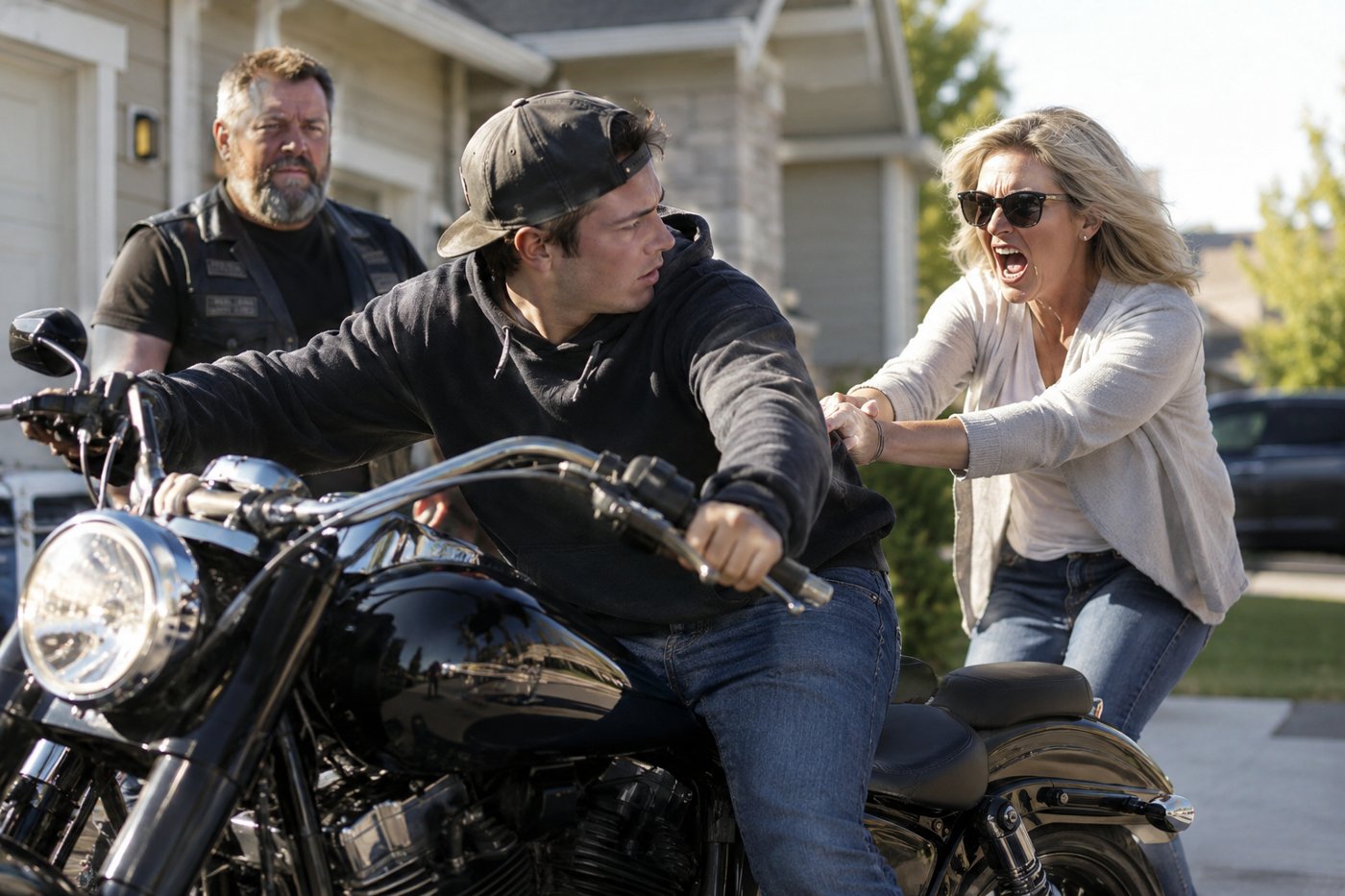

COMMENTS
Loading…