My Wife Kept Removing Her Wedding Ring—Then I Asked About Him
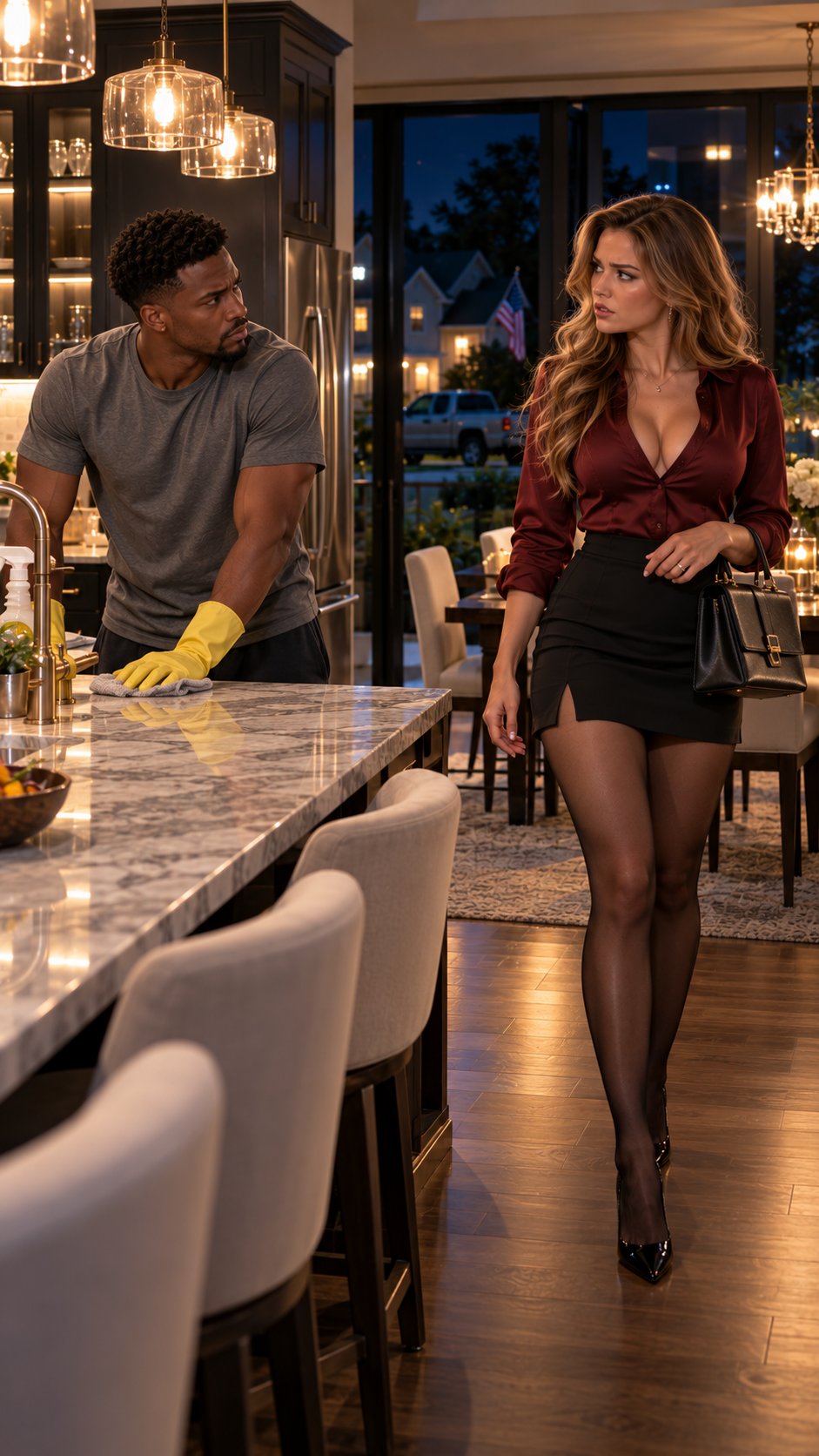
I noticed my wife's wedding ring because I was wearing yellow rubber gloves.
That's the detail I remember most clearly.
Not her dress.
Not her perfume.
Not the way she stopped breathing when I mentioned Tuesday.
The gloves.
Cheap yellow cleaning gloves I'd bought at Target because the spray we used on the kitchen counters dried out my hands.
I was standing at the island wiping spaghetti sauce from the white quartz when my wife walked into the kitchen.
8:06 p.m.
Friday.
Another late “work dinner.”
Claire looked elegant.
Dark green dress.
Black heels.
Hair down instead of clipped behind her head the way she normally wore it at the office.
Small gold earrings.
Perfume.
She reached across the island for her car keys.
That's when I saw it.
Her left hand.
Wedding ring.
I kept wiping the counter.
“You're wearing your wedding ring tonight.”
Claire frowned.
“I ALWAYS DO.”
I moved the cloth through a circle of cleaner.
“No, you don't.”
Her hand stopped above the keys.
Not dramatically.
Just—
still.
“WHAT ARE YOU TALKING ABOUT?”
I rinsed the cloth.
“Tuesday.”
She stared at me.
“Thursday.”
Nothing.
“Last Saturday.”
Her face changed.
“YOU'VE BEEN CHECKING MY HAND?”
I looked up.
“Only because you keep taking it off before you leave.”
Her eyes narrowed.
“SO WHAT?”
That response surprised me.
Not denial.
Not explanation.
Not:
I take it off because it bothers me.
Not:
I forgot it.
So what?
I removed one glove.
Then the other.
Placed them beside the sink.
“What changed tonight?”
Claire said nothing.
I looked at the ring again.
White gold.
Small diamond channel around the band.
The ring I'd slid onto her finger thirteen years earlier.
The ring that had apparently become optional on certain evenings.
Then I asked the question that had been growing inside me for nearly two weeks.
“Did he finally find out you're married?”
Claire's face went completely blank.
And that was when I knew there was a he.
I just didn't know who he was.
Or what my wife had told him.
My name is Andrew Mitchell.
I was forty-two that year.
Claire was forty.
We lived outside Columbus, Ohio, with our eleven-year-old daughter, Grace.
I owned a small residential remodeling company with my younger brother.
Claire worked in pharmaceutical sales.
If you're already thinking that her job involved dinners, travel, physicians, conferences, and client entertainment—
you're right.
That's what made everything so difficult.
Late dinners weren't unusual.
Nice clothes weren't unusual.
Hotels weren't unusual.
Male colleagues weren't unusual.
Nothing I initially noticed was unusual enough by itself to justify suspicion.
It was the ring.
And even the ring took me months to understand.
Claire and I had been married thirteen years.
We met at a friend's birthday party when we were twenty-seven and twenty-five.
She was standing beside the food table arguing with somebody about whether Die Hard was a Christmas movie.
I joined the argument.
Wrong side, according to her.
Twenty minutes later, we were still talking.
Two years later, we were married.
Grace arrived eighteen months after that.
We bought our house when she was three.
Nothing about our marriage had ever been particularly cinematic.
That was one of the things I loved about it.
We were steady.
Claire traveled.
I worked with my hands.
She wore business clothes.
I came home covered in drywall dust.
She knew restaurant menus in cities I'd never visited.
I knew which hardware store opened earliest on Sunday.
We fit.
Or I thought we did.
The first time I noticed the missing ring was on a Tuesday in March.
Claire came downstairs wearing a navy dress and carrying her laptop bag.
“Dinner?”
I asked.
“Yeah.”
“With?”
“Hospital group.”
“Late?”
“Probably.”
I kissed her.
She left.
Nothing happened.
At least nothing I knew about.
Two days later, Thursday, she had another dinner.
This time she wore black trousers and a cream blouse.
I handed her the keys she'd left on the table.
That's when I noticed her bare left hand.
“Forget something?”
She checked her purse.
“What?”
I almost mentioned the ring.
Then didn't.
Maybe she'd removed it while showering.
Maybe it was upstairs.
Claire occasionally took it off at night.
Nothing strange.
Saturday was different.
She wasn't supposed to work.
Around five she told me a regional director had unexpectedly come to town and several people were meeting for drinks.
She changed clothes.
Black dress.
Jacket.
Heels.
She came downstairs.
No ring.
Again.
I noticed.
Again I said nothing.
Sunday morning, the ring was back.
We went to Grace's soccer game.
Claire sat beside me on the bleachers.
She clapped.
Complained about the referee.
Bought terrible coffee from the concession stand.
Her left hand rested on my knee.
Wedding ring shining in the sun.
I stared at it.
She didn't notice.
Maybe that sounds obsessive.
It wasn't yet.
I wasn't checking every morning.
I wasn't taking photographs.
I wasn't creating spreadsheets.
I simply remembered.
Tuesday.
Thursday.
Saturday.
No ring.
Sunday.
Ring.
Monday.
Ring.
Then another evening event.
No ring.
Once you notice a pattern, it's almost impossible to stop seeing it.
I still didn't confront her.
Because I had innocent explanations.
Some women don't wear jewelry to certain events.
Maybe her fingers swelled.
Maybe she'd started removing it while getting ready and forgetting to replace it.
Maybe the ring irritated her skin.
Except she wore it during the day.
I started noticing that too.
Ring at breakfast.
Ring when she left for the office.
Then no ring when she left again for certain evening events.
That was different.
The next week, Claire had dinner Wednesday.
She came home from work at 5:30.
Ring on.
Went upstairs.
Showered.
Changed.
Came down at 7:00.
Ring off.
I was sitting with Grace helping with math homework.
Claire kissed Grace.
Then me.
“Don't wait up.”
I looked at her left hand.
She noticed my eyes.
For a fraction of a second, she tucked that hand behind her purse.
That's when suspicion became something heavier.
I waited until she left.
Then went upstairs.
Her ring wasn't in the bathroom.
Not beside the sink.
Not on the dresser.
I opened nothing.
Searched no drawers.
I wasn't going to rummage through her things.
But I looked at the small ceramic dish where she normally placed jewelry.
Empty.
That meant she had the ring with her.
Just not on her finger.
Why?
She came home at 11:38.
I was in bed.
She went into the bathroom.
When she emerged ten minutes later, the ring was back on.
I pretended not to notice.
That was the night I stopped sleeping well.
The following morning I nearly asked.
Then Grace came downstairs complaining she couldn't find a science worksheet.
Normal life intervened.
That's what people don't understand about marital crises.
You don't get dramatic lighting and uninterrupted confrontation.
You get school lunches.
Garbage collection.
Dentist appointments.
Milk running out.
You can suspect your marriage is changing while simultaneously searching for a child's missing permission slip.
Two weeks passed.
Claire became more protective of her phone.
Not absurdly.
She didn't carry it into the shower.
Didn't suddenly change every password.
She simply began placing it facedown.
Then taking it with her when she left the room.
Once it buzzed on the kitchen counter.
She was upstairs.
I looked automatically.
Not intentionally snooping.
The screen displayed:
Evan R.
Nothing else.
Notification previews were disabled.
I remembered the name.
“Who's Evan?”
I asked later.
Claire barely looked up.
“Evan?”
“Someone texted.”
“Work.”
“What does he do?”
“Regional accounts.”
“New?”
“Kind of.”
That was it.
I had no reason to continue.
So I didn't.
But now the pattern had a possible name.
I hated myself for thinking that.
A male coworker texting my wife did not equal an affair.
A missing ring did not equal an affair.
Late dinners did not equal an affair.
A facedown phone did not equal an affair.
But marriage is built partly on context.
And the context was changing.
Then came Friday.
The green dress.
The yellow gloves.
The ring suddenly back on her hand.
“Did he finally find out you're married?”
Claire stared at me.
I expected anger.
Instead, I saw fear.
That scared me more.
“Who?”
she asked.
I shook my head.
“Don't.”
“What?”
“Don't make me supply the name.”
She grabbed her keys.
“I don't know what you're talking about.”
“Then why are you wearing the ring tonight?”
“This is insane.”
“Maybe.”
“You've been monitoring whether I wear jewelry?”
“No.”
“You just listed dates.”
“Because I noticed.”
“That is monitoring.”
“Then explain it.”
She looked toward the hallway.
Grace was upstairs at a friend's house.
We were alone.
Claire knew it.
So did I.
She said:
“Sometimes I take it off.”
“Why?”
“It gets uncomfortable.”
“Only at dinner?”
“No.”
“I've watched you wear it all day and take it off before leaving.”
Her jaw tightened.
“You're imagining things.”
I stared at her.
That sentence hurt.
Not because it was cruel.
Because I knew what I'd seen.
“Tuesday.”
“Stop.”
“Thursday.”
“Andrew.”
“Saturday.”
“I said stop.”
“Wednesday last week.”
She slammed her purse onto the counter.
“FINE.”
Silence.
I waited.
She rubbed her forehead.
“Sometimes I take it off at work events.”
“Why?”
She said nothing.
“Claire.”
“Because married women get treated differently.”
I frowned.
“By who?”
“People.”
“What people?”
“Clients. Executives. Everyone.”
“That doesn't make sense.”
“You wouldn't understand.”
“Try me.”
She started pacing.
“In sales, perception matters.”
“Okay.”
“People talk differently to you.”
“When you're unmarried?”
“When they think you're more available.”
The word hit me.
“Available for what?”
“Conversation.”
I almost laughed.
“Conversation?”
“Networking.”
“You remove your wedding ring so men will network with you?”
She rolled her eyes.
“You're making it sound disgusting.”
“I don't have to.”
That stopped her.
I asked:
“Does your company know you do this?”
“No.”
“Do other married women?”
“I don't know.”
“Did someone suggest it?”
“No.”
“Then when did you start?”
She looked away.
“Couple months.”
That matched the dinners.
“Evan?”
Her face changed.
There.
I had the name.
She whispered:
“What about him?”
“Is he the reason?”
“No.”
Too fast.
I nodded.
“Okay.”
“Andrew.”
“Is he going tonight?”
She didn't answer.
“Claire.”
“Yes.”
I pulled out a chair.
Sat down.
“Who is Evan?”
“Someone from another regional team.”
“Married?”
“No.”
“How old?”
“Thirty-six.”
“How long have you known him?”
“Five months.”
“Does he know you're married?”
Silence.
And suddenly the ring made sense in a way I hadn't prepared myself for.
“Claire.”
“He knows now.”
I felt something drop inside my chest.
“Now?”
She covered her face.
I stood.
“What does now mean?”
“He found out this week.”
“How?”
She lowered her hands.
“LinkedIn.”
I actually laughed.
Not because anything was funny.
“He had to discover your husband on LinkedIn?”
“I never said I wasn't married.”
I stared at her.
That sentence.
That technical defense.
I knew immediately we were in deeper trouble than I'd thought.
“You never said you were?”
“No.”
“Did he ask?”
“Not directly.”
“Did you let him believe you were single?”
Claire began crying.
I repeated:
“Did you let him believe you were single?”
“Yes.”
There it was.
The kitchen suddenly felt enormous.
I looked at the ring.
Then her.
“Why?”
“I don't know.”
“Yes, you do.”
“I liked talking to him.”
“That doesn't require pretending you're single.”
“I know.”
“Did he flirt with you?”
“Yes.”
“Did you flirt back?”
She looked down.
“Yes.”
I removed the second rubber glove I'd somehow put back on while talking.
I don't remember doing it.
Placed it beside the first.
My hands were shaking.
“How far?”
“What?”
“How far did this go?”
“Nothing happened.”
I laughed.
Something had obviously happened.
Maybe not physically.
But my wife had spent months removing her wedding ring before seeing another man while allowing him to believe she wasn't married.
“Define nothing.”
“We didn't sleep together.”
“That's a very specific definition.”
She closed her eyes.
“We didn't kiss.”
“Did he try?”
“No.”
“Did you want him to?”
No answer.
I looked away.
“Are you going to dinner with him tonight?”
“It's a group dinner.”
“Was Tuesday?”
“Mostly.”
“Thursday?”
She didn't answer.
“Last Saturday?”
Her voice became small.
“No.”
“No what?”
“It wasn't a group.”
I sat down again.
“Just you and Evan?”
“Yes.”
“Where?”
“Restaurant downtown.”
“How late?”
“Eleven.”
“You told me you were with the regional team.”
“I know.”
“Did you take the ring off?”
“Yes.”
“Did he think you were single?”
“Yes.”
I nodded.
Each answer landed separately.
“Why is the ring on tonight?”
She wiped her face.
“Because he knows.”
That was exactly what I'd asked.
I wished I'd been wrong.
“What happened when he found out?”
“He was angry.”
“At you?”
“Yes.”
“Why?”
“Because he thought…”
She stopped.
“What?”
“He thought we were becoming something.”
I closed my eyes.
There it was.
Not harmless flirting.
Not sales strategy.
Something.
“What did you think?”
“I didn't know.”
“That's not an answer.”
“I liked him.”
“As a coworker?”
“No.”
Honesty finally.
Painfully late.
I asked:
“Did you tell him you were separated?”
“No.”
“Divorcing?”
“No.”
“Unhappy?”
She hesitated.
“Yes.”
“What did you tell him?”
“That things at home were complicated.”
I laughed bitterly.
“Were they?”
She started crying harder.
“Yes.”
That surprised me.
Because nobody had told me.
“What was complicated?”
“You and I barely talk.”
“We talk every day.”
“About Grace.”
“Okay.”
“Bills.”
“Okay.”
“Your jobs. My jobs. The house.”
“Okay.”
“Nothing else.”
I thought about that.
There was truth in it.
Our marriage had become logistical.
That didn't explain the ring.
But it explained something.
Claire continued.
“You stopped seeing me.”
I almost became defensive.
Then stopped myself.
“What does that mean?”
“You stopped looking at me like I was a woman.”
“That isn't true.”
“It felt true.”
I didn't argue with the feeling.
But I said:
“So you let another man think you were single.”
She looked down.
“Yes.”
“Those are two separate things.”
“I know.”
“Don't combine them.”
She nodded.
That distinction would become important later.
I could be emotionally absent.
She could be lonely.
Our marriage could need repair.
And Claire could still be fully responsible for deceiving another man and me.
One truth didn't erase the other.
“Does Evan know you're coming tonight?”
“Yes.”
“Why?”
“He wants to talk.”
“About?”
“What happens now.”
I stared at her.
“What happens now between you and him?”
“Yes.”
“And you're dressed for that conversation.”
She looked down at herself.
Her face changed.
For the first time, maybe she saw the evening through my eyes.
I asked:
“Do you want to go?”
She said nothing.
That was worse than yes.
“Claire.”
“I don't know.”
I nodded.
“Then don't stay here because you're afraid of what I'll do.”
“What?”
“If you need to decide whether you want him, don't make me your jailer.”
Her eyes widened.
“I'm not leaving you.”
“You already removed the symbol that said you were married so another man could believe you were available.”
“That isn't the same as leaving.”
“No.”
I agreed.
“But it's not staying honestly either.”
She sat down.
For the next minute, neither of us spoke.
Then her phone buzzed.
She looked.
I didn't ask.
She turned it over.
I said:
“Evan?”
“Yes.”
“What did he say?”
“He's asking if I'm coming.”
I waited.
Claire unlocked the phone.
Typed.
Stopped.
Deleted.
Typed again.
Then set it down.
“What did you send?”
“I said no.”
I felt no relief.
Not yet.
“Why?”
She looked at me.
“Because I need to fix this.”
“Which this?”
She understood.
“Our marriage.”
I shook my head.
“You don't get to decide that in one sentence.”
“I know.”
“Do you actually want to be married to me?”
“Yes.”
Immediate.
I almost believed her.
Then I looked at the ring.
“Did Evan think you wanted a relationship?”
“Yes.”
“Why?”
“Because I acted like I did.”
That was the first answer that felt completely honest.
Claire changed clothes.
The green dress disappeared upstairs.
She returned in sweatpants and a sweatshirt.
We sat at the kitchen table until almost 2:00 a.m.
The truth came slowly.
And badly.
Evan Reed had joined a neighboring regional team five months earlier.
They met at a conference in Indianapolis.
Group dinner.
Nothing happened.
He was funny.
Attentive.
Newly single after ending a long relationship.
They exchanged numbers for work.
Messages became personal.
At first, Claire wore her ring.
Evan knew she was probably married.
Or should have.
Then one evening, after a conference reception, Claire took the ring off because her finger was swollen.
That was genuinely how it began.
Evan became more flirtatious.
Claire noticed.
And didn't correct the assumption.
The next time they met, she deliberately left the ring in her purse.
That changed everything.
Not because jewelry magically creates fidelity.
Because intention had entered.
She wanted to see what happened if she looked unattached.
Evan asked:
“Seeing anyone?”
Claire answered:
“It's complicated.”
Not:
I'm married.
Not:
I have a husband and daughter.
It's complicated.
I stared at her when she admitted that.
“Thirteen years of marriage became complicated?”
She cried.
“Yes.”
After that, Evan believed she was leaving a relationship.
Claire never explicitly said husband.
Never said wife.
Never said divorce.
She used phrases.
“Things at home aren't good.”
“We're basically living separate lives.”
“I don't know what I want.”
Technically, she could tell herself she hadn't lied.
Emotionally, she'd constructed a fiction.
“Were we living separate lives?”
“No.”
“Did we sleep in the same bed?”
“Yes.”
“Have sex?”
“Yes.”
“Take Grace to dinner together?”
“Yes.”
“Go to your parents' anniversary three weeks ago holding hands?”
“Yes.”
“Then why tell him that?”
She whispered:
“Because I wanted permission.”
That answer stopped me.
“Permission for what?”
“To see what it felt like.”
Not necessarily sex.
Not initially.
Possibility.
To enter a room and be seen as Claire instead of Andrew's wife.
Grace's mother.
The woman responsible for schedules.
The employee with thirteen years of adult history attached to her.
Evan saw a version without context.
She liked her.
That didn't excuse anything.
But I understood the seduction.
Not of Evan.
Of reinvention.
The private dinners started six weeks earlier.
First coffee.
Then lunch.
Then dinner.
No kissing.
No hotel rooms.
No sex.
But they talked for hours.
Evan touched her hand once.
She didn't move it.
He told her he was attracted to her.
She said:
“I know.”
I hated that answer.
“Did you tell him you were attracted to him?”
“Yes.”
“When?”
“Saturday.”
The most recent Saturday.
The night she'd removed the ring.
The night she'd told me she was meeting her regional team.
“What else happened Saturday?”
“Nothing physical.”
“What did you talk about?”
“He asked what was stopping me.”
“From?”
“Being with him.”
I felt sick.
“What did you say?”
She looked at the ring.
“I said my life was complicated.”
Still no husband.
Still no daughter.
Still no marriage.
Then Tuesday changed everything.
Evan searched Claire online.
Maybe curiosity.
Maybe suspicion.
He found her LinkedIn.
Then Facebook.
An old public photograph.
Claire and me at a charity dinner.
Caption from a friend:
Andrew & Claire Mitchell looking amazing as always.
Then our anniversary post.
Thirteen years.
Evan confronted her.
Not in person.
Message.
You're married?
Claire stared at that message for twenty minutes before responding.
Yes.
He called immediately.
Evan wasn't heartbroken in some grand romantic sense.
They hadn't built a life.
But he felt deceived.
He asked:
“How married?”
I almost laughed when Claire told me.
“What does that mean?”
“She told him?”
“Yes.”
“What did you say?”
“The truth.”
“What truth?”
“That we live together. That we're not separated. That we have Grace.”
His response:
What the hell, Claire?
Fair.
He asked whether I knew about him.
No.
Whether I knew about the dinners.
Not the truth.
Whether she'd removed her ring intentionally.
Claire admitted yes.
He ended the call.
Then contacted her Thursday.
He wanted to talk.
Tonight's dinner.
Friday.
The green dress.
The ring back on.
Because the fiction was over.
I sat there stunned.
“So tonight wasn't a date.”
“No.”
“But the others were.”
She cried.
“I didn't call them dates.”
“What would Evan call them?”
Silence.
“Dates.”
There it was.
I slept in the guest room.
At 3:00 a.m., I stared at the ceiling and realized something strange.
I felt sorry for Evan.
Not enough to make him central.
But he had been deceived too.
He'd participated in an emotional relationship with a woman he believed was available.
Once he discovered she was married, he hadn't celebrated.
He'd been angry.
That mattered.
It also complicated the villain I wanted.
There wasn't one.
There were choices.
Mostly Claire's.
Some mine, in the marriage.
But the deception belonged to her.
Saturday morning, Grace knocked on the guest-room door.
“Dad?”
I opened it.
She looked at the bed.
“Why'd you sleep here?”
“Couldn't sleep.”
“You can not sleep in your own room.”
Kids.
Always inconveniently logical.
I smiled.
“Mom and I were talking late.”
“Are you fighting?”
I didn't lie.
“We're having a difficult conversation.”
“About me?”
“No.”
Immediate.
“Absolutely not.”
She relaxed slightly.
“Are you getting divorced?”
That question broke something inside me.
“I don't know.”
Her face fell.
I knelt.
“But whatever happens is between Mom and me. You didn't cause it, and both of us love you.”
She hugged me.
I held her.
Upstairs, I heard Claire crying.
Later, Claire told Grace only that we'd been having marriage problems and needed time.
No adult details.
Grace didn't need them.
Then Claire did something I didn't expect.
She contacted Evan and asked whether he would speak to me.
I said no.
Immediately.
I didn't need another man's account to validate my marriage.
I didn't want to compare timelines like detectives.
If reconciliation required me to interrogate Evan, I wasn't interested.
Claire accepted that.
Evan sent one message through her:
Tell him I didn't know. I would've stayed away if I had.
I believed that based on what I knew.
Then I asked Claire to stop discussing me with him entirely.
She agreed.
She blocked his personal number.
Not because I demanded it.
Because she said continuing the relationship would be disrespectful to both men.
That wording was interesting.
Both men.
She finally understood she'd manipulated two realities.
We started counseling.
Our therapist, Dr. Maya Henderson, was in her fifties and had an unnerving ability to let silence become so uncomfortable that eventually someone told the truth just to make it stop.
First session, she asked Claire:
“Why did you remove the ring?”
Claire gave the polished answer.
“I wanted to feel independent.”
Dr. Henderson waited.
Silence.
Claire shifted.
Then:
“I wanted attention.”
More silence.
Finally:
“I wanted to know if someone would choose me without knowing I was already chosen.”
That sentence hit me hard.
Dr. Henderson asked:
“And when Evan did?”
Claire cried.
“It felt good.”
“And then?”
“I wanted more.”
“More what?”
“Attention.”
“Not necessarily him?”
Claire thought.
“Eventually him too.”
Honest.
Then Dr. Henderson looked at me.
“What was happening in the marriage?”
I almost said:
“Ask her.”
Instead, I answered.
I had been working constantly.
My business had expanded.
My brother had health problems.
I was carrying more jobs.
At home, I was tired.
I stopped initiating dates.
Stopped asking Claire much about work beyond:
“How was your day?”
Then barely listened to the answer.
Sex became scheduled by exhaustion.
We loved each other.
But we had stopped actively knowing each other.
That was real.
Dr. Henderson asked:
“Did that make Claire's deception inevitable?”
“No.”
“Did it make it acceptable?”
“No.”
“Did it contribute to vulnerability in the marriage?”
I hated the question.
Then:
“Yes.”
That distinction became the foundation of everything that followed.
Claire moved into the guest room.
I didn't ask her to leave the house.
Grace needed stability.
So did we.
For three months, we lived like respectful roommates.
Counseling weekly.
No pretending.
No sex.
Minimal affection.
I needed space inside proximity.
Claire stopped traveling for optional events.
Again, not my demand.
She said she needed to examine why professional travel had become part of her escape.
Necessary trips continued later.
But not immediately.
One month after discovery, she stopped wearing her wedding ring entirely.
I noticed at breakfast.
My stomach tightened.
“Why is it off?”
She looked at her bare hand.
Then at me.
“Because wearing it right now feels dishonest.”
That answer surprised me.
She placed it in the small dish beside our bed.
Not hidden.
Not in a purse.
Visible.
“I don't want to wear a symbol of a marriage you're still deciding whether you want.”
I didn't know how I felt about that.
Part of me hated seeing her without it.
Another part understood.
For months she'd treated the ring as a costume.
On when useful.
Off when useful.
Maybe it needed to stop functioning as evidence.
Two months later, Evan transferred to another region.
I learned accidentally.
Claire mentioned it during counseling.
“Did you know before?”
“No.”
“Did you ask?”
“No.”
I believed her.
That surprised me.
Trust wasn't back.
But belief had begun returning in pieces.
Three months after discovery, I asked Claire:
“Do you miss him?”
She didn't answer quickly.
Good.
Then:
“Sometimes.”
It hurt.
“What do you miss?”
“How I felt.”
“Desired?”
“Yes.”
“Anything else?”
“Uncomplicated.”
I laughed bitterly.
“You were married with a child while pretending to be single. That's not uncomplicated.”
She smiled sadly.
“I know. But inside the lie, it felt uncomplicated.”
That was insightful.
Fantasy stays simple only because reality pays its bills somewhere else.
Evan never saw Claire sick.
Never sat with Grace during stomach flu.
Never argued about property taxes.
Never watched Claire grieve her father's surgery.
Never cleaned a kitchen with her.
Never dealt with thirteen years of history.
He received edited Claire.
Claire received edited Evan.
That doesn't mean their connection was fake.
It means it was incomplete.
Six months passed.
One evening, Claire asked me on a date.
I almost said no.
Then said yes.
Italian restaurant.
No discussion of Evan for the first hour.
We talked about Grace.
Movies.
My company.
Claire's desire to move into training instead of sales.
For a moment, I remembered why I'd married her.
That scared me.
Because anger is easier when you stop loving someone.
I hadn't.
Outside the restaurant, Claire said:
“Can I hold your hand?”
The question nearly broke me.
Thirteen years married.
Asking permission.
I nodded.
She took my hand.
Bare finger.
No ring.
We walked to the car.
Eight months after discovery, I picked up her ring from the dish.
Claire was brushing her teeth.
I held it.
She saw me through the mirror.
Neither of us spoke.
Then I placed it in her palm.
She looked at me.
“What does this mean?”
“It means I want to keep trying.”
She started crying.
I added:
“It doesn't mean everything's fixed.”
“I know.”
“Don't make it mean more than I'm saying.”
“I won't.”
She slid it onto her finger.
For the first time in years, I understood that a wedding ring has no power by itself.
The meaning comes from the choices around it.
The first work dinner after that terrified both of us.
Claire wore a navy suit.
Ring on.
She came downstairs.
I looked at her hand.
She noticed.
“It's staying.”
I nodded.
Then she said:
“But that's not why you should trust me.”
I looked at her.
She continued:
“You should trust what I do whether it's there or not.”
Exactly.
She returned at 9:36.
Not because of a curfew.
There wasn't one.
She came into the kitchen.
I was cleaning.
Again.
No gloves this time.
She smiled.
“You and counters.”
“Someone has standards.”
She kissed my cheek.
Then went upstairs.
Ordinary.
That was the goal.
A year after discovery, Claire apologized for something I hadn't understood she regretted.
“The ‘so what.’”
I knew immediately.
The kitchen.
My question:
“You keep taking it off.”
Her response:
“SO WHAT?”
“Why that?”
she asked.
“Because I knew why I was doing it.”
She looked ashamed.
“And instead of admitting it, I tried to make you feel ridiculous for noticing.”
That was true.
“I wanted the problem to be your suspicion instead of my behavior.”
I nodded.
“That's exactly what it felt like.”
“I'm sorry.”
I believed her.
We stayed married.
Not because of the ring.
Not because Claire cried.
Not because we had a child.
Not because thirteen years would've been “wasted.”
Time spent loving someone isn't automatically wasted if the relationship ends.
We stayed because over the following years, Claire became someone I could reasonably trust again.
And I became more present in a marriage I'd assumed could maintain itself.
Grace grew up.
At fourteen, she asked why Mom and Dad had slept in separate rooms “that weird year.”
We told her we'd had marriage problems.
Nothing more.
At twenty-three, she asked again.
By then she was serious about someone.
Claire and I agreed she could hear a more honest version.
Not every detail.
Enough.
Claire told her.
No excuses.
“I became emotionally involved with another man and hid that I was married from him.”
Grace stared at her.
“You pretended you weren't married?”
“Yes.”
“Why?”
Claire thought.
“Because I wanted to feel like I could become somebody else.”
Grace looked at me.
“And you stayed?”
“Yes.”
“Why?”
I said:
“Because what happened afterward mattered too.”
Grace asked:
“Did you forgive Mom?”
“Yes.”
“How long?”
“Years.”
Claire nodded.
Grace frowned.
“Years?”
“Forgiveness isn't a switch.”
I explained that forgiveness and reconciliation weren't the same.
That staying wasn't mandatory.
That leaving wouldn't have meant I loved Claire less.
That reconciliation required changed behavior, not simply regret.
Grace listened.
Then said:
“That sounds exhausting.”
Claire laughed.
“It was.”
Years later, Grace married.
On her wedding morning, Claire helped fasten her dress.
I stood outside the room.
Then Grace called:
“Dad.”
I entered.
She looked beautiful.
Nervous.
Claire was crying.
Grace held out her hand.
No ring yet.
Then she said something I never forgot.
“It's weird that one little ring is supposed to mean so much.”
Claire and I looked at each other.
I said:
“It only means what you keep choosing after you put it on.”
Claire started crying harder.
Grace rolled her eyes.
“Great. Now Mom's worse.”
At our twenty-fifth anniversary, Claire gave me a small box.
Inside was not a new ring.
It was mine.
My original wedding band.
I frowned.
“I already have one.”
She pointed at my hand.
I was wearing a replacement.
I'd lost the original during a remodeling job years earlier.
Or thought I had.
Claire had found it in an old toolbox while cleaning the garage.
She'd had it polished.
I laughed.
“Apparently rings disappear in this family.”
Her smile faded slightly.
I immediately regretted the joke.
Then she surprised me.
“Some accidentally.”
I looked at her.
“Some deliberately.”
No defensiveness.
No pretending the past didn't exist.
Then she smiled.
“But this one came back.”
I put it on.
We never turned our reconciliation into a fairy tale.
There was no moment where betrayal became “the best thing that happened to us.”
I hate that idea.
Pain doesn't need to become a gift to justify surviving it.
I would've preferred Claire never lied.
She would've preferred it too.
The growth didn't make the wound necessary.
It simply meant we refused to waste what came after.
At sixty, Claire retired from pharmaceutical sales.
Her final company dinner was held downtown.
She came downstairs wearing an elegant black dress.
I was in the kitchen.
Cleaning.
She stopped.
We both noticed the resemblance immediately.
I looked at her hand.
Ring.
She laughed.
“Don't.”
I picked up a yellow rubber glove.
She covered her face.
“Oh, no.”
I pulled it on dramatically.
“You're wearing your wedding ring tonight.”
She started laughing.
“I always do.”
I pointed at her.
“That line didn't work the first time.”
She walked over.
Kissed me.
Then said:
“No. It really didn't.”
We stood there laughing.
Then something shifted.
The memory entered the room.
Not violently.
Just quietly.
Claire looked at the glove.
Then her ring.
“I was terrified that night.”
“So was I.”
“I thought you knew everything.”
“I knew almost nothing.”
She looked surprised.
“Really?”
“I had dates.”
“Tuesday. Thursday. Saturday.”
“And Wednesday.”
She laughed sadly.
“You remembered Wednesday?”
“Unfortunately.”
She touched the ring.
“Do you know why I wore it that night?”
“Because Evan found out.”
“Yes.”
“But there was more?”
She nodded.
“I was ashamed.”
I waited.
“Once he knew, taking it off felt disgusting.”
I hadn't known that.
She continued:
“Before he knew, I could pretend I was just creating a different version of myself.”
“Single Claire.”
“Yes.”
“But once he knew?”
“The ring stopped being about whether he saw it.”
She looked at me.
“It became about whether I could see myself.”
That was one of the saddest things she'd ever said.
She asked:
“Do you know what I thought when you said, ‘Did he finally find out you're married?’”
“No.”
“That I had lost both versions of my life.”
I frowned.
She explained.
“Evan knew I was married. You knew I was hiding something. There was nowhere left where the story still worked.”
That was exactly what had happened.
The compartments collapsed.
For months, Claire had maintained two identities.
At home:
wife.
Mother.
Thirteen-year marriage.
Ring.
Family.
With Evan:
complicated.
Possibly available.
Unattached enough to imagine something else.
No ring.
No husband in conversation.
No daughter at first.
No ordinary history.
The moment both men knew the truth, neither version could exist separately.
Claire had to become one person again.
She looked at me.
“I think that was why I was so angry when you noticed.”
“The ring?”
“Yes.”
“You weren't supposed to notice?”
“I didn't think you did.”
“I almost didn't.”
“What made you?”
I thought about it.
“Nothing dramatic.”
Then I smiled.
“You handed me your keys.”
She looked confused.
“Thursday. I handed you your keys. Your hand was bare.”
“That was it?”
“That started it.”
She shook her head.
“All that because of keys.”
“No.”
I looked at her ring.
“All that because you were lying.”
She nodded.
Fair.
Claire went to her retirement dinner.
I joined later because spouses were invited for dessert.
She introduced me proudly.
“My husband, Andrew.”
Two ordinary words.
Nobody there knew what they meant to me.
Driving home, she rested her hand on the center console.
Ring catching light from passing streetlamps.
I put my hand over hers.
She smiled.
No speech.
No need.
A few years later, Claire developed arthritis in her fingers.
Her wedding ring became uncomfortable.
One morning, she took it off.
She held it up.
“Problem?”
I laughed.
“No.”
“You sure?”
“Claire.”
“I had to ask.”
She placed it in a necklace pendant for a while.
Eventually we had it resized.
The first week she went without it, I noticed something important.
I wasn't afraid.
That surprised me.
Decades earlier, a bare finger had become the symbol of everything wrong.
Now Claire could walk out of the house without the ring and I felt nothing except:
Her hand probably hurts.
That's what trust had become.
Not jewelry.
Context.
History.
Behavior.
Choice.
One evening she said:
“Funny, isn't it?”
“What?”
“I spent months thinking taking off a ring made me feel free.”
I waited.
“And now?”
“Now I can take it off without feeling like I'm leaving anything.”
I understood.
The marriage wasn't attached to her finger anymore.
Maybe it never had been.
When Grace had her first child, Claire and I spent a week helping.
One night, our granddaughter wouldn't sleep.
Claire walked the hallway holding her.
I watched from the doorway.
Silver hair.
Old sweatshirt.
No makeup.
Wedding ring on a chain because her arthritis had flared.
Nothing like the woman in the green dress from decades earlier.
And yet completely the same woman.
That's one of the hardest truths about marriage.
People aren't frozen at their worst moment.
But neither should their worst moment be erased simply because they later become better.
Both versions belong to the same life.
Claire noticed me watching.
“What?”
“Nothing.”
“That look means something.”
I smiled.
“I was thinking.”
“Dangerous.”
“About Friday night.”
She knew which Friday.
After all those years.
“Oh.”
Then:
“Why?”
“Ring.”
She touched the chain around her neck.
“Still checking my hand?”
I laughed.
“No.”
“Good.”
Then she became serious.
“Andrew?”
“Yeah?”
“Thank you for asking.”
“What?”
“The question.”
I knew.
Did he finally find out you're married?
“I hated you for asking it.”
“I remember.”
“But I needed someone to make the lie impossible.”
I shook my head gently.
“You made it impossible.”
“How?”
“You wore the ring.”
She smiled.
“I guess I did.”
Maybe that's why I still remember the yellow gloves.
Because I wasn't searching for evidence.
I was cleaning a kitchen.
My wife walked in.
The ring happened to be there.
The truth was already collapsing before I asked anything.
I just noticed the crack.
If this were a simpler story, Claire would've been sleeping with Evan.
I'd have caught them.
Thrown her out.
Filed for divorce.
Everyone would know who was right and who was wrong.
Real life was less convenient.
She hadn't slept with him.
Hadn't kissed him.
Hadn't built a secret second family.
She had done something quieter.
She had erased me from part of her identity because she wanted another man to see her as available.
That was enough to damage our marriage profoundly.
It was also something we eventually decided could be repaired.
Both things were true.
I had my failures.
Claire had hers.
But we learned not to trade them.
I didn't say:
“You lied, therefore I never need to examine how absent I became.”
Claire didn't say:
“You were absent, therefore my deception was your fault.”
That would've destroyed us.
Instead:
I owned mine.
She owned hers.
Then we decided what to build with what remained.
Maybe that's why a contractor like me understood reconciliation eventually.
You don't repair a damaged structure by pretending the crack isn't there.
You find out what caused it.
Remove what failed.
Reinforce what remains.
And sometimes—
after inspection—
you decide demolition is safer.
We considered that too.
Staying wasn't inevitable.
That's what made choosing it meaningful.
Claire once asked whether I'd have divorced her if she'd kissed Evan.
I said:
“I don't know.”
“If she'd slept with him?”
“I don't know.”
She looked surprised.
“I thought you'd say yes.”
“Maybe I would've.”
“But?”
“People imagine their boundaries clearly before they're actually standing at them.”
She nodded.
That was true for her too.
She'd once believed removing a ring wasn't really crossing anything.
Then discovered boundaries can be violated long before physical contact.
The ring itself sits in a small wooden box now.
Claire's hands became too sensitive to wear it regularly.
Mine sits beside hers because my knuckles aren't much better.
Two old rings.
Scratched.
Resized.
Nothing magical.
Grace once asked why we didn't display them somewhere.
Claire laughed.
“They're jewelry.”
I agreed.
The marriage isn't in the box.
The marriage is in thirty years of choices after the night in the kitchen.
In Claire telling me when she felt invisible instead of finding someone else to make her visible.
In me learning to look at my wife instead of assuming familiarity was the same as attention.
In difficult conversations.
In boundaries.
In boring dinners.
In Grace growing up.
In hospital rooms.
In vacations.
In arguments.
In apologies.
In all the nights nobody took anything off to become someone else.
But if you ask me when I understood how close we'd come to losing everything, I can still see it.
8:06 p.m.
Friday.
White quartz counter.
Cleaner.
Yellow rubber gloves.
Claire walking into the kitchen in a dark green dress.
Keys on the island.
Her left hand reaching across.
Wedding ring.
Me noticing.
“You're wearing your wedding ring tonight.”
Her immediate defense:
“I ALWAYS DO.”
My cloth moving across the counter.
“No, you don't.”
Stillness.
“WHAT ARE YOU TALKING ABOUT?”
“Tuesday. Thursday. Last Saturday.”
Then panic disguised as anger.
“YOU'VE BEEN CHECKING MY HAND?”
I looked up.
“Only because you keep taking it off before you leave.”
And finally the response that told me there was something beneath the jewelry.
“SO WHAT?”
I didn't shout.
Didn't demand her phone.
Didn't block the door.
I just asked:
“What changed tonight?”
Claire said nothing.
And suddenly I understood.
Nothing had changed between us that day.
Something had changed somewhere else.
So I looked at my wife's ring.
Then at her.
And asked:
“Did he finally find out you're married?”
She didn't answer.
She didn't have to.
Her face answered first.
Years later, Claire would tell me that was the exact second the two lives she'd been trying to maintain crashed into each other.
The wife wearing the ring.
The woman taking it off.
She couldn't be both anymore.
And before we could decide whether our marriage would survive—
she first had to decide which woman she was willing to become.
This time, she left the ring on.
Not because Evan finally knew.
Not because I was watching.
Because eventually—
after nearly losing everything it represented—
Claire finally understood that being married wasn't something she could remove from her hand whenever another life looked more interesting.
And neither of us ever confused the ring with the promise again.